
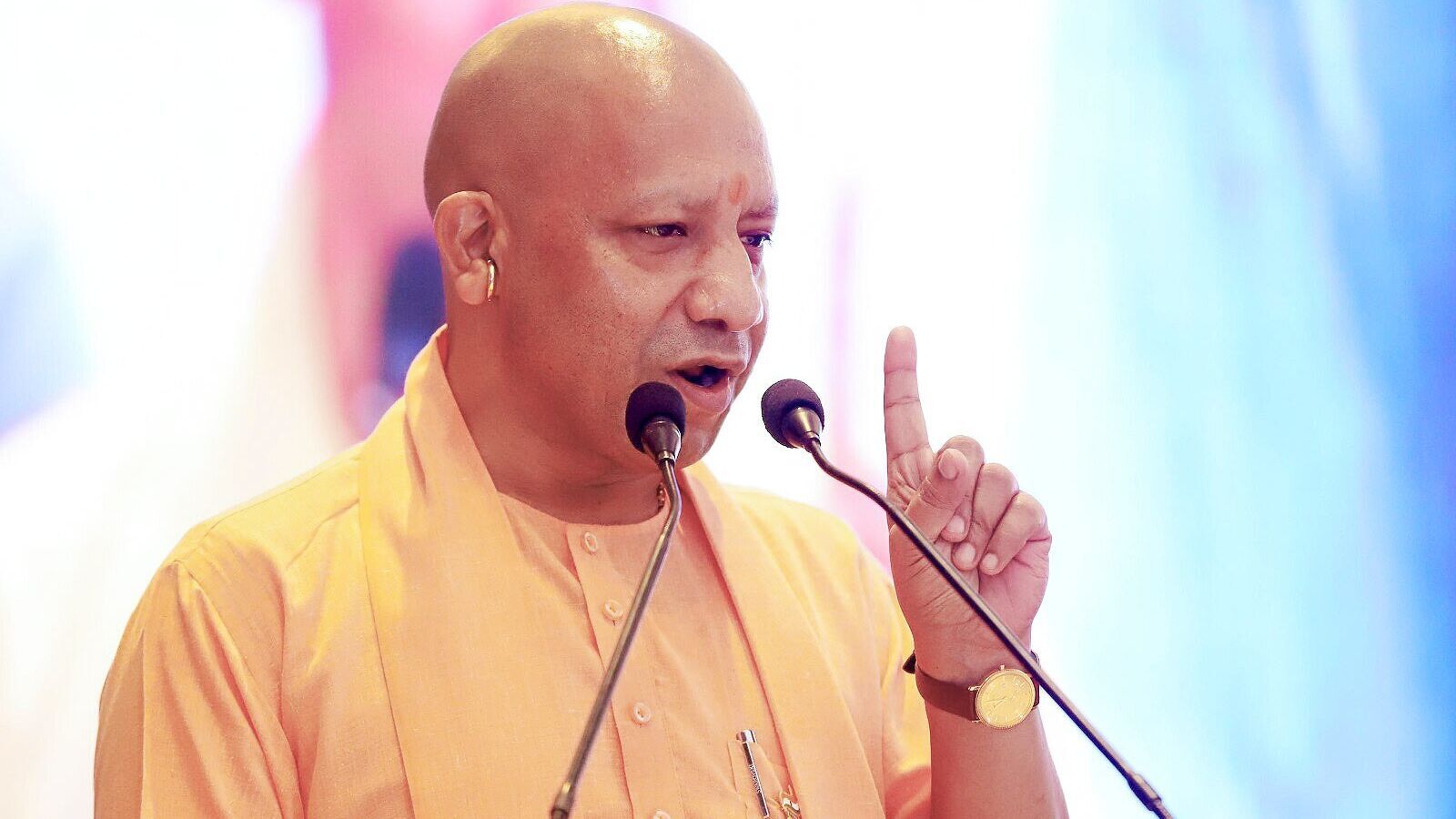
During the discussion on the Budget 2026-27, Chief Minister Yogi Adityanath stated that unlike the Samajwadi Party government, which often made grand announcements without delivering results, the current government not only makes promises but ensures their implementation on the ground.
CM Yogi emphasized that his administration has significantly improved Uttar Pradesh’s image, instilling confidence among citizens to proudly identify with India’s most populous state. He noted that people from Uttar Pradesh are now respected across the country and abroad, and top industrialists are keen to invest in the state due to transparent governance and fair practices.
Highlighting the role of structured policies, the Chief Minister stated that all systems in the state now operate under well-defined frameworks. He underscored the importance of data in policy-making, citing its contribution to reducing encephalitis cases. He also noted that school dropout rates have dropped from 6–7% under the previous government to 0–3% under the current administration.
CM Yogi announced the establishment of composite schools in every district as part of a phased plan, eventually covering all 8,000 Nyaya Panchayats. Each campus, spanning 12–15 acres, will provide education from pre-primary to Class 12, along with skill development training and quality sports facilities. While 150 schools were sanctioned in the previous budget, another 150 have been proposed in the current one.
Addressing concerns about teachers, the CM rejected claims that they do not perform their duties, stating that he personally greets and respects teachers and supports cashless medical facilities for all teaching and non-teaching staff.
हमारा मानना है कि AI गेम चेंजर होने वाला है…
मैं आज उत्तर प्रदेश के नौजवानों के लिए एक बड़ी घोषणा भी करना चाहूंगा… pic.twitter.com/GnuAsOEUP3
— Yogi Adityanath (@myogiadityanath) February 20, 2026
He emphasized inclusive governance, noting that programs like the Samajwadi Pension were previously limited to select groups, while the current government provides benefits equitably. Data has also been instrumental in reducing dropout rates among girls, prompting the creation of the State Data Authority. Uttar Pradesh aims to become a hub for data centers, targeting a 5-gigawatt capacity by 2030, with plans to develop four to five major data center clusters. The budget allocates ₹100 crore for the State Data Authority.
CM Yogi Launches Robotics Mission and Tech Initiatives in Agriculture with ₹100 Crore Allocation
The Chief Minister highlighted initiatives in technology and agriculture, including the use of robotics to reduce manual labor, drones for pesticide application, and collaboration with IIT Kanpur to establish a Center of Excellence. Another ₹100 crore has been allocated for the Robotics Mission.
For youth empowerment, CM Yogi announced free AI access for 2.5 million young people, alongside training in AI, robotics, drone technology, data science, and machine learning. The government plans to develop AI hubs, support AI-driven startups in education, healthcare, and agriculture, and provide farmers with AI-based tools for weather updates, soil health analysis, and pest control.
Also read ; CM Yogi Adityanath to Explore Japan’s Maglev Train Technology on Overseas Visit
On urban development, the CM said the government aims to achieve over 50% urbanization by developing City Economic Regions. This includes a State Capital Region around Lucknow and an economic zone from Kashi to Vindhyachal. Budget allocations have been made for these initiatives.
Finally, CM Yogi reiterated the government’s commitment to the principle of public trust (Jan Vishwas), emphasizing ease of doing business with simplified licensing processes, which were streamlined during the COVID period. The Jan Vishwas principle will now be implemented across 53 departments, with the State Transformation Commission acting as the nodal agency.