
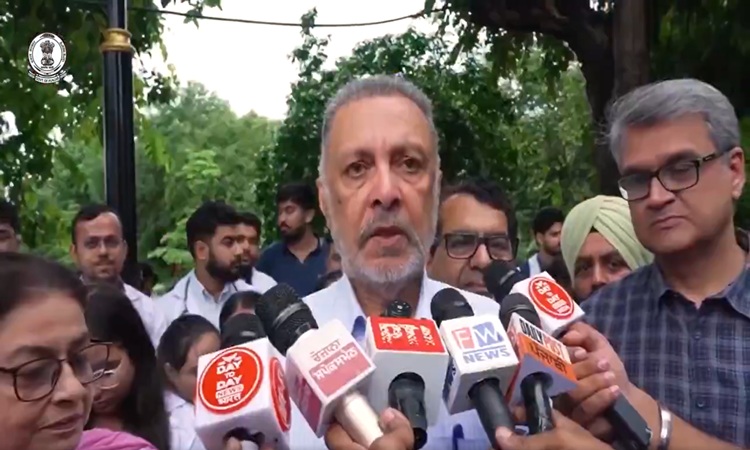
Punjab Leads Regional Efforts Against AMR
Chandigarh — Punjab has emerged as a front-runner in tackling the growing global health threat of antimicrobial resistance (AMR). On the 97th anniversary of the discovery of Penicillin, Health and Family Welfare Minister Dr Balbir Singh unveiled Punjab’s State Action Plan for the Containment of Antimicrobial Resistance (PUNJAB-SAPCAR).
Launched earlier this month on September 15, the policy makes Punjab the seventh state in India to adopt a dedicated framework for AMR containment. The Minister highlighted that Punjab’s initiative is among the most ambitious in the region, with the aim to achieve measurable results by 2028, the centenary year of Penicillin.
“Penicillin revolutionised modern medicine. Yet less than a century later, microbes are evolving faster than humans can respond,” said Dr Singh, addressing an audience of healthcare professionals and policymakers.
“We Are Losing Effective Antimicrobials”
Dr Singh cautioned that antimicrobial resistance threatens to reverse decades of medical progress. He noted that common infections are becoming harder to treat as microbes resist cheaper frontline drugs. This forces doctors to rely on expensive alternatives, burdening patients and the healthcare system alike.
“If the current trend continues, many medical advances of the last century may be undone,” he warned. “We are losing effective antimicrobials faster than new ones are being discovered.”
He credited PGIMER Chandigarh and other institutions for documenting the scale of AMR in the region, underscoring the urgency for action.
The RIVERS Strategy Explained
A key highlight of Punjab-SAPCAR is the adoption of the RIVERS framework, proposed by Fortis Hospital Mohali. The acronym outlines six strategic priorities designed to tackle AMR comprehensively:
- R – Rational Use of Antimicrobials: Promote evidence-based prescriptions to avoid overuse.
- I – Inter-sectoral Coordination: Strengthen collaboration between human health, veterinary, and agriculture sectors.
- V – Vigilance and Surveillance: Improve data collection on antimicrobial resistance patterns across hospitals and labs.
- E – Education and Awareness: Launch campaigns to educate the public on safe antibiotic use.
- R – Research and Innovation: Encourage development of new antimicrobials and diagnostic tools.
- S – Stewardship Programs: Institutionalize hospital-level antimicrobial stewardship to guide treatment decisions.
Dr Singh said the framework will act as a roadmap for hospitals, labs, and healthcare workers across Punjab. “By combining surveillance, education, and stewardship, we can slow the spread of resistance and protect lives,” he explained.
Targeting 2028: Penicillin’s 100th Anniversary
The Health Minister set 2028—the 100th anniversary of Penicillin’s discovery—as a milestone year for Punjab’s AMR action plan. He expressed confidence that with sustained commitment, the state would make visible progress within three years.
“By Penicillin’s centenary, Punjab must show results that prove collective action works. This is our responsibility to future generations,” he emphasized.
The Minister added that Punjab’s proactive stance could inspire other states to prioritize AMR, transforming India’s broader public health response.
Why AMR Matters Globally
AMR has been recognized by the World Health Organization (WHO) as one of the top 10 global health threats. Experts warn that unchecked resistance could make surgeries, transplants, and even childbirth far riskier. Without effective drugs, common illnesses such as pneumonia or urinary tract infections could once again become deadly.
Punjab’s initiative reflects growing awareness in India, where misuse of antibiotics in humans and livestock has fueled the problem. The launch of Punjab-SAPCAR signals a shift towards preventive and rational healthcare policies in the state.
Building Awareness and Accountability
The action plan emphasizes public awareness campaigns, targeting both urban and rural populations. Dr Singh said public cooperation will be as vital as hospital-level reforms.
“Every citizen must understand that antibiotics are not cure-alls. Misuse puts everyone at risk,” he explained.
The plan also mandates that hospitals introduce Antimicrobial Stewardship Committees, ensuring that doctors prescribe responsibly. Training programs for pharmacists and nurses are also part of the roadmap.
Conclusion: Punjab Takes the Lead
Punjab’s action plan against AMR is both timely and urgent. By aligning with the RIVERS strategy and setting a clear target for 2028, the state is positioning itself as a leader in India’s fight against antimicrobial resistance.
As Dr Singh put it: “The fight against AMR cannot wait. We must act today to save tomorrow.”