
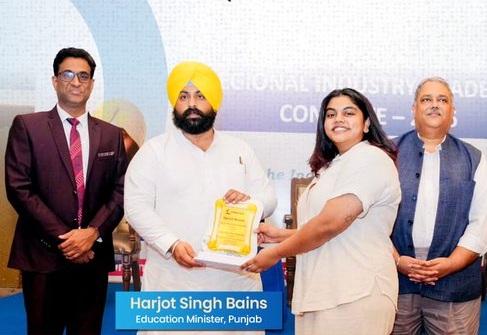
The state government has initiated a comprehensive Punjab technical education overhaul to modernize Government Polytechnics and Industrial Training Institutes (ITIs) across the region. Following significant achievements in foundational school learning, state authorities are focusing on technical skill development. This major initiative aims to transform state institutes into industry-aligned, innovation-driven centers for real-world employment.
The Punjab State Board of Technical Education and Industrial Training (PSBTEIT) recently hosted a Regional Industry-Academia Conclave. The gathering brought together leading corporate employers, industrial leaders, and academic administrators. Participants focused on resolving the disconnect between classroom qualifications and practical workplace demands.
[Classroom Theory] ───► [Outdated Curricula] ───► Skills Gap
│
▼
[Industry Collaboration] ──► [Practical Experience] ──► Job-Ready Talent
Transforming Classrooms into Industry Innovation Hubs
| Metric / Objective | Historical Benchmark | Current Status (2026) | Target Goal |
| National Technical Education Rank | Ranked 27th Nationally | Ranked 3rd Nationally | Target No. 1 Position |
| Mandatory Student Internships | Short/Optional Visits | 1 Full-Semester Mandate | 100% Industry Exposure |
| Faculty Annual Skill Training | Minimal / Sporadic | 40+ Hours Required | Continuous Upskilling |
State leaders highlighted that institutes are evolving beyond theoretical instruction. Students now train directly on machinery and technological tools used in active commercial environments. As part of the Punjab technical education overhaul, industry partners actively participate in updating modern course curricula.
National rankings reflect these structural improvements. Punjab advanced from 27th position to 3rd nationwide in technical learning performance. Education Minister Harjot Singh Bains confirmed that the government aims to achieve the top national ranking while ensuring every graduate secures meaningful employment.
Inauguration of Specialized Innovation Labs
| Location of Innovation Lab | Specialized Focus Area | Facility Investment | Key Technology Tools |
| Khunimajra (Kharar) | Advanced Prototyping | ₹1.5 Crore Joint Fund | 3D Printers & Industrial Kits |
| Bathinda | Industrial Problem Solving | Integrated Lab Infrastructure | High-Precision Machinery |
| Ferozepur | Applied Technical Skills | Maker Space Ecosystem | Digital Design Workstations |
| Badbar | Hardware Innovation | Technical Skill Training | Interactive Testing Equipment |
| Talwara | Student Entrepreneurship | Maker Bhavan Collaboration | Rapid Prototyping Systems |
To accelerate hands-on training, the state introduced advanced Innovation Labs at five key polytechnics. Established in partnership with Vibha India and the Maker Bhavan Foundation, these maker spaces enable students to move beyond conventional textbook assignments. Students utilize 3D printing, advanced prototyping tools, and industry-grade testing gear to develop practical solutions for actual market challenges.
These facilities function as dynamic spaces that promote critical thinking and technical problem-solving. Moreover, full-semester internships are now mandatory for diploma candidates. Teaching staff must also complete over 40 hours of annual professional development at premier institutions like IIT Ropar, IISER, and NIFT.
Strategic Industry Partnerships Drive State Progress
| Partner / Stakeholder | Core Contribution Area | Long-Term Strategic Goal |
| Industry Associations | Curriculum Design & Internship Placements | Modern Skill Alignment |
| Premier Academic Partners (IIM/IIT) | Leadership & Faculty Development | High-Quality Pedagogy |
| Government & PSBTEIT | Funding & Infrastructure Upgrade | Sustainable Employment Engines |
The overarching Punjab technical education overhaul operates under the broader Punjab Sikhya Kranti mission. State leadership continuously collaborates with key sectors, including automotive manufacturing, pharmaceuticals, renewable energy, and information technology. Furthermore, institutional leaders receive specialized administrative training at top management hubs like IIM Ahmedabad and IIM Amritsar.
Officials emphasize that this regional conclave establishes an ongoing partnership rather than a single event. Regular feedback from industrial employers will guide continuous updates to technical training. Consequently, Punjab is building an adaptable educational model that matches modern economic needs and prepares youth for future career success.