
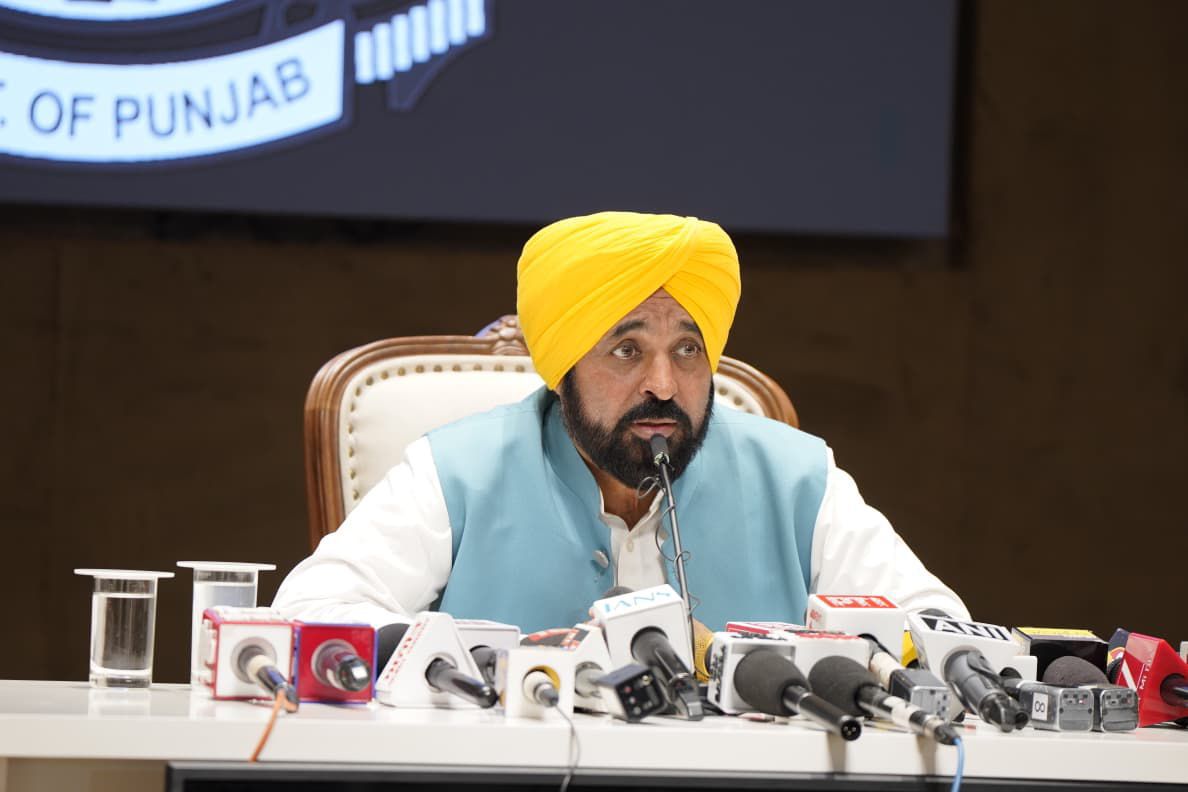
CHANDIGARH — In a major administrative intervention to tackle the intense Punjab heatwave, Chief Minister Bhagwant Mann announced a comprehensive shift in operational hours across the state. Starting Monday, May 25, 2026, all government offices, schools, and colleges will function under a revised window from 7:30 AM to 1:30 PM. The decision comes as scorching summer temperatures routinely climb past 43°C across North India, presenting severe health risks to young students and public employees. The modified schedule ensures that citizens can commute safely before the peak afternoon radiation hours.
The Chief Minister shared the directive directly via his official social media channels after consulting with administrative stakeholders. He emphasized that the primary goal is protecting schoolchildren and the general public from prolonged exposure to hazardous daytime conditions. Consequently, the School Education Department has issued instructions applying this change uniformly to all classes across government, aided, and private institutions. This seasonal adjustment follows similar public safety measures enacted during extreme weather spikes in recent years.
Alleviating Power Grid Infrastructure Demands
Beyond immediate public comfort, the revised institutional hours serve a vital infrastructure management purpose. Data from the Punjab State Power Corporation Limited (PSPCL) indicates that peak electrical grid load begins accelerating sharply after 1:00 PM. By shutting down major government administrative buildings and educational complexes by 1:30 PM, the state expects to drastically curb peak afternoon cooling demands. This operational reduction will significantly ease pressure on the state’s power transmission infrastructure.
Medical professionals have strongly backed the transition, noting that the ongoing Punjab heatwave carries elevated risks of heat exhaustion and dehydration. Moving public-facing service windows to the cooler early morning allows citizens to complete essential paperwork without enduring the punishing noon heat. Additionally, local civic bodies have been instructed to optimize drinking water distribution channels and set up medical relief kiosks at major transport intersections to assist commuters.
Enhancing Employee Welfare and Administrative Output
The structural shift from the standard 9:00 AM – 5:00 PM routine is also designed to maximize administrative efficiency. Officials note that total weekly working hours remain unchanged, ensuring that public service delivery is not compromised. Instead, employees are expected to exhibit better productivity during the cooler morning interval. Chief Minister Mann highlighted that finishing duties earlier allows working parents to sync their schedules with their children, who will be returning home at the exact same time.
Transitioning an entire state’s corporate and civic ecosystem requires precise administrative synchronization. State transport corporations have already realigned public bus frequencies to accommodate the early morning rush and the 1:30 PM exit. While private institutions have been urged to comply voluntarily to maintain uniformity, field officers are actively monitoring compliance across key urban centers like Ludhiana, Amritsar, and Jalandhar to ensure public safety guidelines are strictly respected.
Conclusion: Proactive Governance Amid Extreme Weather Patterns
As the severe Punjab heatwave continues to strain regional resources, this rapid policy pivot showcases a progressive approach to climate-adaptive governance. Chief Minister Bhagwant Mann’s decisive intervention prioritizes citizen well-being while introducing a sensible methodology for energy conservation. Moving forward, the administration intends to review weather data periodically alongside meteorological agencies to determine the timeline for these temporary measures. For now, Punjab’s workforce and student body are preparing to adjust to the new early morning rhythm.