
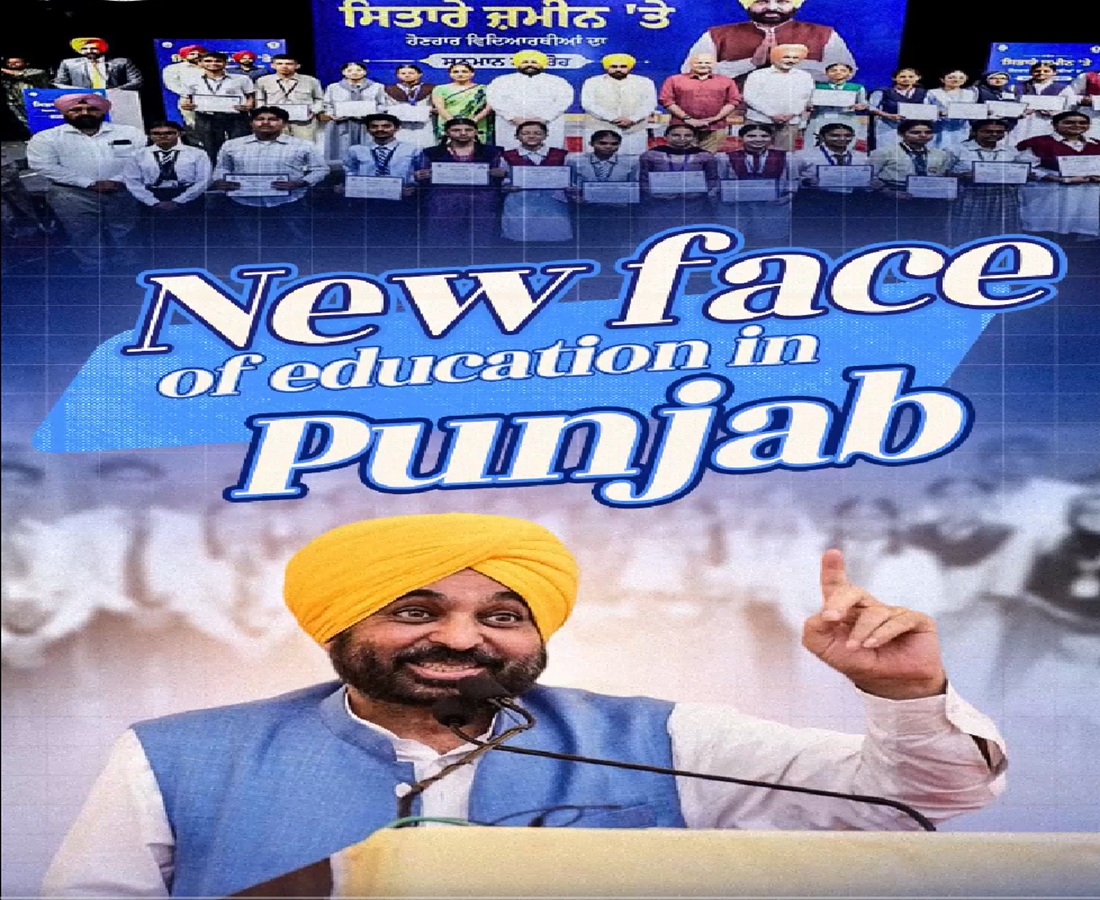
CHANDIGARH — Punjab has achieved the top position in the NITI Aayog School Education Quality Index 2026. Consequently, the state surpassed previous educational leaders through extensive structural reforms. The Punjab Education Revolution has achieved a monumental milestone in public schooling. Four years ago, the state public school system faced severe infrastructure deficiencies. Public school infrastructure suffered from decades of chronic underfunding and administrative neglect.
For instance, over 8,000 schools lacked proper boundary walls in 2022. Additionally, nearly four lakh children sat on cold classroom floors daily. Furthermore, textbooks often arrived late, delaying precious academic instruction. Many rural facilities lacked drinking water, proper sanitation, and secure classroom doors. However, sustained policy focus has replaced systemic decay with modern educational standards.
Today, the state government has completely transformed this dire educational landscape. Infrastructure investments now exceed 3,638 crore rupees across state institutions. Therefore, modern classrooms, boundary walls, and functional amenities now standardly serve every student.
Under the leadership of Chief Minister @BhagwantMann, Punjab has achieved the No. 1 rank in the NITI Aayog School Education Quality Index 2026. While 8,000 schools had no boundary walls and 4 lakh children sat on the floor in 2022, today Punjab has 882 NEET qualifiers from… pic.twitter.com/NVsL9rkjYw
— Government of Punjab (@PbGovtIndia) August 12, 2026
From Infrastructure Deficits to National Benchmarks
The state government systematically targeted physical deficiencies across thousands of rural schools. In addition, state authorities addressed basic sanitation by repairing 3,200 non-functional school toilets. Clean drinking water units now operate across all government primary and secondary facilities. State inspectors ensure that physical infrastructure meets high national quality metrics continuously.
For example, textbook distribution now completes before the academic session begins. Specifically, books reach district hubs by mid-February. Subsequently, schools receive complete sets before April first. Moreover, state education officials personally inspected over 2,000 schools across border regions. This hands-on monitoring identified urgent ground-level requirements quickly. Teacher accountability has improved through regular performance assessments and digital attendance tracking.
Meanwhile, basic foundational learning received immediate intervention through specialized state initiatives. Under Mission Samarth, students learn through level-based groupings rather than traditional grades. Consequently, over twelve lakh students master foundational reading and mathematics rapidly. This rapid rise reflects the success of the ongoing Punjab Education Revolution. Furthermore, over 70,000 teachers participate in continuous specialized pedagogical training annually.
Comparative Overview of State School Education Parameters
| Strategic Educational Indicator | Status in Year 2022 | Transformation Status in 2026 |
| National NITI Aayog Rank | Rank 27 Statewide | Rank 1 National Leader |
| School Boundary Walls | 8,000 Lacking Walls | Fully Constructed State-Wide |
| Seating Infrastructure | 4 Lakh Students on Floor | Modern Classrooms & Furniture |
| NEET Qualification Numbers | 80 Candidates | 882 Govt School Qualifiers |
| Artificial Intelligence Scope | No AI Curriculum | Core Subject (Classes I to XII) |
Pioneering Artificial Intelligence in School Curriculums
In July 2026, Punjab became the first Indian state to introduce Artificial Intelligence statewide. Under the Sarbat AI project, AI education is now a mainstream core subject. Specifically, the program spans from Class 1 through Class 12. Consequently, the Punjab Education Revolution prioritizes modern technology alongside foundational learning.
The curriculum rollout occurs across strategic phased implementations. Initially, senior students in Classes 8 through 12 integrate AI into computer science. Furthermore, digital learning portals and project assessments support classroom instruction. Subsequently, foundational classes from Grade 1 through Grade 7 will adopt age-appropriate AI lessons.
The innovative Sarbat AI program introduces algorithmic thinking to young learners early. Students learn ethical AI applications alongside foundational computer coding skills. Leading global technology firms provide pedagogical assistance and dynamic learning platforms. Therefore, public school students gain early competitive exposure to advanced technology. Consequently, state classrooms now foster digital creativity alongside conventional academic subjects.
Historic Surges in National Competitive Examinations
Academic outcomes in national entrance tests have reached unprecedented historic heights. For instance, 882 government school students qualified for NEET in 2026. In contrast, only 80 government school candidates cleared the exam in 2021. Furthermore, the Punjab Education Revolution focuses heavily on competitive examination preparation.
Through the Punjab Academic Coaching for Excellence initiative, candidates receive specialized preparation. Free coaching programs and structured mentorship eliminate financial barriers for poor families. Notably, 686 of the successful NEET qualifiers this year are female candidates. Additionally, 340 successful students belong to the Scheduled Caste community.
Similarly, engineering aspirants achieved impressive success in JEE entrance examinations. Over 780 government school students cleared JEE tests during the past three years. Dedicated faculty members provide after-school coaching sessions for ambitious rural candidates. Thus, merit and dedication now determine competitive examination success across the state. State authorities also installed interactive smart panels in over 8,000 classrooms. Furthermore, over 5,000 state schools now house fully functional computer laboratories.
Transparent Recruitment and Federal Educational Leadership
Systemic administrative reform has reinforced academic progress across all administrative districts. The state government recruited over 28,000 permanent teachers through transparent merit mechanisms. Moreover, over 68,000 total public jobs were filled without political influence. Fair recruitment processes have eliminated political patronage in educational appointments completely. Teachers receive appointments strictly based on competitive examination rankings and merit. Consequently, restored institutional trust encourages qualified educators to serve diligently.
Additionally, state leaders capped private school fee increases at five percent annually. This legislative action prevents commercial exploitation in primary education. Furthermore, parents now express strong confidence in state-run educational facilities. Public school enrollments have surged as parents transfer children from costly private schools. Indeed, the Punjab Education Revolution demonstrates how targeted investments transform public institutions. Punjab now serves as a national benchmark for comprehensive public education reform. Ultimately, Punjab sets a historic precedent for sustainable public education reform across India.