
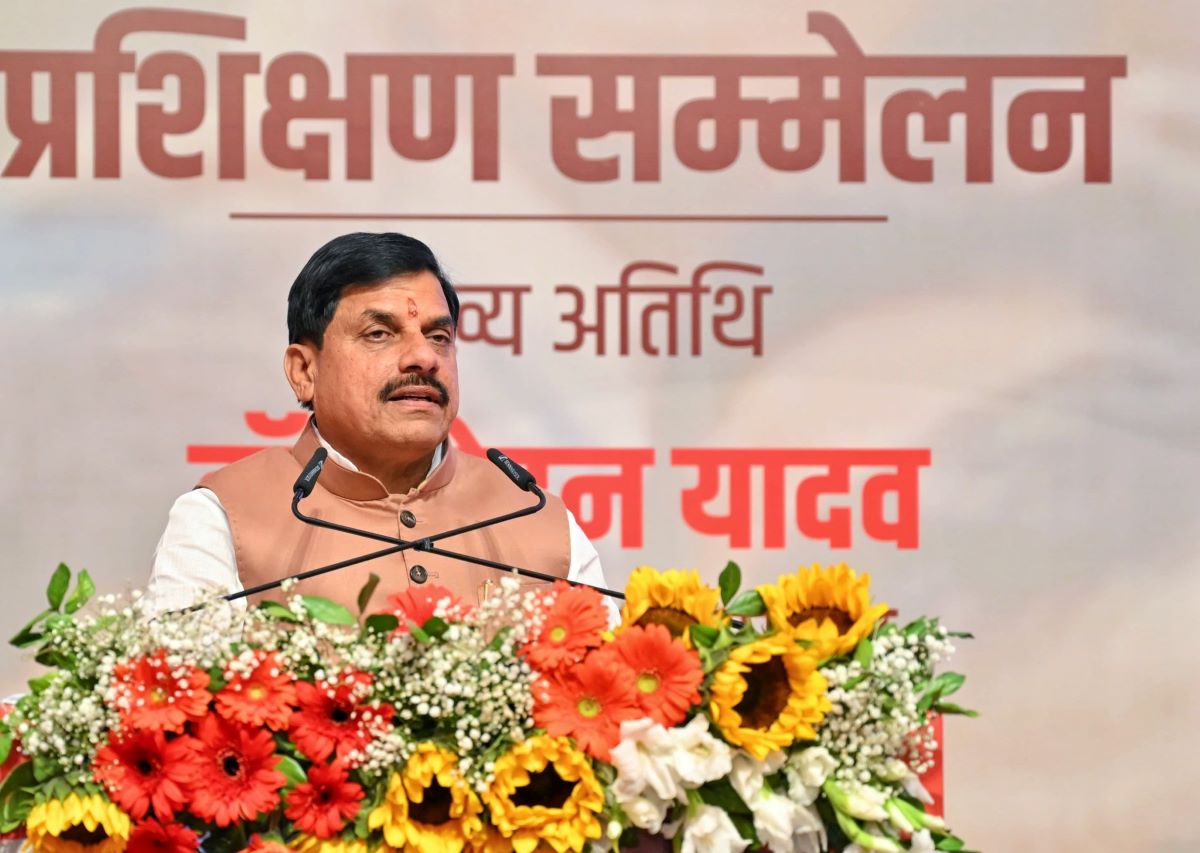
Bhopal: Chief Minister Dr. Mohan Yadav emphasized the critical importance of the Census during a state-level training conference for the first phase of Census-2027. He said that the Census is the largest and most significant data exercise in the country, forming the basis for government schemes, resource allocation, and strategic planning for inclusive development. With India now being the most populous nation globally, this Census carries both national and international significance.
The conference, held at Kushabhau Thakre Convention Centre, was inaugurated by Dr. Yadav with a lamp-lighting ceremony, followed by the screening of a short film explaining the Census-2027 process. Senior officials including Chief Secretary Anurag Jain, Census Commissioner Mrityunjay Kumar Narayan, Additional Chief Secretaries Neeraj Mandloi and Sheoshekhar Shukla, along with Divisional Commissioners, Collectors, Municipal Commissioners, and other administrative officers, attended the session.
CM Dr. Mohan Yadav Emphasizes Digital Census and Accurate Data for Infrastructure Planning
Dr. Mohan Yadav highlighted Prime Minister Narendra Modi’s historic decision to conduct a Digital Census, noting that a social-level Census had last been conducted in 1931. He stressed the importance of assessing villages, hamlets, and deserted settlements, as plans for roads, hospitals, schools, and other infrastructure depend on accurate Census data. According to the CM, the Census is more than counting; it reflects administrative sensitivity, credibility, commitment, and transparency. Officers were urged to implement special strategies in sensitive areas and complete the work within the scheduled timeline, with field administrators being the key to success.
Dr. Mohan Yadav also directed officials to prepare for the upcoming Budget Session of Madhya Pradesh Vidhan Sabha from February 16 to March 6 and ensure law-and-order arrangements during Mahashivratri and Holi. He called for monitoring adulteration in sweets and colors and maintaining social harmony. Additionally, the CM congratulated officers for implementing the Bhavantar Yojana, improving Viksit Bharat G-Ram-G Yojana, and ensuring proper arrangements for farmers under the Krishak Kalyan Year 2026, including promoting urad, groundnut, and maize crops, and controlling stubble burning. Revenue collection targets in mineral, registration, and excise sectors were also highlighted.
आज भोपाल स्थित कुशाभाऊ ठाकरे सभागार में ‘जनगणना-2027’ पर केंद्रित राज्यस्तरीय प्रशिक्षण सम्मेलन का शुभारंभ किया।
आदरणीय प्रधानमंत्री श्री @narendramodi जी के नेतृत्व में देश में ऐतिहासिक जनगणना होने जा रही है। मुझे पूर्ण विश्वास है कि इसके क्रियान्वयन में मध्यप्रदेश, देश के लिए… pic.twitter.com/dUFaBoohX9
— Dr Mohan Yadav (@DrMohanYadav51) February 13, 2026
Chief Secretary Anurag Jain noted that the Census and elections are the most complex administrative tasks and serve as opportunities for officers to showcase efficiency. He emphasized the importance of technology in the upcoming digital Census and the inclusion of nearly 1.27 lakh hamlets and tolas, along with GIS data, to improve planning. Accurate information from citizens was called critical for better results.
Also read : Padma Shri Awardee Satyendra Singh Lohia Makes Historic Cook Strait Crossing
Census Commissioner Mrityunjay Kumar Narayan said that the Census is a constitutional responsibility and the foundation for national progress. It determines the allocation of Assembly and Lok Sabha constituencies and guides policymaking and implementation of government schemes. For the first time, the Census will be conducted digitally, including a self-enumeration option, and a caste Census will also be undertaken. Director of Census Operations, Kartikeya Goyal, added that the first phase of house listing in Madhya Pradesh will take place from May 1 to May 30, 2027.
Census 2027 to Be Conducted in Two Phases
The Census of India, the largest administrative exercise in the world, will be conducted in two phases. Notification for the Census has been issued under Section 3 of the Census Act, 1948. In the first phase, enumerators will visit households to record data on house conditions, amenities, and assets. The second phase, scheduled for February 2027, will involve population enumeration, collecting information on age, gender, marital status, religion, disability, mother tongue, literacy, education, economic activity, migration, fertility, and other demographic details.