
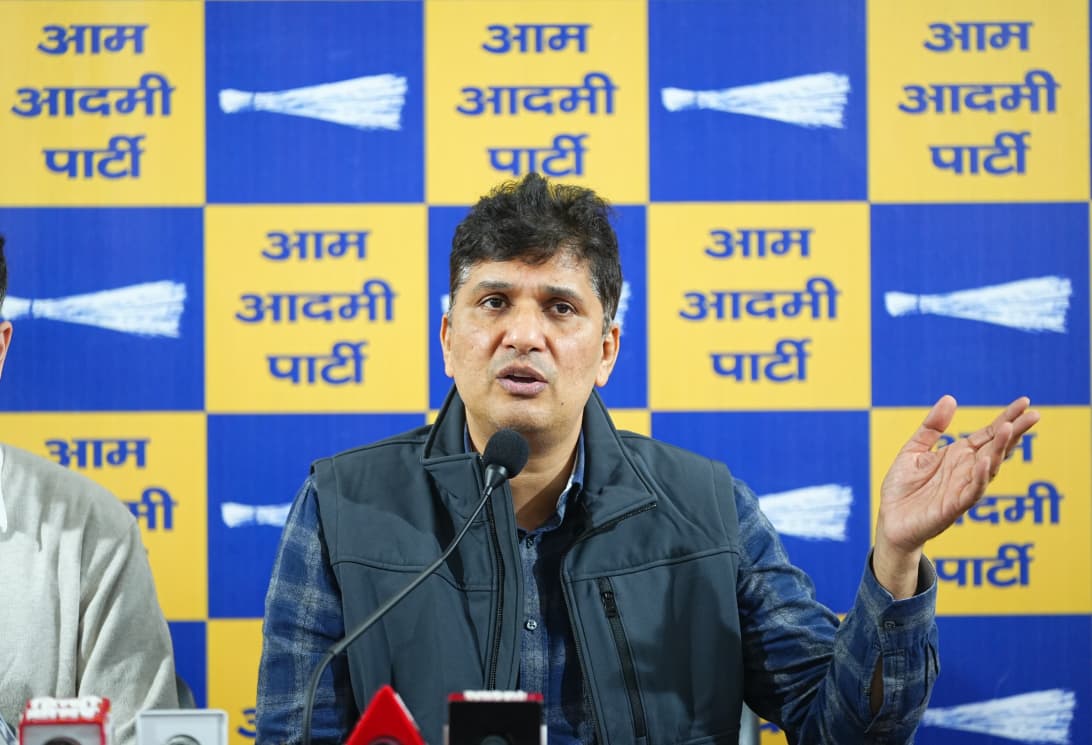
Delhi Aam Aadmi Party (AAP) leader Saurabh Bharadwaj on X (formerly Twitter) accused the Bharatiya Janata Party (BJP) of exploiting Arya Samaj platforms for political purposes. According to him, the BJP conducted several political programs in Delhi with the support of Arya Samaj, including events inside Arya Samaj temples, and even used the occasion to deliver communal and politically charged speeches, contradicting the organization’s founding philosophy.
Political Events Inside Religious Spaces
Saurabh Bharadwaj highlighted that BJP’s political programs inside Arya Samaj temples went against the core principles of the movement established by Swami Dayanand Saraswati. “They have used religious platforms for political propaganda, which is completely against Arya Samaj’s ideology,” he wrote.
आर्य समाज ने दिल्ली में भाजपा के लिए खूब कार्यक्रम किए । यहाँ तक कि आर्य समाज मंदिर के अंदर भाजपा के राजनैतिक कार्यक्रम किए गए। आर्य समाज की मूल विचारधारा के ख़िलाफ़ भी भाजपा की सांप्रदायिक भाषणबाज़ी की गई ।
भाजपा ने क्या दिया ?
आज आर्य समाज के संस्थापक स्वामी दयानंद सरस्वती… pic.twitter.com/S8KbQSKtNk
— Saurabh Bharadwaj (@Saurabh_MLAgk) February 12, 2026
Liquor Stores Opened on Religious Occasions: Saurabh Bharadwaj
Further criticizing BJP’s governance, Saurabh Bharadwaj pointed out that today, on the birth anniversary of Arya Samaj founder Swami Dayanand Saraswati, all liquor shops in Delhi were opened. He noted that during the tenure of Chief Minister Arvind Kejriwal, such shops remained closed on these occasions. He also mentioned that liquor stores were opened during other significant religious events such as Chhath Puja and Ravidas Jayanti under the BJP government, sparking criticism from citizens who view the move as disrespectful to religious sentiments.
Also read : AAP Alleges BJP Negligence After Fatal Incidents in Delhi, Calls Out Open Drains and Civic Failures
AAP Accuses BJP of Mismanagement and Disrespect
Through his posts on X, Saurabh Bharadwaj suggested that the BJP’s actions reflect a trend of prioritizing political gains over social and cultural respect, highlighting concerns about the misuse of religious spaces and policies affecting citizens’ sentiments.