
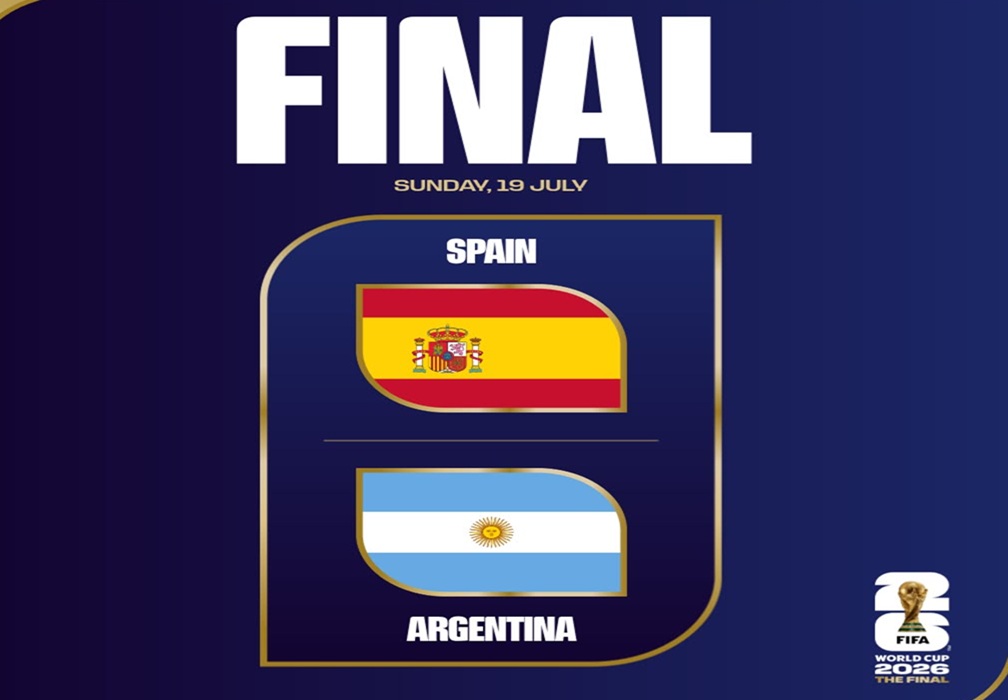
The highly anticipated football tournament reaches its grand conclusion at MetLife Stadium in New Jersey on Sunday. Defending champions Argentina will face the formidable European giants Spain in an epic championship showdown. Consequently, the lucrative FIFA World Cup 2026 final prize money has become a primary topic of discussion globally. Both national teams have already guaranteed themselves an incredibly historic payout by reaching the final match. Furthermore, the ultimate winner of this historic match will secure the largest single payoff in football history.
The defending Champions & the challengers. #FIFAWorldCup pic.twitter.com/NzuPaVmxM2
— FIFA World Cup (@FIFAWorldCup) July 19, 2026
Specifically, the victorious squad will take home a staggering fifty million dollars in direct performance rewards. Meanwhile, the runner-up team will receive a massive thirty-three million dollars for their incredible tournament run. Therefore, the combined payout for the two final teams reaches an unprecedented eighty-three million dollars. This spectacular financial reward sets a completely new benchmark for international sports entertainment events. Additionally, it represents a substantial increase compared to the earnings from the previous tournament in Qatar. Indeed, the champion’s earnings will exceed the 2022 winning payout by a remarkable eight million dollars.
Breakdown of the Historical Financial Pool
This year’s global showpiece has completely shattered all previous financial records in international sports economics. Initially, the governing body announced a standard prize fund of seven hundred twenty-seven million dollars. However, the management council later approved a massive budget expansion for all participating federations. They raised both the base participation fees and the essential team preparation grants significantly. Consequently, the total financial allocation has soared to a record eight hundred seventy-one million dollars.
Moreover, this expanded fund ensures that every single phase of the competition features higher financial stakes. The administration divided the massive pool into two distinct, highly strategic funding categories. Performance-based rewards account for seven hundred three million dollars of the total available cash. Additionally, the organizers allocated one hundred sixty-eight million dollars specifically for non-performance financial support. This dual structure ensures that lesser-funded football associations receive vital assistance for basic travel logistics. Therefore, the total FIFA World Cup 2026 final prize money system supports the entire global football ecosystem.
Complete Distribution Across the Forty-Eight Nations
The expansion to forty-eight teams has naturally allowed more countries to secure substantial financial rewards. For instance, teams eliminated during the intense group stages are guaranteed ten million dollars each. Subsequently, the nations knocked out in the Round of 32 will collect eleven million dollars. Moreover, the teams that successfully reached the Round of 16 will secure fifteen million dollars. These guaranteed figures provide immense financial stability to growing football nations across various continents.
| Tournament Finish | Number of Teams | USD Payout (Per Team) | Approx. INR Payout |
| Champion | 1 | $50 Million | ₹4,814 Crore |
| Runner-up | 1 | $33 Million | ₹3,177 Crore |
| Third Place | 1 | $29 Million | ₹2,792 Crore |
| Fourth Place | 1 | $27 Million | ₹2,599 Crore |
| Quarterfinalists | 4 | $19 Million | ₹1,829 Crore |
Meanwhile, the four squads knocked out in the high-stakes quarterfinals will earn nineteen million dollars each. Furthermore, the final weekend features separate high-paying matches for the top four remaining nations. Fourth-placed France will receive twenty-seven million dollars after their grueling semi-final campaign concluded. However, England secured a higher reward of twenty-nine million dollars by winning the third-place play-off. The Three Lions defeated Les Bleus 6-4 in a truly enthralling, high-scoring match in Miami. Consequently, the final cash distributions highlight the immense economic value generated by the FIFA World Cup 2026 final prize money structure.
Guaranteed Payouts and Team Infrastructure Support
Importantly, the organizing committee ensures that no nation leaves the tournament empty-handed or financially strained. Every single one of the forty-eight qualified nations receives a baseline preparation grant. Specifically, this initial grant provides two and a half million dollars to cover early training camps. Additionally, the federation provides sixteen million dollars in dynamic contributions for general operational expenses. Therefore, every country enters the tournament with a guaranteed minimum of twelve and a half million dollars.
This systematic funding helps local associations manage expensive long-distance travel, elite accommodation, and support staff logistics. Consequently, smaller nations can compete on an even playing field against wealthy traditional football powerhouses. The substantial growth in available funds stems directly from massive global broadcast rights and commercial sponsorships. Experts estimate that the governing body will easily surpass its multi-year revenue projections by a wide margin. Clearly, this commercial success allows for a much more generous FIFA World Cup 2026 final prize money allocation.
Long-Term Impact on Global Football Development
Ultimately, the distribution of these massive funds will shape the future of the sport for decades. The international governing body does not pay these multi-million-dollar rewards directly to individual players. Instead, the organization transfers the entire sum directly to each country’s national football association. Subsequently, each domestic association independently decides how to share the wealth among coaches and players. Typically, squads negotiate an internal bonus structure ranging between twenty and thirty percent of the total revenue.
Moreover, progressive federations utilize the remaining millions to fund vital grassroots development programs. They build modern training academies, improve youth scouting networks, and upgrade local stadium infrastructure. Therefore, the massive earnings from the FIFA World Cup 2026 final prize money pool will yield long-term benefits. Millions of young fans will enjoy better playing fields and superior coaching systems in their hometowns. This continuous reinvestment loop ensures that the sport remains healthy, popular, and commercially viable globally. As the final whistle approaches in New Jersey, the economic power of modern football remains absolutely undeniable.