
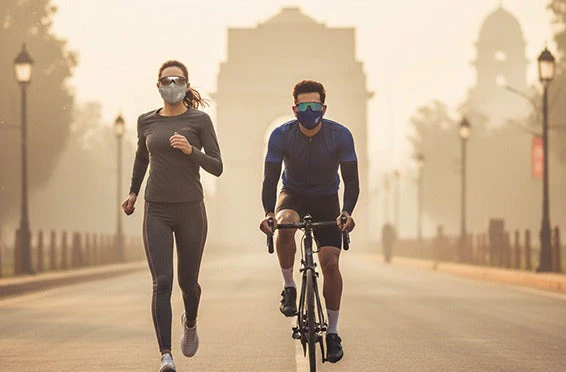
Delhi’s winter haze makes exercise tough. Follow these tips to protect your lungs, stay hydrated, and work out safely in polluted air.
Winter Exercise in Air Pollution: Delhi is still covered in heavy pollution and fog, which affects visibility and day-to-day activities. The Air Quality Index (AQI) for Delhi was 377 on Tuesday morning, falling into the “very poor” range. Exercise in the face of air pollution, particularly in Delhi, is a barrier in addition to the challenges of daily living. Wintertime low temperatures cause blood arteries to shrink, raising blood pressure and making it harder to stay warm. Because clothing is worn in layers, blood flow may be restricted, making breathing difficult. Additionally, the absence of moisture dries up joints, which causes coughing during working out.
Delhi experiences high levels of haze and air pollution, which make it difficult to exercise because of the settling toxins close to the ground’s surface. In addition to causing inflammation and dyspnea, the sensitive PM2.5 particles penetrate the bloodstream and lungs. Additionally, exercising in Delhi’s polluted air can lead to health problems including asthma or heart problems. Here, we’ll explain which exercises are more difficult in Delhi and offer advice on how to work out properly when the air is polluted.
Why Do Winter Exercises Feel More Difficult?
Stores of Glycogen
People use their limited glycogen stores more quickly in cold winter air, especially when there is air pollution, than they do at low intensities, when they are powered by fat. Increased dependence on carbohydrates results in faster depletion, which causes the “bonk” or “hitting the wall,” making exercises more difficult and fuel running out more quickly.
Acid Lactic
Blood lactate levels increase to indicate a higher exertion over a specific intensity. Although lactate is a useful fuel, its synthesis acidifies working muscles, resulting in burns and increased fatigue due to inefficiency. As a result, lactate levels rise earlier in the winter, particularly in areas like Delhi, making efforts feel more difficult and leading to burnout more quickly.
Fibres of Muscle
Fast-twitch fibers are used for explosive sports like sprints, which quickly exhaust people, and fatigue-resistant slow-twitch fibers are used for endurance activities like easy running or skiing. Fast-twitch fibers are used for quick, explosive exercises like power lifting and sprinting in extremely cold temperatures, which quickly wears people out and depletes their energy.
Rate of Metabolic
Cold weather causes an increase in basal metabolic rate, which uses more calories just to stay alive. Additionally, it most likely depletes the energy of the cardiorespiratory system and working muscles. This makes it much harder to sustain intensity, which heightens the sense of pain in the cold.
Inhale
People breathe more heavily when working out in the winter. Breathlessness results from the chilly air constricting airways in vulnerable individuals, which makes hair movement more difficult. Dehydration is also exacerbated by increased ventilation.
Also read’ : Wet Hair at Night: Why You Should Avoid Going to Bed with Damp Tresses
How to Work Out Safely When There Is Air Pollution
Slow Down and Layer Up
To keep your muscles warm, use layers of clothing. Additionally, slow down your movement to prevent perspiration. When engaging in physical activities, these permit the inhalation of harmful air contaminants to a minimum.
Before beginning, refuel.
Take part in activities that guarantee adequate fuel. Winter favors cardio since it burns carbohydrates more quickly; nevertheless, avoid cardio after 20 to 30 minutes. Keep emergency energy drinks on hand for prolonged activities, and make sure your breathing doesn’t become labored, allowing more contaminants to enter your system.
Maintaining Hydration Right Away
Breathing becomes more rapid due to the extreme dryness and lack of humidity, which suppresses thirst. Therefore, preventing the consequences of dehydration and the buildup of pollutants in the respiratory tract requires drinking a lot of water beforehand.
Keep Your Mouth Shut
Breathe through a scarf or buff over your face to reduce fluid loss and bronchoconstriction by preheating and humidifying your inhalations. Additionally, the buff traps pollution particles, which are then lowered by inhaling them when exercising.
Leave Out High-Intensity Stunts
Avoid hard sprints followed by active recovery during high-intensity intervals where you are cooling down, breathing deeply, and sucking in pollutants. Instead, continue at a constant pace to maximize efficiency and reduce air exposure.