
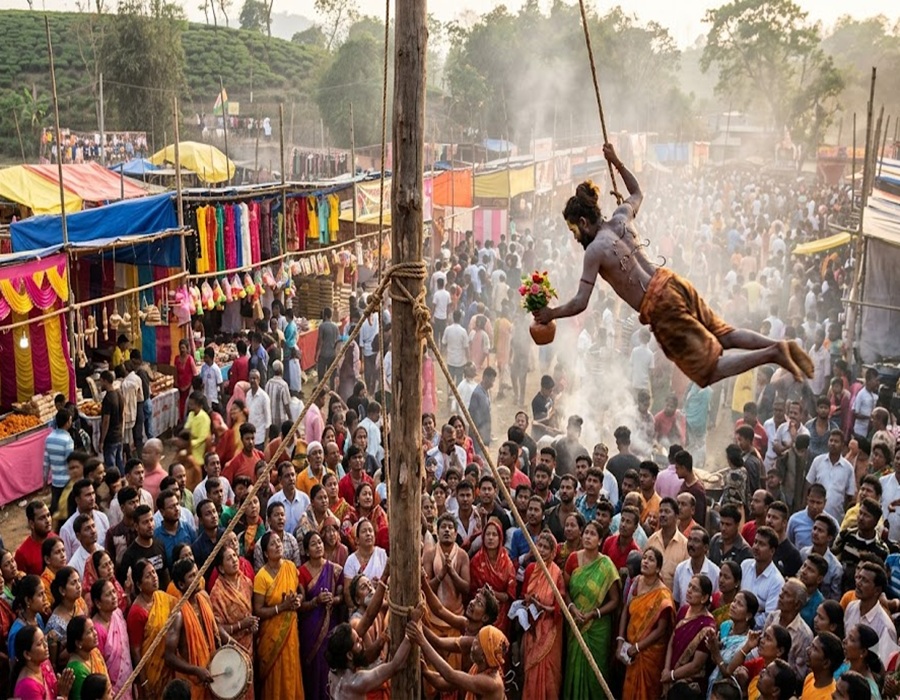
SILCHAR — The vibrant landscape of Assam’s Barak Valley transformed into a hub of spiritual austerity as part of the Bengali New Year celebration . Thousands of devotees gathered to celebrate Charak Sankranti 2026, a significant folk religious festival that marks the end of the Bengali calendar year. From the early hours of Chaitra Sankranti, the air in districts like Cachar, Karimganj, and Hailakandi resonated with the sounds of traditional drums and chants dedicated to Lord Shiva. This festival serves as a bridge between the passing year and the promise of a prosperous New Year. Moreover, it remains a powerful symbol of the region’s deep-rooted agrarian and mythological heritage.
The festivities reached their climax with the installation of the “Charak Tree,” a tall pole representing the cosmic axis. Devotees, known as Gajan Sanyasis, participated in dramatic reenactments of cosmic sacrifices. These rituals often include fire-walking and body piercings, which participants undergo with remarkable stoicism. While these practices appear intense, practitioners view them as acts of ultimate purification. They believe that such penance ensures the well-being of the community and protects them from diseases in the coming year.
The Ritualistic Climax: Hook-Swinging and Neel Puja
The journey toward Charak Sankranti 2026 began on the evening of April 12 with Neel Puja. On this day, women fast and offer prayers to Shiva as “Neelkantha” to seek longevity for their family members. Subsequently, the final day witnesses the “Charak” or hook-swinging ritual. Historically, this practice involved piercing the skin of devotees with metal hooks. However, in many urban pockets of the Barak Valley today, symbolic enactments have replaced the physical piercing to ensure safety while preserving the spiritual essence of the tradition.
Across rural pockets, the Charak Sankranti Mela (fairs) offered a captivating blend of devotion and commerce. Local artisans and traders set up stalls, creating a festive atmosphere that attracts visitors from neighboring states like Tripura and Meghalaya. These fairs are essential to the social fabric, facilitating a vibrant cultural exchange among various communities. Additionally, the festival is closely linked to the Gajan Festival of Shiva, which traces its prominence in the region back to the 12th century.
Preserving Folk Identity in a Modern Era
The Charak Sankranti 2026 celebrations highlight the resilience of folk traditions in the face of rapid modernization. Despite the influence of digital culture, the youth of the Barak Valley continue to participate in these ancient customs with enthusiasm. Community leaders noted that the festival provides a unique sense of identity and belonging. Furthermore, it acts as a platform for traditional performing arts, including dances that depict the folk tales of Lord Shiva and Goddess Kali.
As the sun set on Chaitra Sankranti, the immersion of the Charak pole in local ponds symbolized the cycle of death and rebirth. This agricultural custom is meant to infuse the soil with fertility before the spring planting season. By blending mythology with environmental awareness, the festival remains relevant to the local agrarian economy. For the people of Assam, the conclusion of the Charak rituals signifies that they are spiritually ready to welcome the Bengali New Year Poila Baisakh.
A Legacy of Faith and Resilience
In districts like Dibrugarh and the Mayong region, similar enactments drew massive crowds, underscoring the pan-Assam appeal of Shiva-Shakti worship. The government and local police ensured tight security at various “Mela” grounds to manage the surge of pilgrims. Looking ahead, scholars emphasize the need to document these visceral expressions of faith. They argue that Charak Sankranti 2026 is not just a religious event but a living museum of South Asian folk history.
As the state gears up for the New Year, the memories of the hook-swingers and the glowing embers of the fire-walkers remain etched in the public consciousness. This blend of bravery and belief continues to define the spirit of the Barak Valley. Whether through the arduous fasts or the vibrant fairs, the festival reaffirms that tradition remains the heartbeat of the community. For now, the echoes of “Har Har Mahadev” signal a hopeful transition into a new chapter of peace and prosperity.