
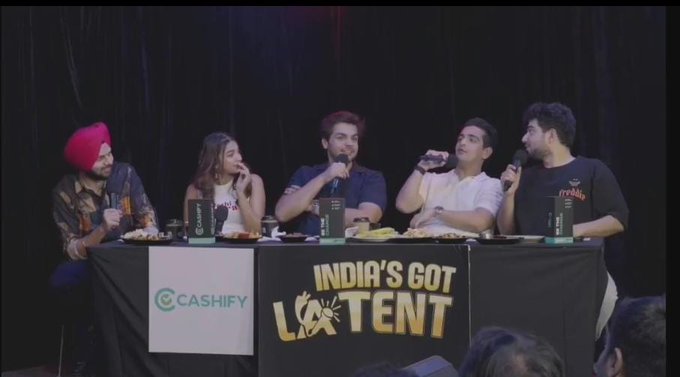
The Supreme Court on Monday came down heavily on social media influencer Ranveer Allahabadia during a hearing on petitions concerning dignity of disabled persons and alleged insensitive remarks on a popular YouTube show. The court expressed concern over casual apologies issued by influencers after controversial comments and asked the Union government about framing guidelines for responsible online conduct.
Background of the Case
The matter arose from petitions filed against comedians and podcasters, including Ranveer Allahabadia and stand-up comic Samay Raina, for their conduct during an episode of India’s Got Latent. The show allegedly featured remarks that mocked persons with disabilities and trivialised the high-cost treatment for Spinal Muscular Atrophy (SMA).
One of the petitions was filed by the Cure SMA India Foundation, which accused Raina of insensitivity towards patients and their families. The foundation highlighted the struggles of those suffering from SMA, a rare genetic condition requiring expensive treatment.
Senior Advocate Aparajita Singh, appearing for the foundation, told the bench that all respondents had issued apologies in response to the complaints.
Court’s Observations
A bench comprising Justice Surya Kant and Justice Joymalya Bagchi observed that Allahabadia “tried to portray himself as very innocent and then apologised.” The remark highlighted the court’s dissatisfaction with the influencer’s affidavit.
The Attorney General for India, R Venkataramani, informed the court that meetings with stakeholders had already taken place and that possible guidelines were being examined. However, he stressed that a complete gag on speech would be difficult to implement under Article 19 of the Constitution, which protects freedom of expression.
Justice Kant responded that guidelines should be forward-looking and not merely reactive. “Policy is for future challenges. That’s why we said even if you have some policy regime, we will get answers from experts as well,” he said. The court granted the Centre more time to submit its position on potential regulations.
Balancing Free Speech and Sensitivity
Justice Bagchi emphasised the thin line between humour and insensitivity. While acknowledging that “humour is part of life,” he warned against jokes made at the expense of marginalised communities.
“When you start making fun of others, there is a breach of sensitivity,” Justice Bagchi said. He further noted the commercialisation of online speech, stating that influencers profit from content and thus must act responsibly.
He reminded that commercial speech is treated differently under the law and does not enjoy the same protections as free speech. Referring to the Amish Devgan case, he reiterated that offensive speech for commercial gain cannot be justified under Article 19(1)(a).
Implications for Influencers and Content Creators
The Supreme Court’s intervention highlights the growing scrutiny of digital content creators in India. With millions of followers, influencers like Allahabadia and Raina wield significant influence over public opinion. The court’s remarks suggest that apologies alone may not suffice when content causes harm or ridicule to vulnerable groups.
Legal experts note that the case could set a precedent for future regulation of online speech, especially where commercial interests intersect with freedom of expression. While the court has not endorsed a blanket restriction, its insistence on policy measures indicates that influencers may soon face clearer accountability standards.
What Lies Ahead
The Centre is expected to return to court with possible guidelines addressing the balance between creative freedom and social responsibility. These could involve content moderation standards, codes of conduct, or penalties for violations.
As India’s digital media ecosystem expands, the ruling will be closely watched by creators, platforms, and policymakers. The outcome may shape the future of influencer culture in India, where humour and commentary often blur the line between entertainment and offence.