
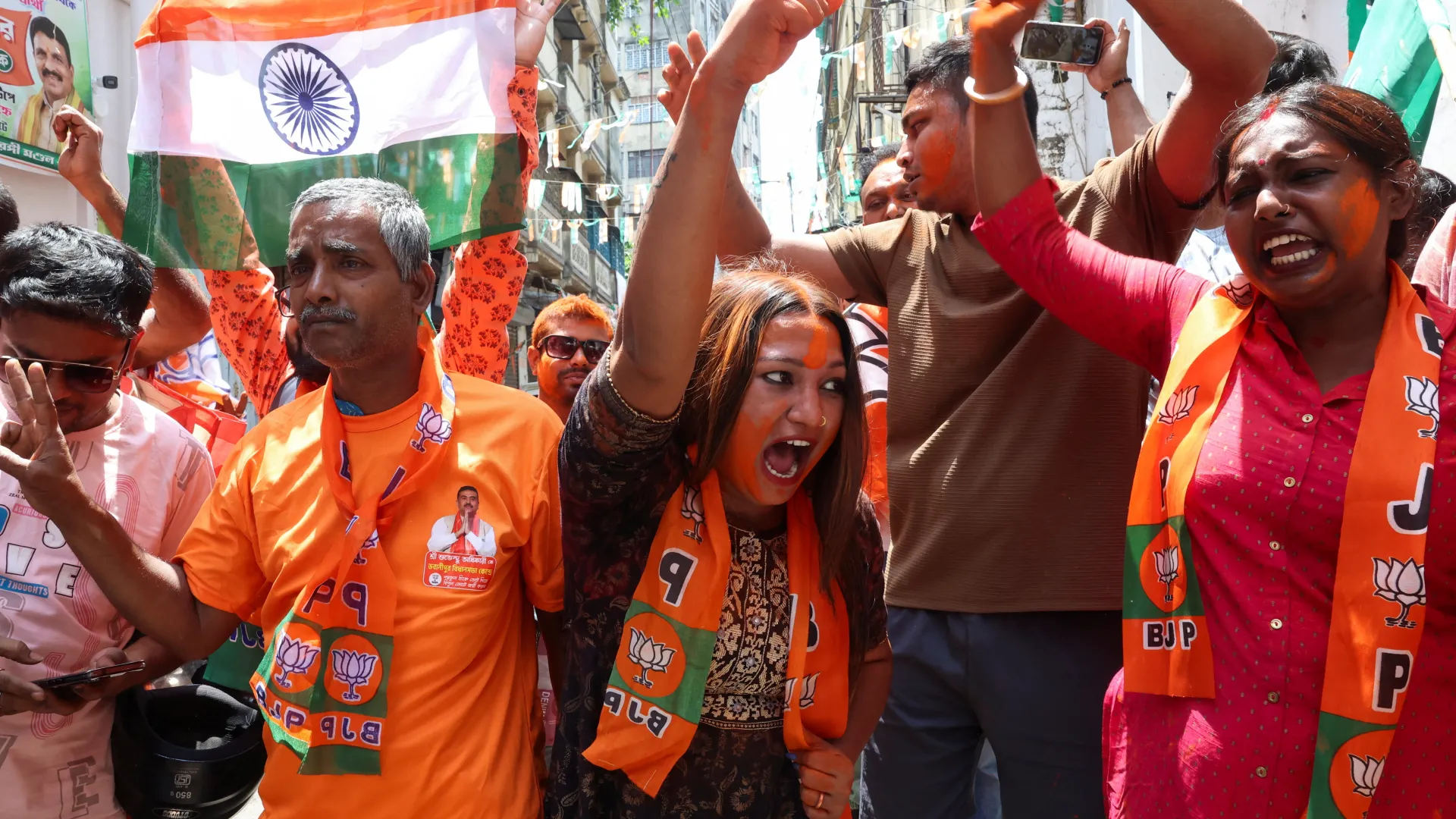
Political debate has intensified across India following BJP’s electoral performance in states like Delhi and West Bengal, with many analysts focusing on the effectiveness of BJP election strategy rather than the idea of a simple “wave” politics.
Observers argue that the recent victories are less about national sentiment alone and more about the carefully executed BJP election strategy, which combines grassroots organisation, cadre expansion, and targeted voter outreach.
Shift from Narrative Politics to Ground-Level Planning
The BJP’s success story is increasingly being linked to its structured planning at the booth level. The BJP election strategy focuses heavily on strengthening local presence, identifying key constituencies, and building long-term voter relationships.
This approach marks a shift from personality-driven campaigns to a more system-based political model, where the BJP election strategy prioritises organisational discipline and micro-level management.
West Bengal: Long-Term Expansion Model
West Bengal is often cited as a major example of the party’s evolving political approach. Historically, the BJP had limited presence in the state, but consistent organisational efforts changed the scenario over time.
The BJP election strategy in West Bengal involved strengthening cadre networks, expanding booth committees, and integrating leaders from other political parties. This helped the party build a stronger base across rural and urban regions.
Over time, targeted campaigns on issues like governance, migration, and border security became central to the BJP election strategy, helping the party expand its influence significantly.
Electoral Growth Through Strategic Positioning
From minimal representation to becoming a major political force, the BJP’s rise in West Bengal highlights the importance of long-term planning. The BJP election strategy focused on converting organisational presence into electoral gains through sustained voter engagement.
जिस दिल्ली और बंगाल को भाजपा ‘मोदी वेव’ की चरम सीमा पर नहीं जीत पाई.. 2015 में दिल्ली में और 2016 में बंगाल में इनकी 3-3 सीट आई..
उस दिल्ली और बंगाल को भाजपा ने तब जीत लिया जब मोदी जी की लोकप्रियता पूरे देश में पाताल में जा रही… कैसे?
— Arvind Kejriwal (@ArvindKejriwal) May 5, 2026
This systematic approach helped the party improve its vote share and establish itself as a strong competitor in state politics.
Delhi: Local Leadership and Issue-Based Campaigning
In Delhi, the BJP’s comeback was driven by a combination of anti-incumbency sentiment and strong organisational work. Issues such as infrastructure gaps, governance challenges, and public dissatisfaction played a key role.
Also read : Tamil Nadu Election 2026: TVK Disrupts Political Race as Tight Three-Cornered Contests Emerge
The BJP election strategy in Delhi emphasised strengthening local leadership, using targeted messaging, and addressing voter concerns around basic civic issues. This helped the party reconnect with urban voters.
Micro-Level Management and Voter Outreach
A key feature of the BJP election strategy is its focus on micro-level management. From booth committees to digital outreach, the party has invested heavily in building a structured communication system.
This includes mobilising ground workers, identifying local issues, and tailoring campaigns for different regions, which has significantly enhanced voter engagement.
Political analysts suggest that BJP’s recent electoral performance is best understood through the lens of organisation and execution rather than slogans alone.
The BJP election strategy, built on grassroots expansion, disciplined cadre structure, and issue-based campaigning, has played a decisive role in shaping outcomes in key states like Delhi and West Bengal.