
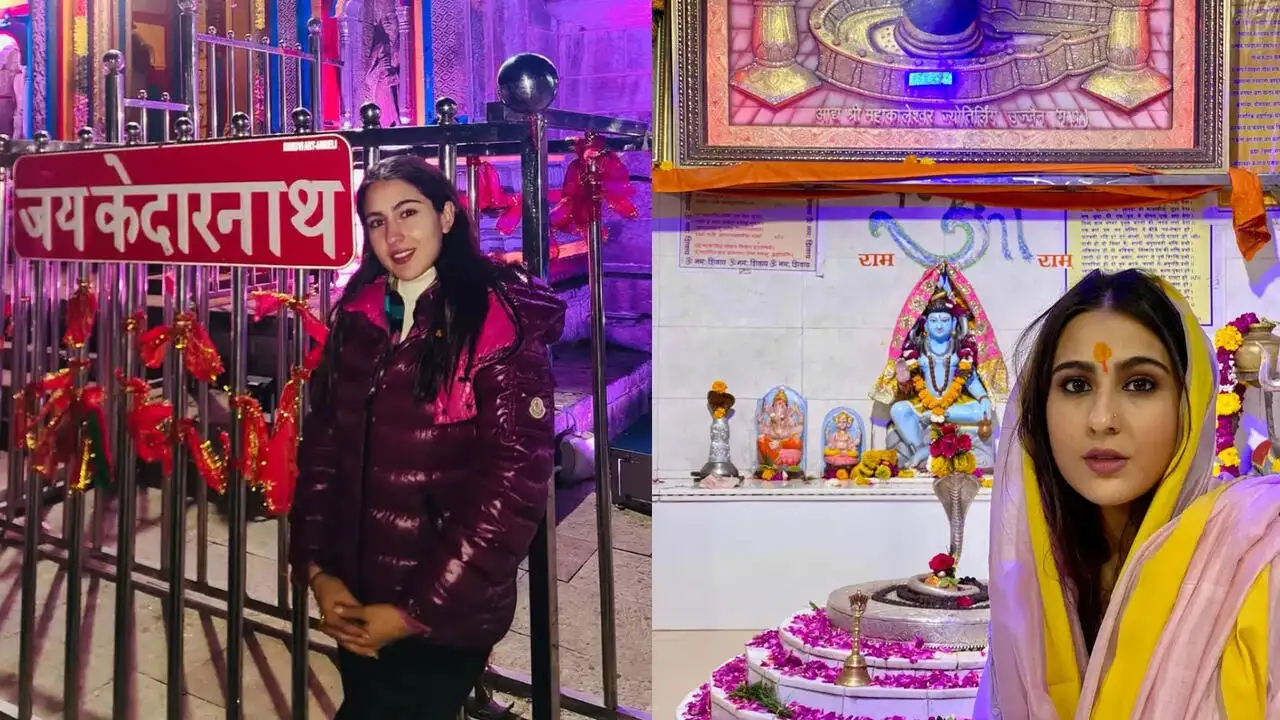
The Sara Ali Khan Kedarnath controversy has emerged as a major talking point ahead of the upcoming Char Dham Yatra 2026, as a proposal to regulate the entry of non-Hindu devotees into prominent Uttarakhand temples gains traction. The issue has triggered a wider debate on religious access, traditions, and inclusivity after reports suggested that Bollywood actress Sara Ali Khan may be required to submit an affidavit to visit the sacred Kedarnath Temple.
Proposed Rule for Non-Hindu Devotees
At the heart of the Sara Ali Khan Kedarnath controversy is a new directive proposed by temple authorities that would require non-Hindu visitors to provide a written declaration affirming their faith in Sanatan Dharma before being allowed to offer prayers.
Committee chairman Hemant Dwivedi confirmed the development while addressing the media, stating that the rule would apply uniformly to all non-Hindu devotees visiting major shrines in Uttarakhand.
He said that individuals willing to express faith in Sanatan traditions and submit an affidavit stating their belief would be granted permission for darshan. The same rule is expected to be implemented at Badrinath Temple as well, making it a broader policy rather than a one-off requirement.
Why Sara Ali Khan is at the Center of the Debate
The Sara Ali Khan Kedarnath controversy has gained significant attention primarily because of the actress’s well-known spiritual connection with Kedarnath. Over the years, Sara has frequently visited the temple and shared glimpses of her visits on social media, often expressing peace and devotion.
Her connection to the shrine dates back to her debut film Kedarnath, which was shot in the region. Since then, her repeated visits have drawn admiration as well as scrutiny, especially in light of the newly proposed rules.
Despite not availing any special privileges, her presence at the temple has consistently sparked public discussion, which has now intensified under the current circumstances.
Political Reactions Add Fuel to Controversy
The Sara Ali Khan Kedarnath controversy has also entered the political arena, with actor-turned-politician Kangana Ranaut reacting to the issue.
Speaking to reporters outside Parliament, Kangana suggested that individuals should not hesitate to openly acknowledge their beliefs.
“Everyone here is Sanatani… there should be no fear in writing down the truth,” she said.
Her remarks have further fueled the ongoing debate, bringing additional attention to the proposed policy.
Tradition vs Inclusivity: A Growing Debate
Beyond individual reactions, the Sara Ali Khan Kedarnath controversy has sparked a broader national conversation about the balance between preserving religious traditions and ensuring inclusivity at places of worship.
Also read : Ridhhi Dogra Siwet Tomar Viral Video: Emotional Bathroom Talk Sparks Dating Rumours
Temple authorities argue that the move is aimed at maintaining the sanctity and traditional practices associated with ancient pilgrimage sites like Kedarnath, one of the twelve Jyotirlingas dedicated to Lord Shiva.
However, critics believe that such measures could lead to exclusion and raise concerns about equal access to religious spaces in a diverse society like India.
What the New Rule Means for Devotees
According to officials, any non-Hindu devotee who wishes to visit Kedarnath or Badrinath for darshan would need to submit documented proof of faith. The affidavit is expected to include a declaration affirming belief in Sanatan Dharma.
This signals a shift towards a more formal and regulated process for entry, especially for those outside the Hindu faith, making the Sara Ali Khan Kedarnath controversy a key example of how these rules may be applied in real scenarios.
Conclusion
As Char Dham Yatra 2026 approaches, the Sara Ali Khan Kedarnath controversy continues to dominate headlines, highlighting sensitive questions around faith, identity, and access. Whether the proposed rule is implemented or revised, the debate it has sparked is likely to have lasting implications for religious