
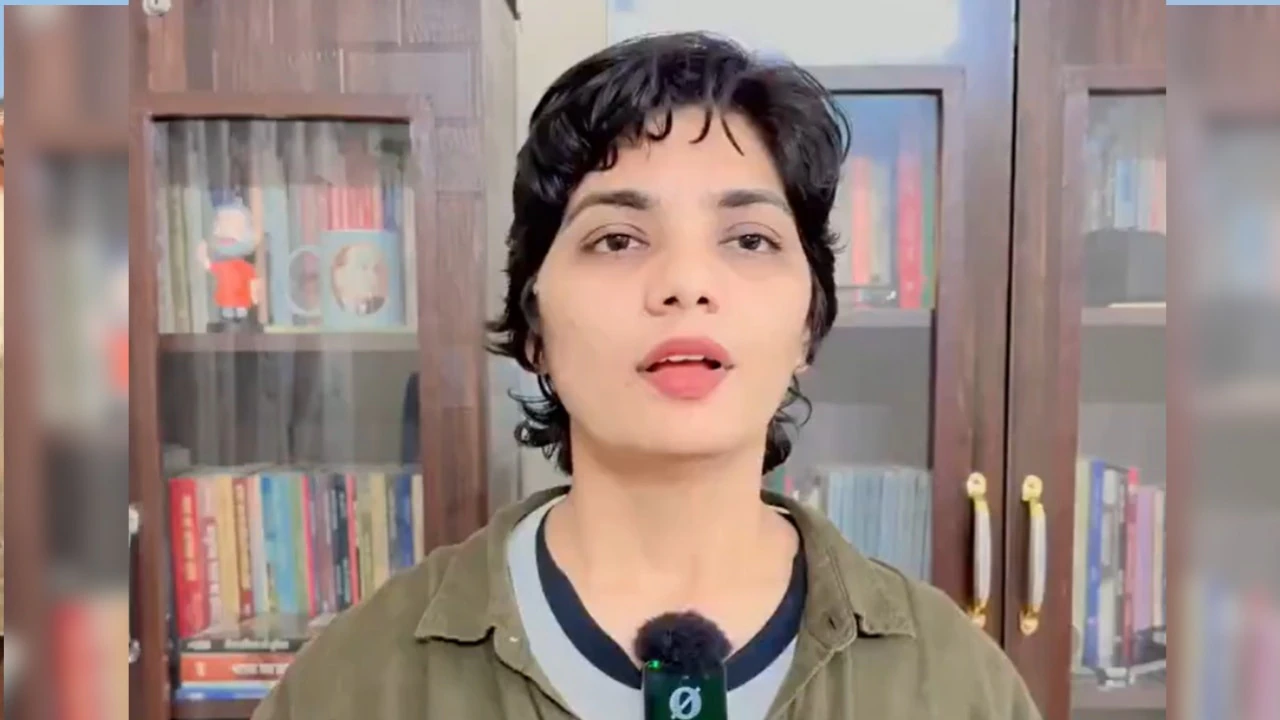
Neha Singh Rathore: The Bhojpuri Singer Facing Sedition Charges Over Pahalgam Attack Posts
In India, where music often captures the spirit of the people, Neha Singh Rathore, a rising Bhojpuri folk singer, has found herself in the midst of a major controversy. Known for her bold and satirical songs about social and political issues, Rathore is now facing sedition charges for her posts about the Pahalgam terrorist attack that occurred on April 22, 2025, in Jammu and Kashmir. The case has sparked a heated debate about freedom of speech, the role of artists, and the intersection of politics and art.
The Pahalgam Attack and Neha Singh Rathore’s Response
On that tragic day, a terrorist attack in Pahalgam claimed the lives of 26 people, most of whom were tourists. These individuals were allegedly targeted based on their religion, leading to a nationwide outcry. However, what made this incident even more controversial was Neha Singh Rathore’s reaction on social media.
Rathore, who has been outspoken about her political views, used X (formerly Twitter) to criticize the government’s response to the attack. She raised questions about the security measures in place and made a pointed comment directed at Prime Minister Narendra Modi:
“Kashmir ki shaanti aatankiyon ki mehrbani par tikki hai kya Modi ji?”
(“Is Kashmir’s peace dependent on the terrorists’ mercy, Modi ji?”)
जम्मू कश्मीर के पहलगाम में आतंकी हमला हुआ और पर्यटकों की हत्या कर दी गई.
ईश्वर उनकी आत्मा को शांति दे…🙏
कश्मीर की शांति आतंकवादियों की मेहरबानी पर टिकी है क्या मोदीजी?@narendramodi #PahalgamAttack #Pahalgam #PahalgamTerroristAttack pic.twitter.com/6slOgAlFEe
— Neha Singh Rathore (@nehafolksinger) April 22, 2025
Rathore didn’t stop there. In a series of posts, she pointed out that such attacks could be timed to divert public attention from more pressing issues, like unemployment and education, ahead of the upcoming elections. Rathore’s comments quickly grabbed the spotlight and sparked strong reactions on both sides. Some people praised her for speaking out, while others accused her of making inflammatory statements that could harm the country’s unity.
The Sedition Case
The Hazratganj police station in Lucknow took action against Rathore after a complaint was filed against her. The charge? Sedition. The complaint claimed that her posts were provocative and could incite one community against another, threatening national unity.
This case has raised significant concerns about the limits of free speech in India, especially when public figures like Rathore use their platforms to speak out on sensitive issues. Rathore’s supporters argue that she was simply exercising her right to speak freely, as guaranteed by the Indian Constitution. They believe that artists and public figures should be able to voice their opinions, especially when it comes to political issues.
However, critics argue that Rathore’s words were dangerous and divisive, particularly at a time when national unity is so crucial. The question now is whether freedom of speech extends to artists and whether their words can sometimes go too far in the name of expression.
Rathore: The Artist and Activist
Neha Singh Rathore is not just a singer; she is also an activist who uses her music and platform to comment on social issues. Her journey began in 2019 when she started composing and performing Bhojpuri folk songs that addressed pressing social issues in Uttar Pradesh. Her songs quickly gained popularity because they not only showcased her talent but also brought attention to issues that often go unnoticed.
What makes Rathore stand out is how she blends traditional folk music with modern-day political discourse. During the COVID-19 lockdown in 2020, Rathore launched a YouTube channel to raise awareness about the struggles of migrant workers. Her songs and videos gave a voice to those who were suffering in silence, further cementing her place as an artist who is not afraid to take a stand.
Rathore’s rise to fame was not just about her powerful voice, but also her willingness to speak the truth. Whether it was criticizing government policies or addressing social inequalities, her songs became a tool for social change.
The Debate: Free Speech vs. National Unity
The sedition case against Rathore has reignited debates about free speech in India, especially when it comes to the role of artists and entertainers. Should artists be allowed to voice their political opinions, or should they be restricted to their art? And, if their words could harm national unity, should there be limits to their expression?
Rathore’s supporters argue that, as a citizen, she has every right to question the government’s actions and to use her platform to raise important issues. After all, in a democracy, criticism of the government should be welcomed, not silenced.
On the other hand, some believe that Rathore’s comments were too divisive, particularly at a time when the nation is already dealing with political and social tensions. Critics argue that her remarks could inflame the situation and create further divisions within society, especially in sensitive regions like Kashmir.
The Road Ahead for Rathore
As of now, Neha Singh Rathore has not publicly commented on the charges against her. The case is still ongoing, and its outcome will likely have a significant impact on how freedom of expression is interpreted in India, particularly for artists.
This case also raises important questions about the role of art in political discourse. Can a singer or an actor speak out on deeply political issues, or does their platform come with a responsibility to avoid any potential harm to national unity?
In the coming weeks, the fate of this case could set a precedent for how artists and public figures navigate the fine line between free speech and national security concerns. For now, Rathore’s comments have sparked a conversation that shows no signs of slowing down.
One thing is clear: Neha Singh Rathore’s words have already left a lasting impact on the public conversation, and the debate surrounding freedom of speech, politics, and art is far from over.