
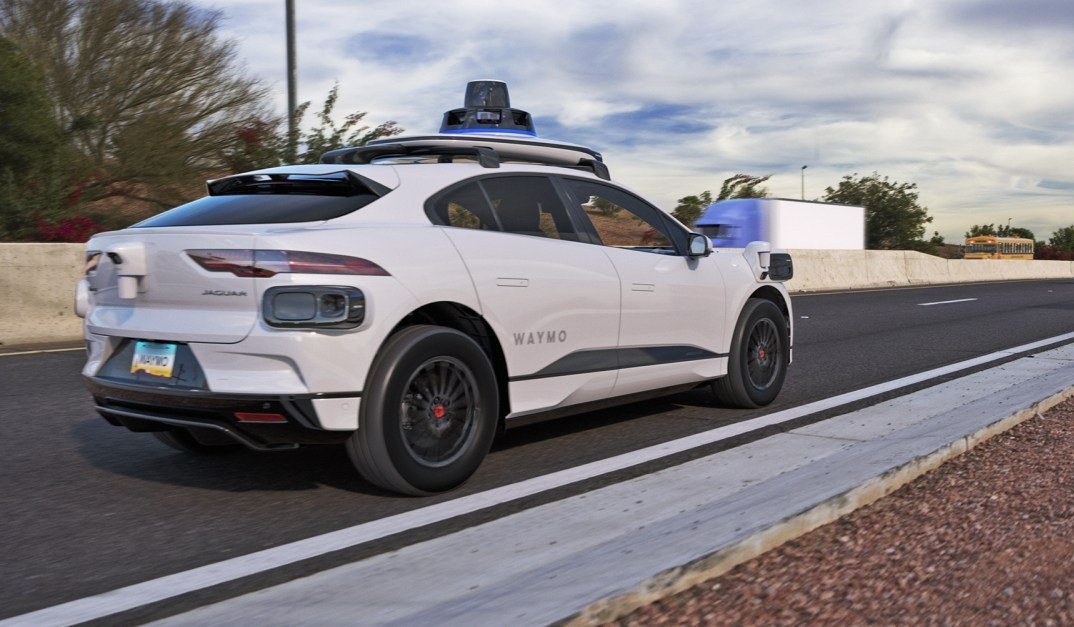
Major Regulatory Crackdown Halts Autonomous Highway Operations
Delivering a significant setback to commercial autonomous vehicle expansion, Waymo suspends driverless freeway rides across its major United States operating markets. The Alphabet-owned robotaxi company paused highway passenger services in California, Phoenix, Austin, and Miami after the California Department of Motor Vehicles (DMV) banned its driverless vehicles from state freeways.
California regulators declared the autonomous vehicles an “imminent hazard” following two high-profile traffic safety episodes in the San Francisco Bay Area earlier this month.
In one widely circulated incident on November 6, a driverless Waymo vehicle sped toward and attempted to pass two California Highway Patrol cruisers with flashing emergency lights conducting a slow-speed traffic break ahead of a construction truck.
One day earlier, on November 5, three autonomous Waymo cars entered an active highway construction zone, prompting immediate regulatory intervention.
Waymo Freeway Suspension Scope and Regulatory Findings
The table below outlines affected US markets, triggering safety incidents, and operational restrictions governing Waymo’s autonomous fleet.
| Serial No. | Regulatory / Operational Parameter | Official Status / Finding | Primary Safety & Industry Impact |
| 1 | California DMV Directive | State Freeway Ban Enforced | Cites “imminent hazard” on highways. |
| 2 | Additional Markets Paused | Phoenix, Austin & Miami | Voluntary company-wide freeway halt. |
| 3 | November 6 Trigger Incident | Attempted Pass of CHP Cruisers | Ignored flashing police traffic break lights. |
| 4 | November 5 Trigger Incident | 3 Cars Entered Work Zone | Occurred in San Francisco Bay Area. |
| 5 | Surface Street Operations | Operating Normally | Serves over 500,000 weekly city rides. |
Voluntary Expansion of Pause to Evaluate Software Performance
Explaining its operational response as Waymo suspends driverless freeway rides, a company spokesperson confirmed that the broader multi-city highway halt allows engineers to evaluate real-world software performance. Although neither November incident resulted in physical collisions or injuries, viral video footage of the police encounter sparked intense public debate over how self-driving algorithms interpret dynamic human law enforcement signals.
California DMV officials stated that freeway restrictions will remain strictly enforced until Waymo demonstrates effective corrective engineering measures addressing edge-case highway scenarios.
Meanwhile, Waymo continues operating regular surface-street ride-hailing trips across cities including San Francisco, Los Angeles, Las Vegas, Dallas, and Denver, completing more than half a million weekly trips.
Broader Scrutiny Over High-Speed Autonomous Driving Rollouts
Industry analysts note that the development where Waymo suspends driverless freeway rides underscores the technical gap between low-speed urban streets and high-speed highway environments. Freeways require split-second decision-making around emergency responders, shifting construction cones, and high-velocity traffic merges.
Competing autonomous mobility developers and federal transportation regulators are closely reviewing the California DMV order as cities debate stricter safety benchmarks for driverless commercial fleets.
Path Toward Restoring Highway Passenger Services
Working closely with state transportation authorities after Waymo suspends driverless freeway rides, engineering teams are conducting closed-track simulations and software updates.
Restoring public and regulatory trust remains essential before commercial driverless airport and intercity highway routes can safely resume.