
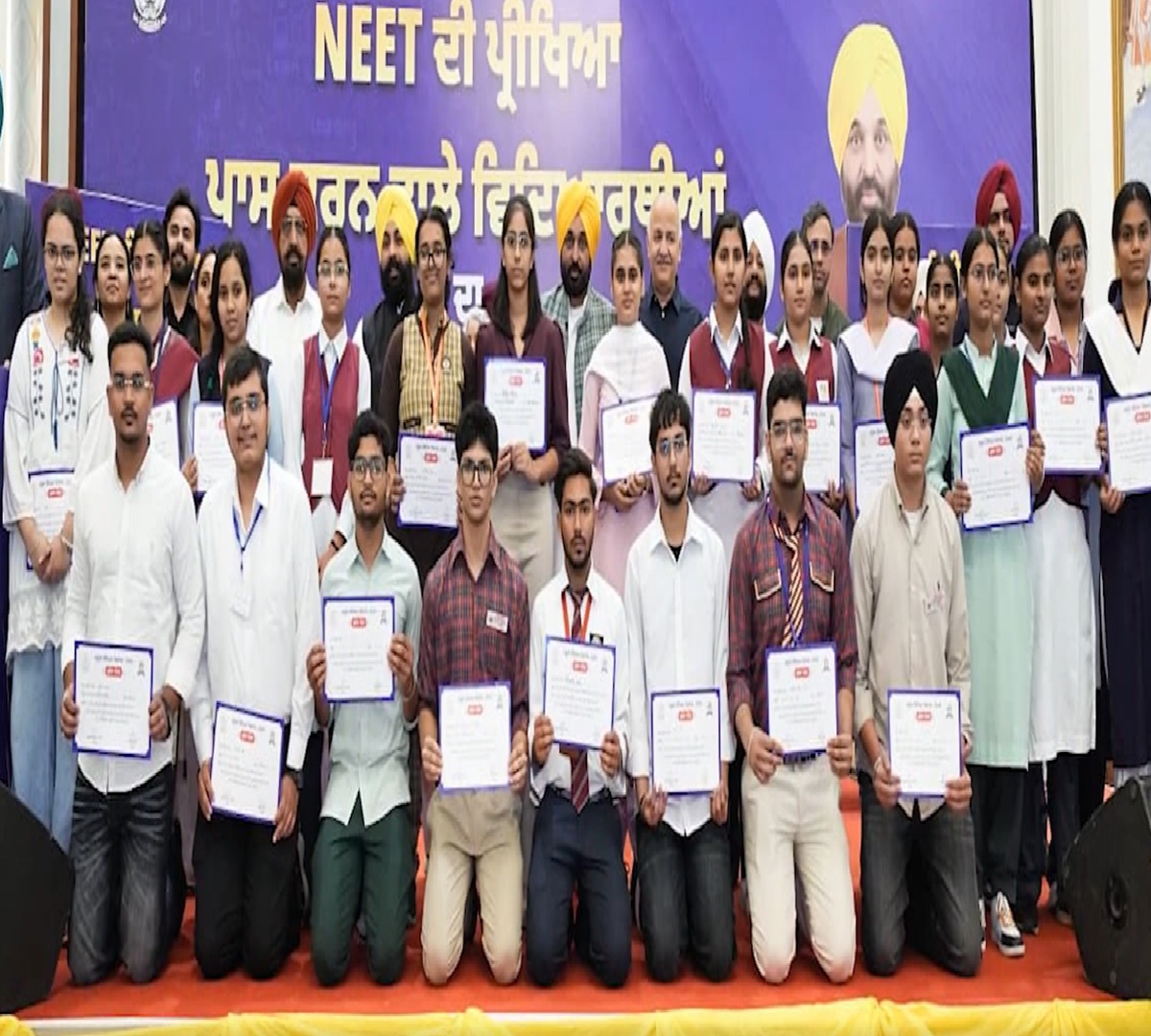
In a remarkable milestone, Punjab education reforms have transformed the state’s public school landscape. Consequently, a record 882 government school students qualified the prestigious NEET-UG 2026 medical entrance examination. This outstanding total more than doubles the 437 qualifiers recorded in the year 2024. Furthermore, it marks an eleven-fold jump from just 82 qualifying students in 2022.
Chief Minister Bhagwant Mann felicitated these meritorious students at a grand ceremony in Zirakpur near Mohali. Moreover, the event celebrated the ongoing success of the state’s ambitious ‘Sikhya Kranti’ flagship initiative. During the ceremony, Mann shared a historic group photo with certificate-holding toppers and proud parents. Additionally, senior AAP leader Manish Sisodia and Education Minister Harjot Singh Bains attended the event.
ਮੁੱਖ ਮੰਤਰੀ @BhagwantMann ਦੇ ਦਿਸ਼ਾ-ਨਿਰਦੇਸ਼ਾਂ ਅਨੁਸਾਰ ਪੰਜਾਬ ਸਰਕਾਰ ਵੱਲੋਂ ਸਿੱਖਿਆ ਖੇਤਰ ਵਿੱਚ ਕੀਤੇ ਜਾ ਰਹੇ ਸੁਧਾਰਾਂ ਸਦਕਾ ਪੰਜਾਬ ਨੇ ਸਿੱਖਿਆ ਦੇ ਖੇਤਰ ਵਿੱਚ ਦੇਸ਼ ਭਰ ਵਿੱਚ ਪਹਿਲਾ ਸਥਾਨ ਹਾਸਲ ਕੀਤਾ ਹੈ। ਇਸੇ ਲੜੀ ਤਹਿਤ ਸੂਬੇ ਦੇ ਸਰਕਾਰੀ ਸਕੂਲਾਂ ਦੇ 882 ਵਿਦਿਆਰਥੀਆਂ ਨੇ NEET ਪ੍ਰੀਖਿਆ ਪਾਸ ਕਰਕੇ ਆਪਣੀ ਕਾਬਲੀਅਤ ਦਾ ਸਬੂਤ… pic.twitter.com/1eZ9C5T0Lc
— Government of Punjab (@PbGovtIndia) July 28, 2026
Chief Minister Bhagwant Mann strongly praised the dedication shown by students, parents, and hardworking teachers. He emphasized that merit alone now determines success in both education and public recruitment. Furthermore, Mann stated that Punjab education reforms have successfully removed political patronage and bribery.
In fact, the administration has delivered over 68,000 government jobs entirely through transparent competitive processes. Therefore, bright Punjabi youths are increasingly choosing local opportunities over migrating to foreign nations. Notably, female students achieved incredible success by securing 686 out of the 882 total seats. Additionally, 340 successful candidates belong to the Scheduled Caste community across various rural districts. Overall, these results highlight growing inclusivity within public learning institutions throughout the state.
Comprehensive Public School Infrastructure Upgrades Fuel Academic Excellence
Specifically, the state government attributed this triumph to sustained investments in modern educational infrastructure. For instance, the Punjab Academic Coaching for Excellence programme provides free competitive exam training. Additionally, dedicated career counseling teams guide students through complex medical entrance preparation modules. Meanwhile, the state government established modern ‘Schools of Eminence’ across every district in Punjab.
As a result, students receive high-quality academic coaching without paying expensive private institute fees. Furthermore, Punjab education reforms introduced advanced digital tools inside thousands of rural classrooms. Indeed, authorities installed over 8,200 interactive digital panels across secondary schools nationwide. Moreover, the government built fully equipped computer laboratories inside 5,012 state schools recently.
Besides infrastructure, the government prioritized teacher recruitment and professional international training workshops. Consequently, Punjab recruited more than 28,000 permanent teachers through transparent merit recruitment drives. In addition, state school principals attended specialized leadership training at top institutes overseas. Therefore, educators returned with modern pedagogical techniques that directly enhanced classroom learning outcomes.
Through these measures, Punjab rapidly climbed from 27th position to the top national education ranking. Naturally, this transformation restored public trust in state-run primary and secondary educational systems. Indeed, parents now confidently choose public institutions over costly private alternatives across Punjab.
Remarkable Three-Year Academic Data Highlights Rapid Growth Across Competitive Entrance Exams
Over the past three years, government schools produced a cumulative total of 2,166 NEET qualifiers. Similarly, 786 public school students successfully cleared the rigorous Joint Entrance Examination for engineering. These impressive statistics demonstrate sustained academic growth rather than a temporary or accidental spike.
Moreover, Punjab education reforms continue strengthening foundational learning standards across all academic streams. Furthermore, local student Aryan Gupta secured All India Rank 1 in the NEET-UG 2026 exam. This monumental individual achievement inspired thousands of young aspirants throughout various government schools.
During the felicitation ceremony, excited students presented hand-drawn portraits to Chief Minister Bhagwant Mann. Additionally, many young qualifiers eagerly sought his autograph to commemorate their academic milestone.
Addressing the gathering, Mann contrasted Punjab’s clean examination track record with recurring national paper leaks. He noted that nearly 20 lakh students attempted the competitive national medical entrance examination nationwide. However, repeated paper leaks in other regions severely discouraged many hardworking and deserving candidates.
In contrast, Mann asserted that no paper leak occurred in Punjab over four-and-a-half years. Furthermore, he highlighted swift law enforcement action against cheating attempts in recent local recruitment exams. Specifically, police arrested 21 accused individuals in connection with a pharmacy recruitment cheating racket. Therefore, the state administration remains firmly committed to protecting student futures against unfair practices.
Building a Bright Future for Healthcare and Public Education in Punjab
Looking ahead, the successful candidates will now join premier medical colleges across India. Consequently, these future doctors will soon strengthen public healthcare infrastructure throughout rural Punjab communities. Chief Minister Mann urged the graduates to serve society with unwavering compassion and professional integrity.
Moreover, Punjab education reforms will continue expanding specialized coaching programs to cover additional competitive fields. For example, state officials plan to introduce dedicated mentorship frameworks for civil services aspirants. In addition, the state government continues increasing budgetary allocations for public school upgrades annually. Ultimately, these sustained policy initiatives ensure long-term educational empowerment for generations of Punjabi children.
In addition, community participation has increased significantly as local village committees actively support school activities. Consequently, attendance rates across rural government schools have reached historic highs over recent academic sessions. Furthermore, parents frequently interact with teachers during newly introduced regular parent-teacher meetings state-wide. Indeed, these collaborative efforts have created an encouraging academic environment for every student.
In conclusion, the stellar performance of 882 government school students marks a historical turning point. Through visionary leadership and systematic investments, Punjab has established a gold standard for public education. Furthermore, Punjab education reforms prove that state schools can achieve world-class academic excellence consistently. As hundreds of young scholars enter medical colleges, Punjab celebrates a triumphant new educational era.