
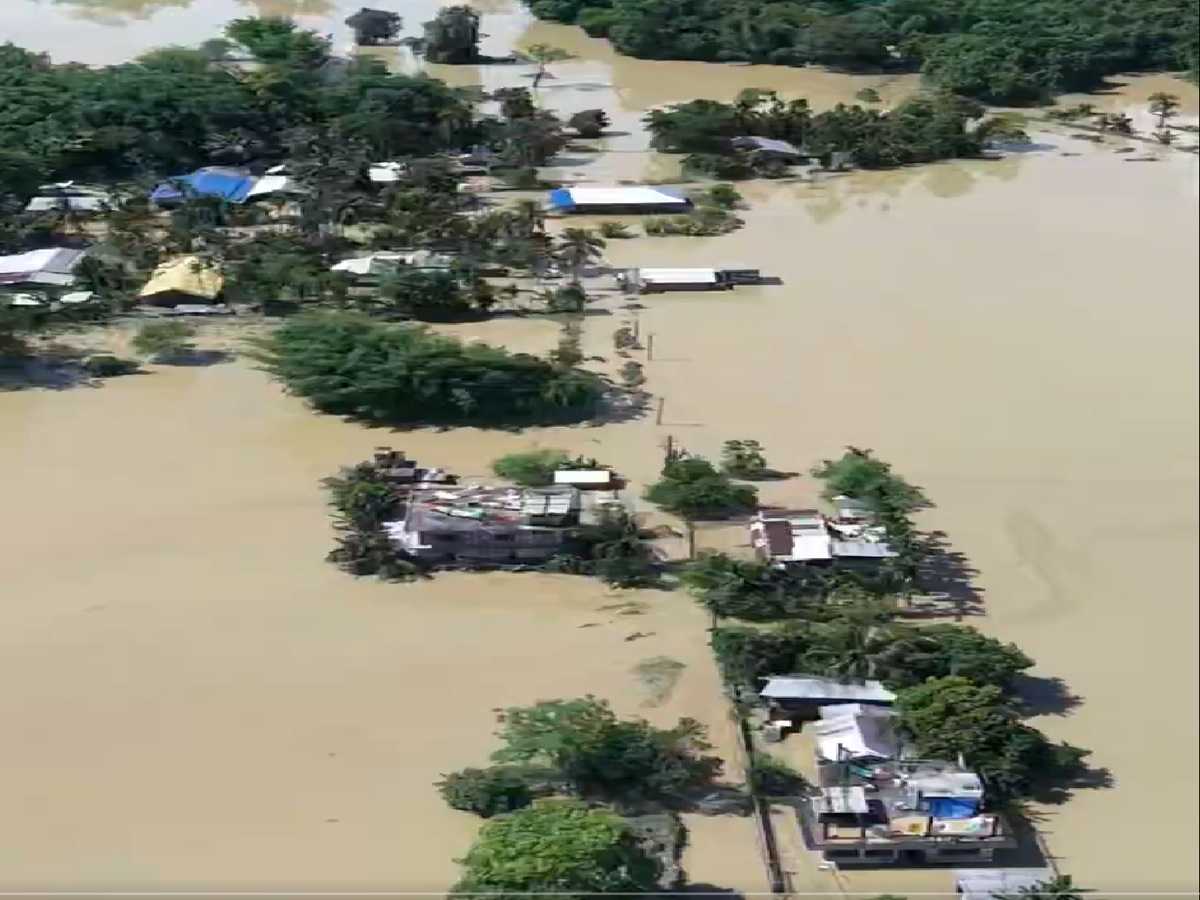
GUWAHATI : The Assam flood 2026 situation worsened significantly on Thursday across several northeastern districts. Torrential rainfall triggered massive river overflows across major regional valleys. Consequently, ten people lost their lives in deluge-related incidents within twenty-four hours.
According to the latest official disaster bulletins, forty-one people have died this season. Meanwhile, over 6.53 lakh residents face severe disruption in eleven affected districts. Local authorities report that rising water levels continue to submerge entire villages.
Assam Deluge Operational Summary
├──► Total Fatalities : 41 lives lost state-wide
├──► Daily Death Toll : 10 deaths in 24 hours
├──► Affected People : 653,100 citizens impacted
└──► Impacted Regions : 11 districts under water
Furthermore, the weather department issued an Orange Alert warning of continuous heavy downpours. Consequently, rescue teams remain on high alert across inundated residential zones. Additionally, daily life remains severely paralyzed in urban and rural centers alike.
Worst-Affected Districts Suffer Heavy Fatalities and Property Losses
Sivasagar district remains the hardest-hit area during the current Assam flood 2026 wave. Nearly four lakh residents in Sivasagar face total submergence of homes and roads. In addition, Charaideo district reported more than 1.11 lakh affected citizens today.
District Impact Breakdown
- Sivasagar : ~400,000 citizens affected (3 deaths)
- Charaideo : ~111,000 citizens affected (2 deaths)
- Jorhat : ~97,000 citizens affected (3 deaths)
Sivasagar and Jorhat districts reported three fatalities each over the past day. Meanwhile, Charaideo recorded two deaths during the same twenty-four-hour period. Karbi Anglong and Dhemaji districts also reported one death each from drowning.
Additionally, official reports confirm that 939 villages remain completely inundated by rivers. Furthermore, floodwaters damaged nearly 24,897 hectares of fertile agricultural land across the state. Therefore, rural farming communities face immense economic losses alongside physical displacement.
Also Read : Sikkim Tunnel Collapse Triggers Major Emergency: 10 Dead and 15 Trapped at NHPC Project
Major Rivers Cross Danger Marks as Rainfall Continues Unabated
Raging floodwaters caused several major rivers to overflow critical embankments on Wednesday. Specifically, the Disang river at Nanglamuraghat surpassed its historic highest flood level mark. Meanwhile, the Dikhou river in Sivasagar continues flowing well above its danger line.
Critical River Water Level Status
├──► Disang River : Flowing ABOVE highest flood level
├──► Dikhou River : Exceeding danger level in Sivasagar
├──► Buridihing River: Flowing above danger mark in Khowang
└──► Dhansiri River : Exceeding safety threshold in Numaligarh
The Buridihing river at Khowang also maintains dangerous water levels today. Moreover, the Dhansiri river in Numaligarh threatens surrounding agricultural fields and roads. Similarly, the Kushiyara river in Sribhumi breached safety thresholds following heavy hill runoff.
Consequently, civil engineers monitor fragile embankments continuously to prevent catastrophic breaches. However, persistent rain hampers routine repair work on damaged riverbanks. Overall, central monitoring agencies report extremely volatile hydrological conditions.
Multi-Agency Rescue Operations Evacuate Thousands of Stranded Residents
In response to rising waters, multi-agency disaster forces launched urgent rescue missions. The Indian Army deployed specialized units to assist civilian administration teams in flooded sectors. Furthermore, teams from the NDRF and SDRF rescued over 8,500 stranded villagers.
Rescue & Relief Measures
- Evacuated Citizens : 8,500+ residents rescued
- Active Facilities : 487 relief camps & centers
- Sheltered Victims : 24,418 displaced people
Air Force helicopters actively deliver emergency food supplies to isolated rural hamlets. Meanwhile, the state government operates 487 relief distribution shelters across ten districts. Consequently, more than 24,418 displaced people receive temporary shelter and medical care.
In addition, emergency workers distribute clean drinking water to prevent waterborne disease outbreaks. Therefore, relief operations expand hourly to reach remote submerged settlements. The ongoing Assam flood 2026 relief efforts require seamless coordination between civil and military forces.
High-Level Review Directs Rapid Restoration of Essential Services
Assam Chief Secretary Ravi Kota held an emergency meeting to review flood responses. He instructed all government departments to expedite relief material distribution across affected districts. Specifically, the administration focuses on Sivasagar, Charaideo, Jorhat, and Golaghat regions.
Administrative Priorities & Action Plan
├──► Expedite Repairs : Reconstruct damaged roads and bridges
├──► Relief Supplies : Ensure medicine and food distribution
├──► Agency Support : Mobilize Army, NDRF, and Air Force
└──► Medical Aid : Prevent disease outbreaks in camps
Moreover, Kota directed rapid restoration of disrupted road networks and power grids. He requested central agencies to enhance technical support for swift infrastructure recovery.
Consequently, telecommunication companies activated intra-circle roaming to maintain mobile network signals. Meanwhile, local authorities establish emergency health desks inside every active relief camp. Furthermore, senior officials visit impacted zones daily to assess rehabilitation requirements.
Long-Term Outlook and Climate Challenges Facing Assam
The current Assam flood 2026 wave highlights growing climate vulnerability across northeastern river basins. Heavy monsoon downpours and sudden cloudbursts repeatedly overwhelm existing drainage infrastructure. Consequently, annual river siltation drastically reduces water-carrying capacity across the Brahmaputra valley.
Therefore, environmental experts advocate for modernizing flood prediction systems and embankment designs. Furthermore, community-based disaster management plans are becoming vital for vulnerable rural populations. State agencies continue working alongside international specialists to design sustainable riverfront protection infrastructure.
As meteorologists predict continued rainfall, the Assam flood 2026 crisis requires sustained assistance. Emergency teams remain deployed statewide to safeguard lives and restore essential infrastructure. Meanwhile, citizens await weather improvements as administrative forces maintain maximum vigilance across all river basins.