
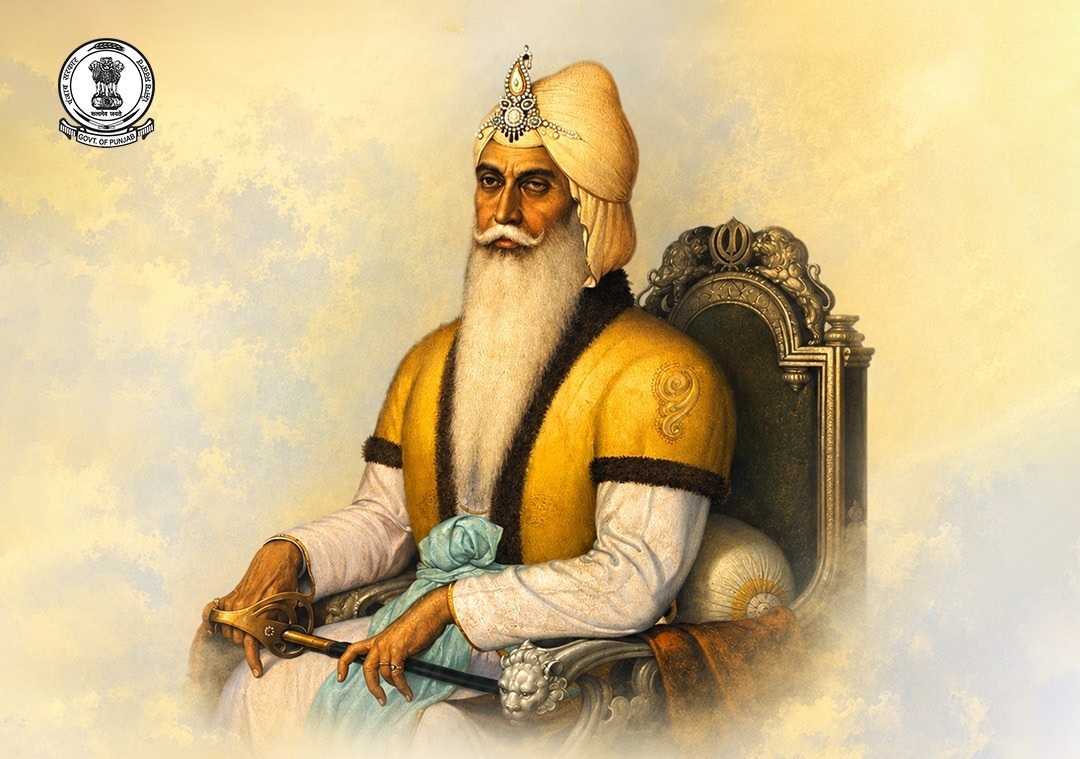
Chief Minister Bhagwant Mann leads the state of Punjab in paying solemn homage to Sher-e-Punjab Maharaja Ranjit Singh Ji on his 188th death anniversary, emphasizing secular ideals.
The Punjab government, led by Chief Minister Bhagwant Singh Mann, paid respectful homage to Sher-e-Punjab Maharaja Ranjit Singh Ji on the solemn occasion of his death anniversary. Marking 188 years since the passing of the legendary ruler of the Sikh Empire, state authorities organized commemorative ceremonies to reflect on an era defined by unparalleled courage, inclusive welfare, and military brilliance.
Chief Minister Bhagwant Mann expressed deep reverence for the great monarch, noting that the legendary emperor remains an eternal source of inspiration for modern administrative systems. Additionally, the Chief Minister highlighted that the historic rule of the Khalsa Raj stands out because it prioritized justice and communal harmony for all citizens.
Remembering the Golden Era of Sher-e-Punjab
Maharaja Ranjit Singh, widely known as the Lion of Punjab, established an expansive empire that stretched across boundaries, offering a true model of sovereign identity. The historic anniversary serves as a reminder of a glorious chapter when Punjab emerged as an independent, prosperous, and globally respected superpower. Consequently, the modern leadership seeks to emulate these foundational values.
“The administration remains committed to cultivating an atmosphere of religious freedom and mutual respect, mirroring the ideals of the great Maharaja,” a government representative shared during a commemorative assembly.
Moreover, this historic occasion coincides with massive public mobilization across the state. Various historical groups and citizens have gathered at prominent locations to preserve the memory of the legendary sovereign ruler.
Strategic Significance of Historical Sites Evaluated
Preserving the monuments associated with the Sikh Empire is a focal point for the current administration. For instance, the historic Chowki Sarkar-e-Khalsa at Rupnagar remains a vital symbol of political heritage and collective self-respect. Historically, this site hosted the monumental meeting between the Maharaja and the British Governor-General Lord William Bentinck in October 1831, demonstrating Punjab’s equal political standing.
| Landmark / Metric | Historical Significance Under the Empire | Modern Preservation Focus |
| Chowki Sarkar-e-Khalsa | Strategic military post and diplomatic meeting ground | Structural restoration and youth educational tours |
| Sutlej Frontier Zones | Acted as a powerful buffer against foreign incursions | Development of heritage corridors and museums |
| Lahore Durbar Legacy | Central seat of secular and pluralistic administration | Promotion of cross-border cultural tourism |
Furthermore, the state plans to upgrade structural facilities near these defense heritage sites. This initiative will explicitly educate younger generations regarding the complex artillery batteries and advanced weapons systems used by the Khalsa Army.
Cross-Border Pilgrimage Marks the Solemn Event
In tandem with the state-level programs, religious devotion transcended borders as a large contingent of pilgrims departed for historic shrines. The Shiromani Gurdwara Parbandhak Committee (SGPC) flagged off a dedicated Jatha of Sikh devotees from Amritsar to visit Pakistan. This annual pilgrimage allows devotees to pay their respects directly at the Samadhi of the Maharaja located adjacent to the Lahore Fort.
Out of 302 applications submitted to the authorities, exactly 290 pilgrims secured official visas to cross the international border this year. The visiting group is scheduled to conclude its spiritual journey and return to India by June 30. This movement highlights the enduring cultural and spiritual connection that remains intact despite geographical divisions.
Applying Ancient Administrative Wisdom to Modern Governance
The enduring legacy of the empire lies heavily in its secular nature. Although the army was led by the Khalsa, the administrative ranks featured prominent Hindu, Muslim, and European experts working in complete unison. Chief Minister Bhagwant Mann emphasized that modern Punjab continues to draw inspiration from this inclusive framework to fight social discrepancies and economic challenges.
Ultimately, celebrating the Maharaja Ranjit Singh Ji death anniversary provides an avenue to reinforce democratic ethics. By honoring the historical ruler, the state reaffirms its vision of prioritizing public welfare, transparent governance, and communal integration.