
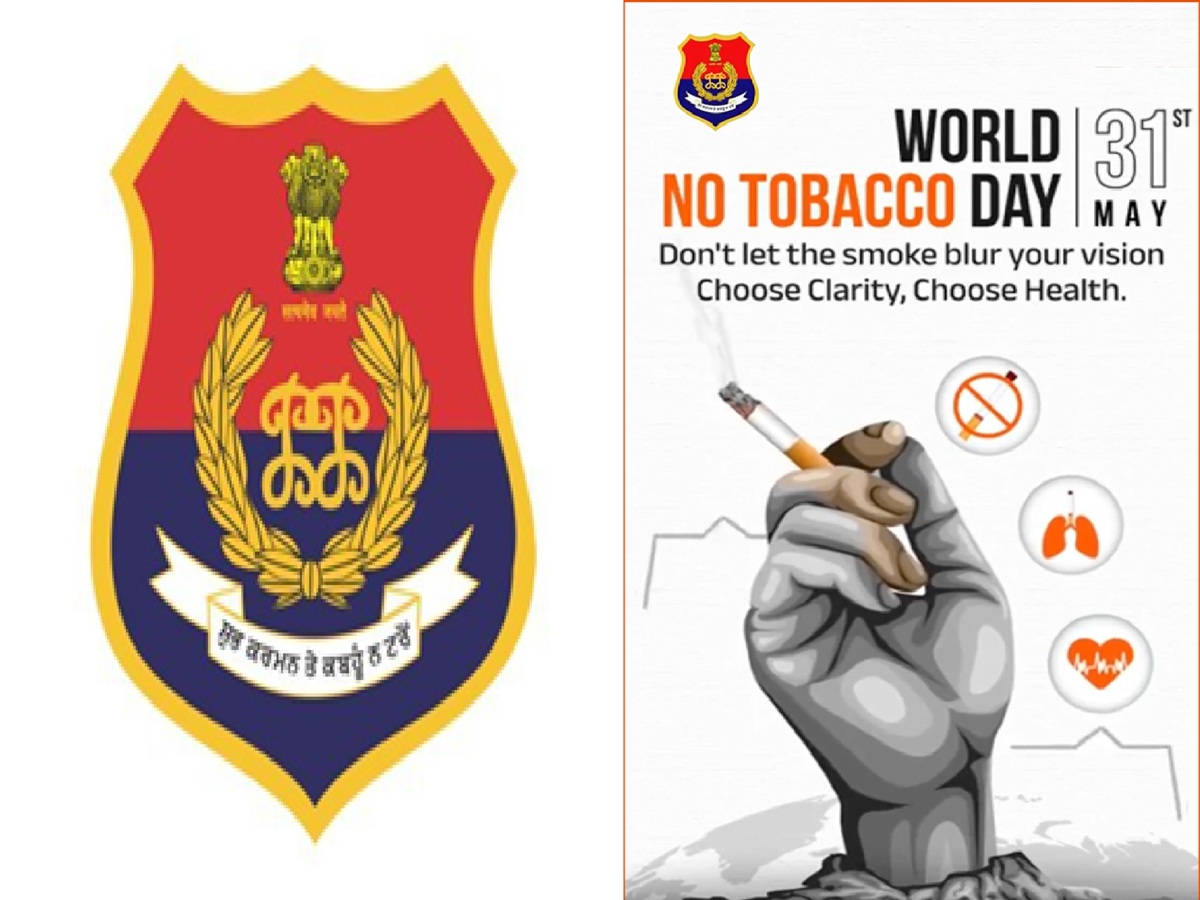
CHANDIGARH — In a comprehensive effort to improve public health and enforce civic discipline, state law enforcement authorities have initiated a massive anti-nicotine drive. The official Punjab Police tobacco free campaign rolled out across all major districts on Sunday, May 31, 2026. Coinciding with World No Tobacco Day, the initiative focuses on reducing public smoking and eradicating illegal tobacco sales near school zones. Police personnel are actively visiting public transits, markets, and educational perimeters to ensure strict compliance with national safety guidelines.
Top administrative officials stated that the drive aims to transform police stations into model, nicotine-free zones. Furthermore, station house officers have received directives to penalize individuals violating the Cigarettes and Other Tobacco Products Act (COTPA). Beyond simple legal enforcement, the campaign heavily emphasizes community-led interventions. Officers are working closely with local panchayats and welfare groups to spread awareness regarding the long-term benefits of early cessation.
Protecting Youth and Monitoring Educational Perimeters
The primary objective of the current enforcement strategy centers around protecting the younger generation from addictive substances. This focus aligns directly with the World Health Organization’s 2026 global theme, which counters deceptive nicotine marketing. To support this vision, the central government recently debuted the pilot Tobacco-Free Educational Institutions (ToFEI) digital application. Consequently, the Punjab law enforcement teams are utilizing these new parameters to monitor areas within 100 yards of schools.
Additionally, specialized police teams are conducting regular surprise inspections at local retail kiosks. Vendors caught selling loose cigarettes or displaying unauthorized advertisements face immediate legal confiscations and steep financial penalties. By eliminating these toxic triggers from student pathways, the state aims to systematically lower adolescent dependency rates. Moreover, local schools are introducing mandatory anti-tobacco pledges during morning assemblies to foster peer-to-peer accountability.
Expanding Medical Access and Community Cessation Support
To ensure the Punjab Police tobacco free campaign achieves sustainable success, the department is highlighting available medical support systems. Currently, India operates more than 2,000 certified Tobacco Cessation Centres across district healthcare facilities. These dedicated clinics offer brief professional counseling, cognitive behavioral therapies, and structured lifestyle guidance to struggling individuals. Combining legal monitoring with medical accessibility provides citizens with a reliable roadmap to break their physical dependence safely.
Timeline of Clinical Benefits After Choosing to Quit Tobacco:
* Within 20 minutes: Human heart rate and systemic blood pressure stabilize naturally.
* After 12 hours: Poisonous carbon monoxide levels in the bloodstream drop to normal.
* Within 2–12 weeks: Internal lung capacity and overall blood circulation improve significantly.
* After 1 year: The long-term risk of developing coronary heart disease reduces by half.
Furthermore, medical experts emphasize that smoking contributes heavily to chronic respiratory diseases, strokes, and malignant cellular transformations. Because second-hand smoke severely threatens non-smoking family members, choosing to quit safeguards entire households. Law enforcement personnel are distributing multilingual pamphlets detailing these physiological updates at major highway toll Plazas. This proactive outreach ensures that even floating populations receive vital health data seamlessly.
Conclusion: Uniting Law Enforcement with Public Health Vision
Ultimately, the successful deployment of the Punjab Police tobacco free campaign highlights a vital shift toward holistic governance. Law enforcement agencies are no longer just maintaining order; they are actively shielding citizens from preventable wellness crises. By penalizing public violations and encouraging users to quit, the police are helping build a highly resilient state infrastructure. Moving forward, the sustained cooperation between civil society and police units will determine the ultimate health of the region.