
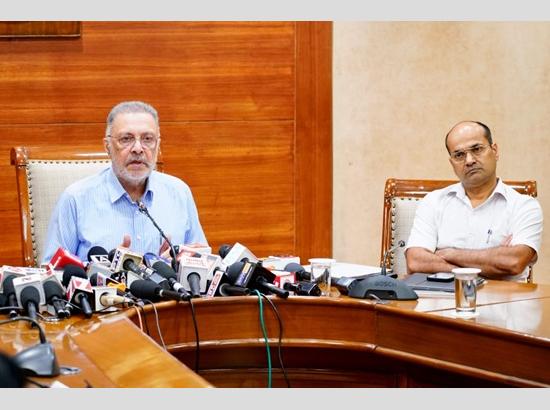
Punjab Health Minister Dr Balbir Singh reviewed the Mukh Mantri Sehat Yojna to ensure smooth rollout of the ₹10 lakh cashless health scheme.
Health and Family Welfare Minister Dr. Balbir Singh presided over a high-level review meeting on Sunday to evaluate the Mukh Mantri Sehat Yojna (MMSY) on-ground implementation, a crucial step towards guaranteeing the smooth implementation of Punjab’s ₹10 lakh cashless health insurance plan. Key players from the public and private healthcare ecosystems attended the meeting, which was hosted by the State Health Agency Punjab.
The Punjab Hospital and Nursing Home Association (PHANA), the Indian Medical Association (IMA) Punjab, the Punjab Civil Medical Doctors (PCMS) physicians, and representatives from top private medical colleges were among the important participants. The meeting was also attended by Chief Executive Officer (CEO) SHA Sanyam Aggarwal and Principal Secretary Health Kumar Rahul.
Health Minister Dr. Balbir Singh reaffirmed the Punjab Government’s dedication to a cooperative and citizen-centered scheme implementation, emphasizing that strict adherence to regulations, moral medical conduct, and total openness were critical to MMSY’s success. “The goal of the Punjab government is to guarantee that all Punjabis receive high-quality healthcare without incurring financial burdens, and this can only be accomplished by genuine collaboration between the government, physicians, and healthcare facilities,” he continued.
In order to guarantee the best possible service delivery under the program, Minister Dr. Balbir Singh emphasized that there would be no room for departures from the established standards and that moral behavior and openness were non-negotiable. He declared, “The Punjab government expects the highest professional standards in return and views healthcare providers as partners in this transformative initiative.”
Also read : Punjab CM Bhagwant Mann Vows Strict Action After Amritsar Sarpanch Murder
IMA Punjab and PHANA representatives pledged their complete cooperation in expediting beneficiary enrollment and voiced their strong support for the program. They emphasized that in order to guarantee prompt and high-quality care for patients throughout the state, growing the network of affiliated hospitals would be essential. The medical organizations applauded the new Package Master HBP 2.2 and stated that the changed reimbursement structure would greatly increase hospitals’ operational viability and facilitate the scheme’s easier implementation.
Major private medical institutions such as Dayanand Medical College and Hospital in Ludhiana, Christian Medical College and Hospital in Ludhiana, Adesh Medical College in Bathinda, and Gian Sagar Medical College in Patiala actively participated in the meeting. These organizations’ representatives commended the Punjab Government for the goals of MMSY and applauded the higher reimbursement rates, characterizing them as a start in the right direction for further private sector involvement.
In order to provide beneficiaries with quick assistance, all participating private medical colleges expressed their strong interest in the program and promised that their empanelment procedures will be finished in the coming days.
PCMS physicians also expressed their complete support for the project, pointing out that MMSY would not only provide free and cashless medical care for the general population but would also be essential in bolstering the facilities and service capabilities of public hospitals throughout Punjab. With a focus on enhancing effectiveness and motivation at the implementation level, recommendations were also made during the conversation on providing incentives to physicians and other healthcare personnel who are involved in carrying out the program.
At the end of the evaluation, all parties involved agreed to work closely together to make the Mukh Mantri Sehat Yojna a strong, open, and people-focused healthcare guarantee for Punjab.