
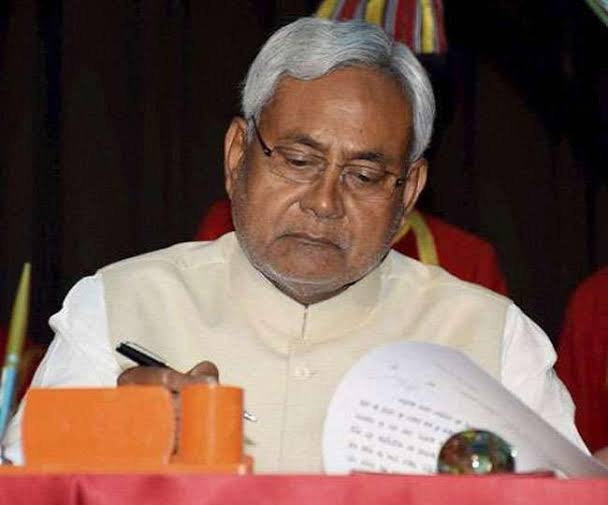
Nitish Kumar takes oath as Bihar CM, BJP aligns with his decisions, and both parties prepare a strategic roadmap for 2030 politics.
In Bihar, “Nitishe Ke Chali,” the same incident occurred once more. Taking the oath of office as chief minister for the tenth time, Nitish Kumar, who has been at the center of state politics for 20 years, made it clear that he has the last say regardless of how much the balance of power in Bihar shifts. Up until October 29, he was suspected of taking over as chief minister once more. However, on November 20, when the oath was administered alongside 26 ministers, the situation entirely changed.
Cabinet message: Nitish Kumar returns strongly
The government made it clear that there would not be a cabinet increase with the swearing-in of 26 ministers. In a state that can only have 36 ministers, Nitish has replicated the strategy he used in 2005, 2010, and 2015 by leaving 10 positions open.
He was weak and had to expand within weeks of taking the chief ministerial oath in 2020 (Ambony Elections), 2022 (NDA break, resignation from CM’s seat), and 2024 (return to NDA ahead of Lok Sabha elections). He didn’t offer any such chance this time.
He also put an end to media rumors that the BJP was calling for the arrival of its chief minister by delivering the oath to the ministers collectively.
The BJP presents soft faces, while the Nitish core crew stays
Eight of his quota’s senior ministers were replaced by Nitish Kumar. Their trust in their personnel and their refusal to engage in any form of experimentation are made very evident.
Conversely, the BJP has appointed six new ministers, indicating a shift in politics and prioritizing soft-image figures over long-standing hardliner stalwarts.
Also read : Tejashwi Yadav Hopes Nitish Kumar’s New Bihar Government Meets Public Expectations
By include young people like Sanjay Singh Tiger and Shreyasi Singh in the cabinet, the party is laying the groundwork for its leadership in 2030.
The BJP has also improved their social calculation by abandoning EBC Anand Shankar Prasad and Rama Nishad and replacing them with Dalit leader Lakhendra Roshan.
Why was Nitish’s statement required to be accepted by the BJP?
The BJP was five seats short of the majority, despite being the single largest party with 89 seats and having the potential to achieve 117 in an alliance with partners LJP(R), HAM, and RLM.
Technically, the administration may have been established, but it would not have been stable without Nitish’s political support.
Nitish’s sentiment is the main cause of this.
With almost sixteen percent of the vote going directly to him, he is without a doubt the head of the Kurmi, EBC, and Mahadalit classes.
Aside from this, they have a very powerful hold on women in Bihar. Everywhere Nitish travels, power is formed, according to the five elections.
The BJP also believes that after Nitish, the JD(U) will lose support, and his base of support will inevitably go to the BJP.
As a result, it is currently engaging in consensus politics rather than confrontational politics.
In Bihar, nitish remains the most important factor.
Overall, the new cabinet affirms that Nitish Kumar remains Bihar’s most powerful political figure.
The BJP is planning for 2030 after realizing this. The exact thing that Nitish desires is currently in power in Bihar.