
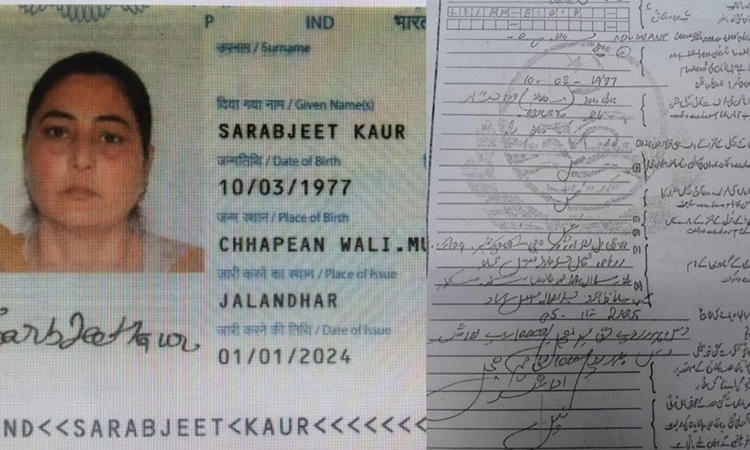
Indian Agencies Probe Sarbjeet Kaur Case and New ISI Pattern
The disappearance of Indian Sikh woman Sarbjeet Kaur in Pakistan has raised serious concerns for Indian intelligence agencies. Kaur travelled to Pakistan as part of a Sikh jatha for Gurupurab celebrations. However, she did not return with the group, and officials now see her case as part of a wider issue. Moreover, sources say the Sarbjeet Kaur case highlights Pakistan’s growing “pilgrim recruitment” model run by its intelligence agency, the ISI.
Authorities in India received initial reports that Kaur had married a Pakistani man in Lahore. Additionally, a Nikahnama shows that she has converted to Islam and now uses the name Noor Hussain. The document carries her supposed consent. However, senior officials believe the consent may not be genuine.
One intelligence officer said the case fits a “recurring pattern” linked to Pakistan’s covert outreach. He described the strategy as a “soft-power penetration model” built on emotional manipulation and religious pressure. This description has raised concerns across security circles.
Marriages and Conversions Used as Recruitment Tools
Investigating teams say the ISI has targeted women pilgrims for years. These women usually come from minority communities in India and travel to Pakistan for religious visits. Moreover, the visits include stops at major Sikh shrines such as Nankana Sahib, Panja Sahib, and Kartarpur Sahib. These locations allow Pakistani handlers to interact with Indian visitors in controlled environments.
Sources explain that these areas include guesthouses, shrines, and monitored transit points. Within these spaces, radical preachers, intermediaries, and surveillance teams work together. Their combined aim, according to intelligence reports, is to identify emotionally vulnerable individuals. Additionally, they try to build trust and dependency through sustained interaction.
Officials say that the process often follows a fixed pattern. It begins with emotional grooming and involves religious influence. The next phases include coerced marriage and eventual conversion. Moreover, many individuals are isolated from their groups at critical moments. Some are pressured under emotional or religious duress.
Investigators believe that the consent shown in documents like marriage certificates is often manufactured. They argue that the victims do not always understand the long-term consequences of their decisions. The Sarbjeet Kaur case appears to reflect this pattern.
Once married and converted, many individuals remain in Pakistan permanently. This relocation cuts all ties with their Indian identity. Officials say this allows Pakistan’s intelligence network to use them for information collection or minor operational tasks.
Social Engineering as a New Intelligence Strategy
Experts believe that this method represents a shift in Pakistan’s intelligence tactics. Traditional spying relied on field agents and targeted recruitment. However, this model uses social engineering and emotional pressure instead. The ISI appears to be embedding Indian citizens into Pakistani communities through marriage and conversion. Moreover, this embedding creates long-term assets with low visibility.
Officials say that such individuals are later used for propaganda or psychological leverage. Some are pushed to share community-level information. Others act as informal couriers for low-risk tasks. The low profile of these individuals makes them valuable in long-running intelligence operations.
This recruitment model also exploits religious mobility. Pilgrims travel to Pakistan with emotional devotion and spiritual intent. That deep connection creates ideal conditions for manipulation. Moreover, many pilgrims travel in groups and lack strong personal protection. This makes the model particularly hard to detect.
Cases like the Sarbjeet Kaur case show that these strategies may be expanding. Intelligence reports suggest that handlers monitor pilgrim groups long before they arrive. They observe group leaders, personal dynamics, and individual vulnerabilities. This preparation increases the likelihood of successful targeting.
India’s Security Concerns Rise After Latest Disappearance
Indian security agencies are now reviewing safety protocols for pilgrim groups visiting Pakistan. Officials believe that stronger oversight is needed during these trips. Moreover, they argue for improved tracking systems and group supervision. Some experts even suggest digital monitoring tools to protect vulnerable individuals.
However, officials also admit that the issue involves deep emotional factors. Pilgrims form religious bonds with sacred sites. That emotional connection reduces their caution. Additionally, Pakistani handlers use this emotional space to create trust.
In previous cases, individuals who remained in Pakistan had limited communication with Indian authorities. This lack of contact makes rescue operations difficult. Moreover, legal barriers prevent direct intervention in many situations.
The Sarbjeet Kaur case has therefore intensified calls for coordinated action. Agencies are now evaluating new guidelines for travel groups. They want to prevent similar incidents and protect vulnerable pilgrims from manipulation.
As investigations continue, India awaits more clarity on Kaur’s status. Officials hope to determine whether she acted freely or under pressure. Moreover, they aim to identify the handlers behind the pattern. For now, the case serves as a reminder of the growing risks faced by Indian pilgrims in Pakistan.