
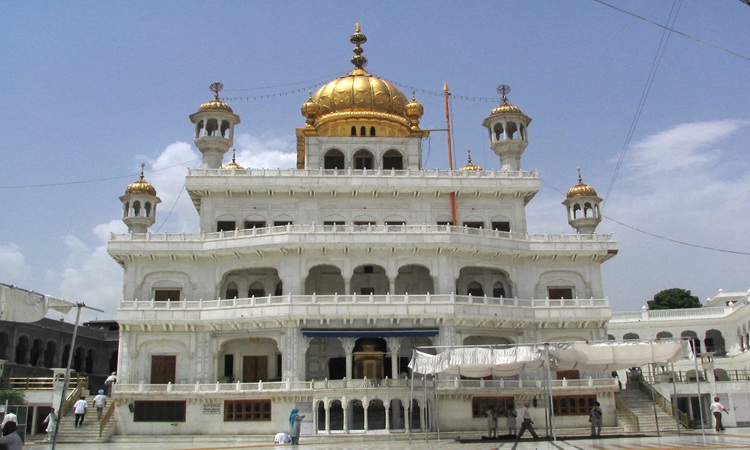
Akal Takht Questions Sajjan Kumar Acquittal in 1984 Sikh Massacre Case
CHANDIGHAR : The acquittal of Congress leader Sajjan Kumar in a 1984 Sikh massacre case has sparked sharp reactions.
The verdict came from Delhi’s Rouse Avenue Court.
Following the ruling, the Sikh community expressed deep anguish.
On Friday, Akal Takht Sahib questioned the acquittal publicly.
The Sikh religious authority asked who remains accountable for the 1984 killings.
The statement renewed demands for justice and responsibility.
Read More : Delhi Court Acquits Sajjan Kumar in 1984 Anti-Sikh Riots Case
Akal Takht Raises Serious Questions on Justice
Jathedar Giani Kuldip Singh Gargajj described the acquittal as deeply troubling.
He said the decision weakens faith in the justice process.
Moreover, he stated it adds pain to the wounds of Sikh families.
Although Sajjan Kumar continues to serve sentences in two other cases, concerns remain.
The acquittal, he said, reflects poorly on investigating agencies.
Therefore, the Takht demanded clarity from the government and courts.
The Jathedar asked a direct question.
Who was responsible for the massacre of Sikhs in Delhi?
Janakpuri Case and the Death of a Minor Witness
The Janakpuri case involved the killing of a 17-year-old boy.
Gurcharan Singh died after being thrown into a burning truck.
The truck belonged to his father, S. Nath Singh.
Despite severe injuries, Gurcharan Singh sought justice for years.
He repeatedly named Sajjan Kumar as the mob leader.
However, investigating agencies ignored his testimony.
From 1984 to 2008, his statement remained unrecorded.
Later, he passed away without seeing justice.
The Jathedar termed this failure deeply shameful.
Investigative Lapses Highlighted by Sikh Body
According to Akal Takht, agencies failed victims repeatedly.
The Central Bureau of Investigation recorded Gurcharan Singh’s statement in 2008.
However, officials never made it part of the formal case.
The Takht questioned this omission strongly.
Why did authorities ignore a recorded testimony?
Moreover, no explanation has been offered so far.
Initially, the Delhi Police handled the investigation.
Police closed the case without recording key statements.
This action, the Takht said, raises serious doubts.
Witness Deaths and Delayed Investigations
Another key witness, Harwinder Singh Kohli, also named Sajjan Kumar.
Despite repeated claims, police closed his case too.
No detailed investigation followed at that time.
In 2015, authorities formed a fresh investigation team.
The team recorded Kohli’s statement later.
However, he had already passed away.
Family members of both witnesses later testified.
They identified Sajjan Kumar and supported earlier claims.
Yet, the court acquitted him in the Janakpuri case.
Community Reaction and Demand for Accountability
The Sikh community views the verdict as a moral failure.
Many believe delayed justice has denied closure.
The Akal Takht echoed these concerns strongly.
The Jathedar said justice delayed remains justice denied.
He stressed the need to fix responsibility clearly.
Moreover, he urged reforms in investigative processes.
Community leaders demanded transparent accountability.
They also called for stronger witness protection systems.
Such reforms, they say, can prevent future injustice.
1984 Sikh Massacre and Ongoing Legal Struggles
The 1984 Sikh massacre remains a painful chapter.
Thousands lost lives following Prime Minister Indira Gandhi’s assassination.
Decades later, many cases still seek closure.
Legal experts say weak investigations harmed prosecutions.
Witness intimidation and delays worsened outcomes.
Therefore, acquittals continue to trigger outrage.
The Akal Takht stated it will continue raising its voice.
It pledged to stand with victims’ families.
The call for justice remains firm and ongoing.