
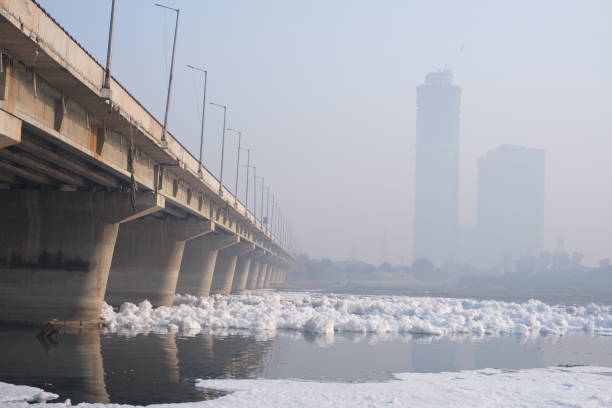
Delhi AQI Crosses 400: GRAP IV Emergency Restrictions Enforced
Delhi’s air quality plunged sharply over the weekend as the Delhi AQI crosses 400, entering the “severe” category and prompting authorities to impose the strictest anti-pollution curbs under the Graded Response Action Plan (GRAP) Stage IV or GRAP IV. Officials warned of hazardous health impacts as smog thickened across the capital and neighbouring districts.
The Commission for Air Quality Management (CAQM) activated GRAP IV emergency measures on Saturday after air quality readings surged, with the 24-hour average AQI at 400 by 4 pm and climbing to 428 by 8 pm due to unfavourable weather, low winds and a western disturbance.
Exposure to AQI above 400 poses serious health risks, especially for children, the elderly and people with respiratory or cardiac conditions. Experts have urged residents to minimise outdoor activity and follow safety advisories.
Also Read : How Air Pollution in India Is Silently Affecting Fertility and Reproductive Health
What Triggered the GRAP IV Enforcement?
The GRAP is a calibrated set of pollution control actions that escalate as air quality worsens. The system categorises air quality as:
- Poor (AQI 201–300)
- Very Poor (301–400)
- Severe (401–450)
- Severe+ (AQI >450)
Once the Delhi AQI crosses 400, authorities can invoke stringent Stage IV measures to protect public health and prevent further deterioration. This move followed an earlier imposition of Stage III restrictions a day before, signalling rapidly worsening conditions.
Meteorological conditions, including slow wind speed and dense fog exacerbated by a cold wave, have hindered pollutant dispersion, allowing smog to accumulate over the region. Visibility has dropped significantly, contributing to flight delays at the Indira Gandhi International Airport.
Key Restrictions Under GRAP IV
Stage IV of the GRAP framework represents the strictest curb level, and includes multiple measures designed to reduce pollution sources and human exposure:
Strict Vehicle Controls
- Entry of vehicles that are not BS-VI compliant or those without Delhi registration is banned.
- Non-essential truck traffic is restricted citywide, except for vehicles carrying essential goods or services.
- Cleaner trucks using LNG, CNG, electric or BS-VI diesel fuels are permitted under specific conditions.
Halt to Construction and Industrial Activity
- All construction and demolition activities are stopped across Delhi and major NCR districts.
- Stone crushing, mining and other dust-generating operations are also suspended under the GRAP IV order.
Education and Office Adjustments
- Schools may be shifted to hybrid or online learning to reduce children’s exposure.
- Government and private offices are recommended to operate with 50 % workforce working from home, and may adopt staggered hours to ease peak-time traffic emissions.
These curbs apply not only in Delhi but also in adjoining districts such as Gurugram, Faridabad, Ghaziabad and Gautam Buddha Nagar.
Health Risks and Public Advisory
Medical specialists warn that prolonged exposure to severe air pollution can trigger respiratory irritation, asthma attacks and worsen heart conditions. Residents are advised to:
- Stay indoors during peak pollution hours
- Wear masks if venturing outside
- Use air purifiers at home
- Monitor vulnerable persons closely
Local hospitals have reported an uptick in patients seeking treatment for respiratory distress over recent days, with emergency departments preparing for further influxes if conditions persist.
Public Response and Policy Debate
The enforcement of GRAP IV comes amid renewed public debate on long-term air quality management in Delhi. Discussions have intensified around the possible reinstatement of odd–even traffic schemes, expanded metro services and stricter emission norms for industries.
Environmental activists have urged policymakers to look beyond seasonal measures, advocating for year-round strategies targeting vehicular emissions, construction dust, biomass burning and industrial pollutants.