
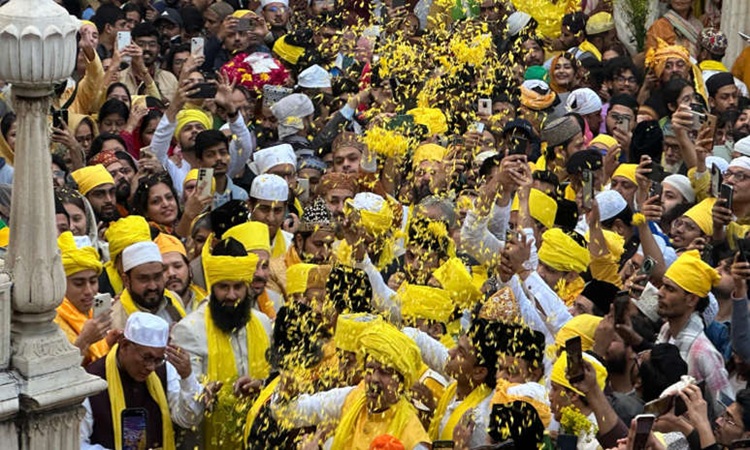
At the heart of Delhi’s historic Nizamuddin Basti, Basant Panchami unfolds in a deeply spiritual and cultural form. The celebration at Nizamuddin Dargah stands apart from other observances across India. Here, the festival blends Sufi devotion, poetry, music, and the joy of spring. Moreover, it reflects a tradition that has united people across faiths for centuries.
While Basant Panchami elsewhere often centres on Goddess Saraswati and learning, the dargah marks the day with a Sufi spirit. The focus remains on renewal, love, and harmony. As a result, the festival has become one of Delhi’s most powerful symbols of shared cultural heritage.
What Basant Panchami Means at Nizamuddin
Basant Panchami signals the arrival of spring and new beginnings. Across India, people wear yellow and celebrate nature’s renewal. However, at Nizamuddin Dargah, the festival takes on a spiritual meaning rooted in Sufi philosophy.
Devotees gather to welcome spring as a metaphor for inner awakening. Additionally, the colour yellow symbolises joy, warmth, and hope. The entire complex comes alive with flowers, music, and prayer. Consequently, the celebration feels both festive and meditative.
Unlike many religious events, the Sufi Basant remains open to all. People from different communities visit the dargah together. This openness reinforces the inclusive message that Sufi traditions have long carried.
Also read : Basant Panchami 2026: Saraswati Puja Significance, Rituals, Holidays, and Regional Celebrations
How the Sufi Basant Tradition Began
Historical accounts trace the origin of this celebration to the 13th century. The tradition is linked to Amir Khusro, the legendary Sufi poet and disciple of Hazrat Nizamuddin Auliya.
According to lore, Nizamuddin Auliya was once grieving the loss of his nephew. Seeing his master in sorrow, Amir Khusro sought a way to lift his spirits. On Basant Panchami, he dressed in yellow and carried blooming mustard flowers, inspired by local spring customs.
Moreover, Khusro sang verses celebrating the season. One famous line, “Phool rahi sarson sakal ban…,” praised the blooming mustard fields. The gesture brought a smile to the saint’s face. That moment, devotees believe, marked the birth of the Sufi Basant at the dargah.
Why the Colour Yellow Holds Deep Meaning
Yellow dominates the celebration at Nizamuddin Dargah. The colour mirrors mustard blossoms that cover fields during spring. Symbolically, it represents optimism, renewal, and divine light.
Devotees wear yellow turbans, shawls, or kurtas. Additionally, they offer mustard and marigold flowers at the shrine. A yellow chadar is placed over the saint’s tomb, marking reverence and joy.
This shared use of colour creates a visual unity. Furthermore, it reinforces the idea that nature and spirituality remain closely connected in Sufi thought.
Music, Qawwali, and Shared Devotion
Music forms the heart of the Sufi Basant celebration. Special qawwali sessions echo through the dargah courtyard. Singers perform compositions attributed to Amir Khusro that celebrate spring, love, and divine connection.
These performances draw large gatherings. Importantly, listeners come from diverse religious and social backgrounds. As the music flows, distinctions fade, and collective devotion takes centre stage.
Therefore, the festival becomes more than a ritual. It transforms into a lived experience of harmony and emotional unity.
A Living Symbol of Ganga-Jamuni Tehzeeb
Centuries later, Sufi Basant Panchami at Nizamuddin remains a living tradition. It reflects India’s long history of cultural confluence. The celebration embodies the idea of Ganga-Jamuni tehzeeb, where cultures blend without losing identity.
In a time of social divisions, the festival offers a powerful reminder. Devotion, poetry, and community can coexist peacefully. Each year, the arrival of spring renews this message at the dargah.