
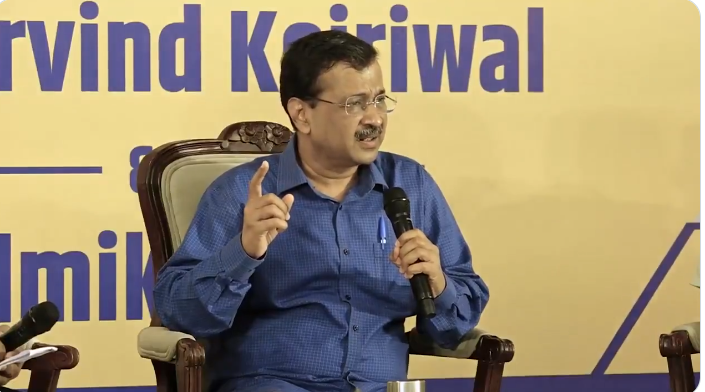
New Delhi – AAP National Convenor Arvind Kejriwal has once again highlighted the party’s commitment to public welfare, emphasizing its successful implementation of free electricity schemes in Delhi and Punjab. Speaking at a recent event, Kejriwal addressed critics who questioned the financial feasibility of providing electricity at no cost to citizens.
“When we said that we would make electricity free, other parties used to ask, ‘Where will the money come from?’” Arvind Kejriwal remarked. He pointed out that Delhi and Punjab governments have already delivered on this promise, with citizens in Punjab now enjoying electricity bills reduced to zero.
जब हम कहते थे कि हम बिजली मुफ्त कर देंगे तो दूसरी पार्टियां कहती थी कि इसके लिए पैसे कहाँ से आयेंगे?
हमने दिल्ली और पंजाब में बिजली मुफ्त करके दिखाई है, पंजाब में लोगों का बिजली बिल Zero आता है।
दूसरी पार्टियां आपका पैसा घर ले जाती है जबकि हमारी सरकार लोगों का पैसा जनता पर खर्च… pic.twitter.com/96G3UHDbWK
— Aam Aadmi Party Delhi (@AAPDelhi) February 3, 2026
Arvind Kejriwal Highlights AAP’s People-First Governance Through Free Electricity and Welfare Initiatives
Arvind Kejriwal contrasted AAP’s approach with other parties, saying, “Other parties take your money home, while our government spends people’s money on the public.” He stressed that the initiative demonstrates the party’s commitment to prioritizing citizens’ welfare and public services over political gains.
Also read: AAP Warns BJP: Move Kondli Ration Office Back or Face Public Protest
The free electricity program, according to Arvind Kejriwal, is part of a broader strategy to alleviate economic burdens on ordinary citizens, improve quality of life, and showcase effective governance. By successfully implementing such welfare schemes, AAP aims to present a people-first governance model ahead of upcoming elections in various states.
This announcement reinforces AAP’s reputation for delivering on promises, particularly in sectors like power, healthcare, and education, and positions the party as a viable alternative to traditional political players who often face criticism for alleged mismanagement of public funds.