
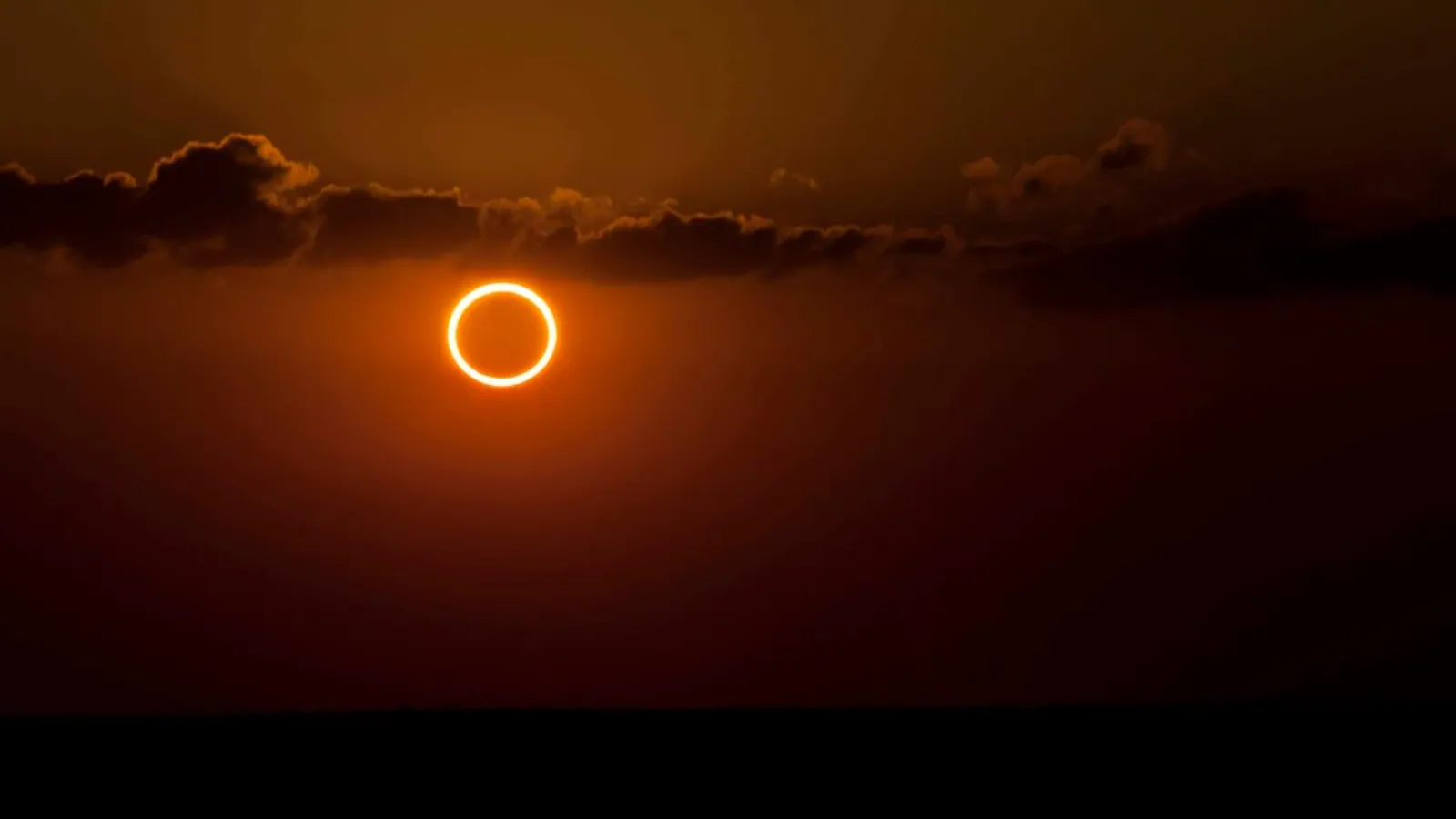
The first solar eclipse of 2026 is set to occur on 17 February, attracting attention from both astronomers and spiritual devotees. Falling under Kumbh Rashi and Dhanishta Nakshatra, this celestial event will be an annular solar eclipse, popularly known as the ‘Ring of Fire’, with the Moon expected to cover nearly 96% of the Sun at its peak. Devotees are keen to know the exact timings, Sutak Kaal, visibility in India, and religious guidelines.
Solar Eclipse 2026: Date and Timings
According to Indian Standard Time (IST):
-
Eclipse begins: 3:26 PM
-
Eclipse ends: 7:57 PM
-
Maximum phase: 5:13 PM – 6:11 PM
The total duration of the eclipse will be 4 hours and 31 minutes, making it one of the most prominent astronomical events of the year.
Will the Eclipse Be Visible in India?
This annular solar eclipse will primarily be visible in parts of southern Africa (Zimbabwe, Zambia, Tanzania, Namibia, Mauritius, Botswana, Mozambique), and some regions of Argentina, Chile, and Antarctica.
Since the eclipse will not be visible in India, many traditional restrictions and rituals related to eclipse visibility may not strictly apply for residents.
Sutak Kaal: Is It Applicable?
In Hindu tradition, Sutak Kaal begins 12 hours before a solar eclipse and marks a period of religious observance. However, it is generally considered relevant only in regions where the eclipse is visible. As a result, Sutak Kaal will not be observed in India for this event.
What the Annular Eclipse Looks Like
During an annular eclipse, the Moon passes directly between the Earth and Sun but appears slightly smaller, leaving a bright ring of sunlight visible around its edges — the famous ‘Ring of Fire’. This phenomenon is considered one of the most visually spectacular astronomical events.
Types of Solar Eclipses
Solar eclipses are classified into three main types:
-
Total Solar Eclipse: Moon completely covers the Sun.
-
Partial Solar Eclipse: Moon covers only a portion of the Sun.
-
Annular Solar Eclipse: Moon covers the centre of the Sun, leaving a bright ring visible.
The February 2026 eclipse belongs to the annular category.
Religious Beliefs and Mythological Significance
In Hinduism, eclipses are associated with Rahu and Ketu, the shadow planets. Mythology tells of Swarbhanu, a demon who attempted to consume Amrit during the Samudra Manthan. When exposed by the Sun and Moon, Lord Vishnu cut him in half with the Sudarshan Chakra. The head became Rahu and the body Ketu, who periodically “swallow” the Sun and Moon, causing eclipses.
Also read ; Summer Skincare Tips for Acne-Prone Skin: Keep Your Skin Clear and Healthy
Do’s and Don’ts During a Solar Eclipse
Traditional guidelines for regions where eclipses are visible include:
-
Avoid performing auspicious ceremonies.
-
Refrain from cooking or eating food.
-
Pregnant women, children, and the elderly should stay indoors.
-
Chanting mantras dedicated to Surya Dev or Lord Shiva is considered spiritually beneficial.
Post-Eclipse Rituals
After the eclipse, devotees typically:
-
Take a purifying bath.
-
Sprinkle Ganga jal in the home.
-
Cleanse temple idols with pure water.
-
Offer charity, particularly items associated with the Sun, such as wheat, jaggery, lentils, black sesame seeds, and yellow fruits.
Acts of charity during or after an eclipse are believed to bring spiritual merit and blessings.