
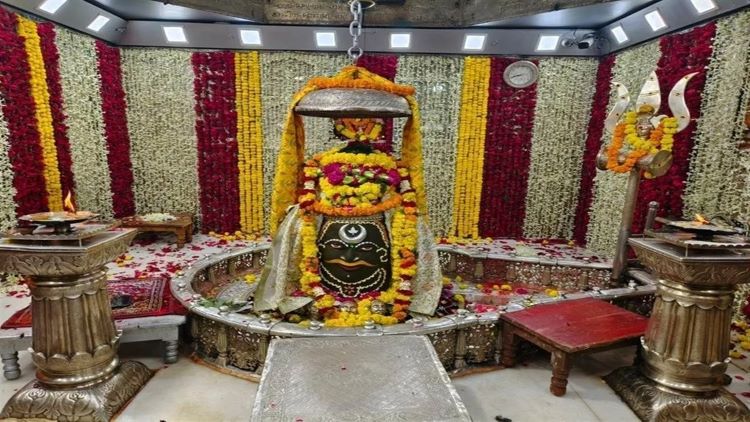
Ujjain: Shiv Navratri holds a profoundly sacred place in the spiritual traditions of Ujjain, home to the renowned Mahakaleshwar Temple, the third Jyotirlinga among the twelve sacred abodes of Lord Shiva. This unique nine-day festival, celebrated exclusively in Ujjain, marks the divine wedding of Lord Mahakal and culminates with Mahashivratri on the tenth day. Devotees from across India visit the temple to witness elaborate adornments, powerful Vedic rituals, and a spiritual atmosphere that unfolds a new narrative each day.
Dates and Significance
In 2026, Shiv Navratri begins on 6 February (Panchami Tithi of Krishna Paksha, Phalgun month) and concludes on 15 February with Mahashivratri. During these nine days, the Mahakaleshwar Temple becomes the epicenter of devotional ceremonies, symbolic decorations, and age-old rituals that reflect Lord Shiva’s journey as a divine groom.
What Makes Shiv Navratri in Ujjain Unique
Unlike celebrations in other regions, Shiv Navratri is observed only at Mahakaleshwar Temple, where it represents the ceremonial wedding of Lord Mahakal. Each day, the deity is dressed in a different form, reflecting various divine aspects. The festival reaches its spiritual peak on Mahashivratri, when Lord Mahakal is adorned with a ceremonial sehra, symbolizing the divine groom.
Also read : Cervical Cancer Warning Signs: Early Detection Can Save Lives
Shiv Navratri 2026: 9-Day Ritual Schedule
6 February: Festival begins with special adornment of Lord Mahakal. Eleven Brahmins perform Rudrabhishek and Vedic recitations.
7 February: The deity is dressed in new attire with a distinctive theme.
8 February: Lord Mahakal appears in the Sheshnag form, accompanied by Ekadash-Ekadashini Rudra Path.
9 February: Significant Ghatatop adornment, including crown, garlands, umbrella, ornaments, and floral decorations.
10 February: Chhabina adornment with yellow attire, crown, skull garland, and fruit garlands.
11 February: Traditional Holkar-style adornment is performed.
12 February: Lord Mahakal presented in Uma-Mahesh form, symbolizing Lord Shiva with Goddess Parvati.
13 February: The deity adorned in red attire, representing power and devotion.
14 February: Devotees witness Shiv Tandav form, reflecting intense divine energy.
15 February (Mahashivratri): The deity is decorated with Saptadhan Mukhauta. The temple remains open continuously for 44 hours, offering uninterrupted darshan.
Baba Mahakal: The Divine Groom
Pujaris explain that just as weddings in families are celebrated with grandeur, the city of Mahakal marks the divine marriage of Lord Shiva as a grand spiritual festivity. This age-old tradition is deeply embedded in the sacred heritage of the Avanti (Avantika) region, making Ujjain a revered spiritual center.
Throughout the nine days, Lord Mahakal appears in different divine forms, each representing various aspects of his cosmic presence. On the final day, coinciding with Mahashivratri, the deity is adorned with a ceremonial sehra, symbolizing the divine groom, which is considered the spiritual climax of the festival.
A Festival That Reaches Its Spiritual Zenith
Shiv Navratri in Ujjain is not merely a religious observance—it is a living spiritual tradition. With each passing day, anticipation builds, and the rituals culminate in Mahashivratri, when the energy inside Mahakaleshwar Temple intensifies, offering devotees a rare chance to witness divine symbolism and spiritual energy in real time.