
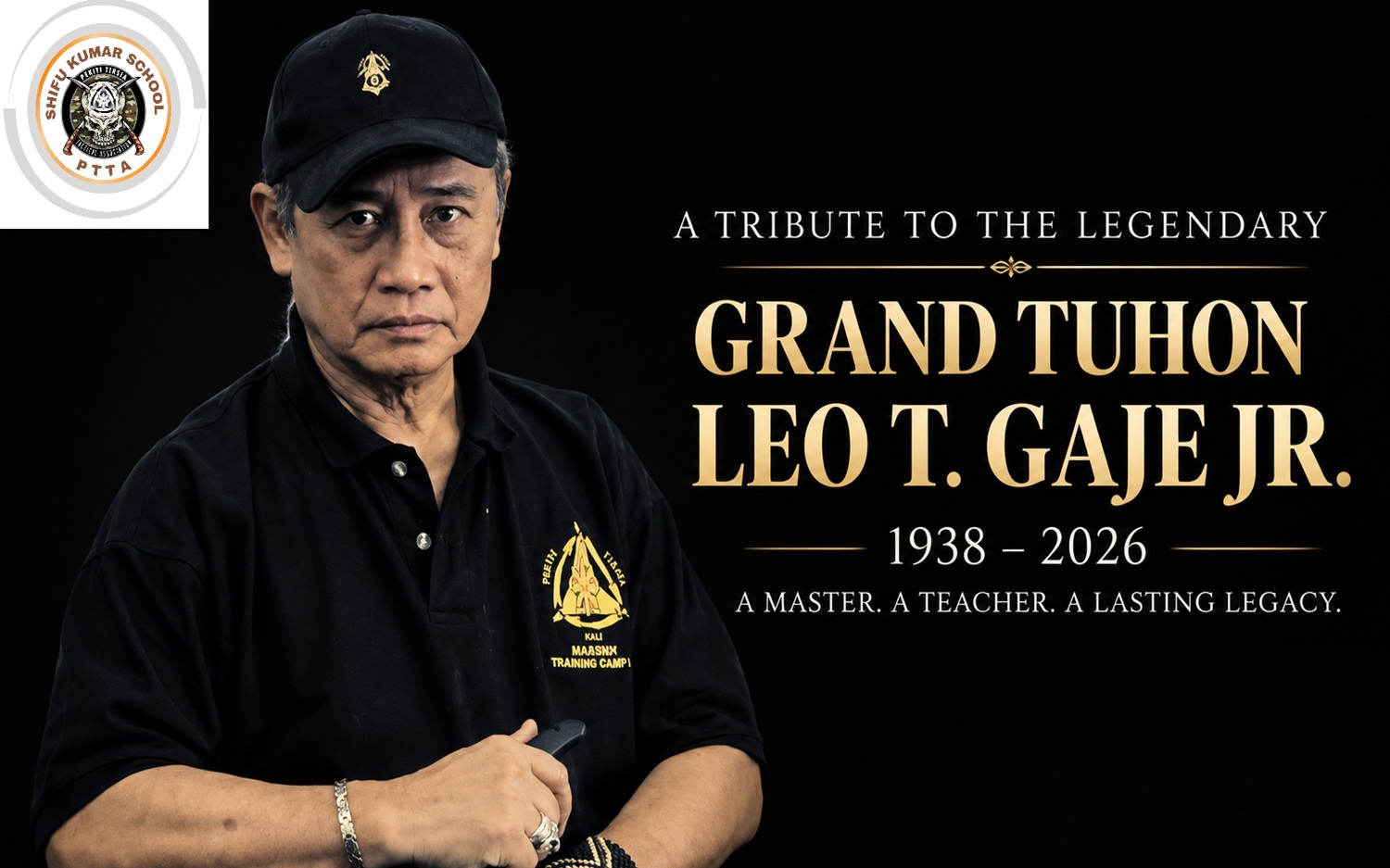
Introduction to a Martial Arts Giant
From 5 May 1938 to 25 September 2026, Grand Tuhon Leo T. Gaje Jr. walked this earth as far more than a master of blades. He was a guardian of a living tradition, a bridge between generations, and for many, the greatest teacher who inspired countless people around the world to learn and live the Filipino Martial Art.
As the heir to the Pekiti Tirsia Kali (PTK) system – officially recognised by the Armed Forces of the Philippines as a doctrine applicable for warfare – he carried a responsibility that was both practical and profoundly spiritual. For him, PEKITI TIRSIA was never just a name or a style. It was a sacred symbol.
Its 12 letters embody the 12 hours of night and the 12 hours of day, a complete cycle of existence. You live by PEKITI TIRSIA, day after day, until it becomes not only a fighting method, but a way of life and an inner guide, watched over by the sacred power of Kali.
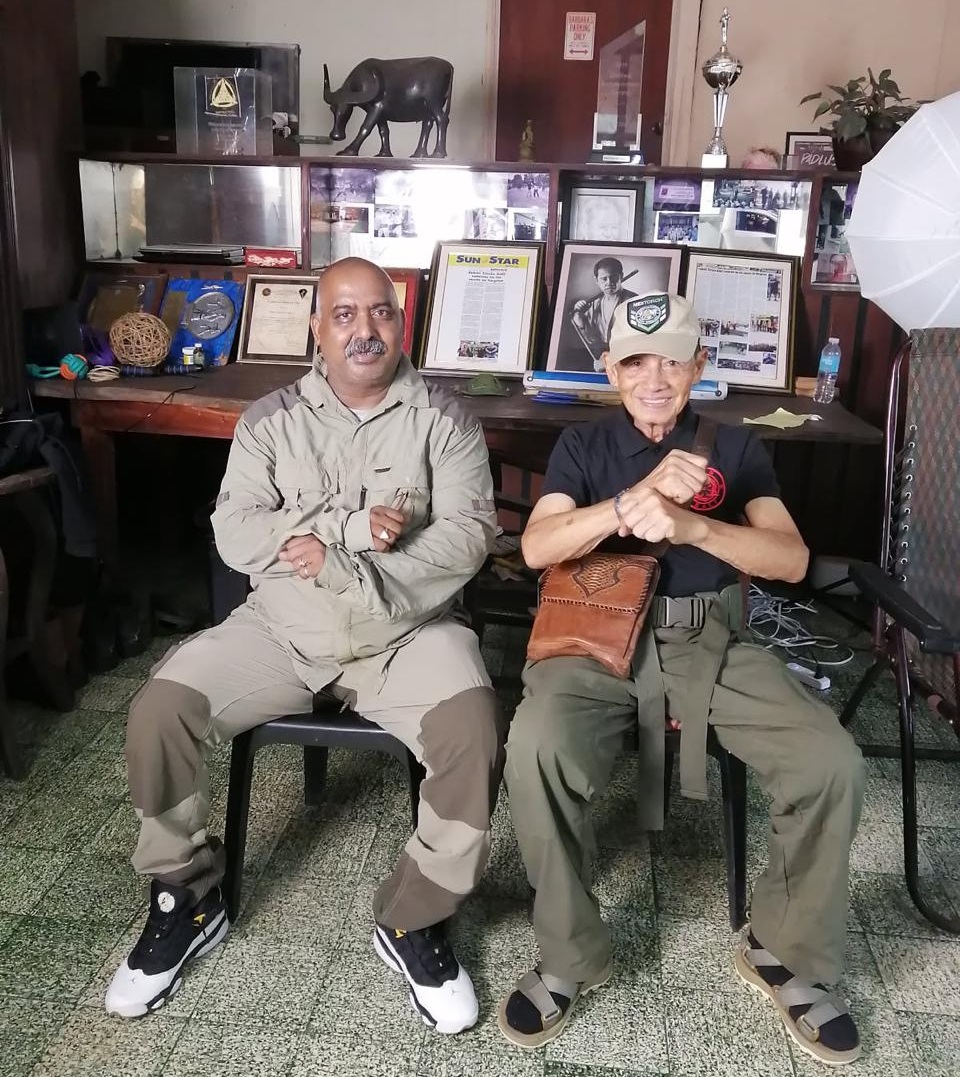
Left to right shifu Kumar with his friend and buddy late GT Leopoldo T. Gaje Jr. at his residence in Bacolod , Negros, Philippines.
Embodied Knowledge and Direct Transmission
Grand Tuhon Leo T. Gaje Jr. did not inherit his art from pages in a manual. He physically learned, absorbed and embodied the knowledge passed down by his forefathers.
His message to his students was simple and profound: “I do not have any books to give you. My direct teaching is your book. I am the book, and you will become the book.” In this, he reminded every practitioner that true mastery is not found in theory alone, but in experience, presence, and transmission from heart to heart, hand to hand.
The Core Philosophy of Pekiti-Tirsia Kali
His Kali philosophy was unwavering in its clarity: “I believe in life, not in death. I believe in health, not in sickness. I believe in success, not in failure.”
Under his guidance, PTK was never about glorifying violence. It was about preserving life. You learn to protect your own life, and in doing so, you learn to respect and value the lives of others. The more deeply you understand the blade’s power to harm, the more you come to honour the sanctity and fragility of life itself.
Spirituality and the Duality of the Blade
Kali, as a blade culture, holds a spiritual meaning. In India, Kali is the goddess of violence and destruction – a timeless, formidable energy.
In the context of Grand Tuhon’s teachings, this energy becomes symbolic: if you respect the philosophy, she protects you; if you neglect or abuse it, she destroys you. The same edge that can guard your life can also ruin it, if met with arrogance, carelessness or ego. This duality lies at the heart of his teaching: the blade is a mirror of your character.
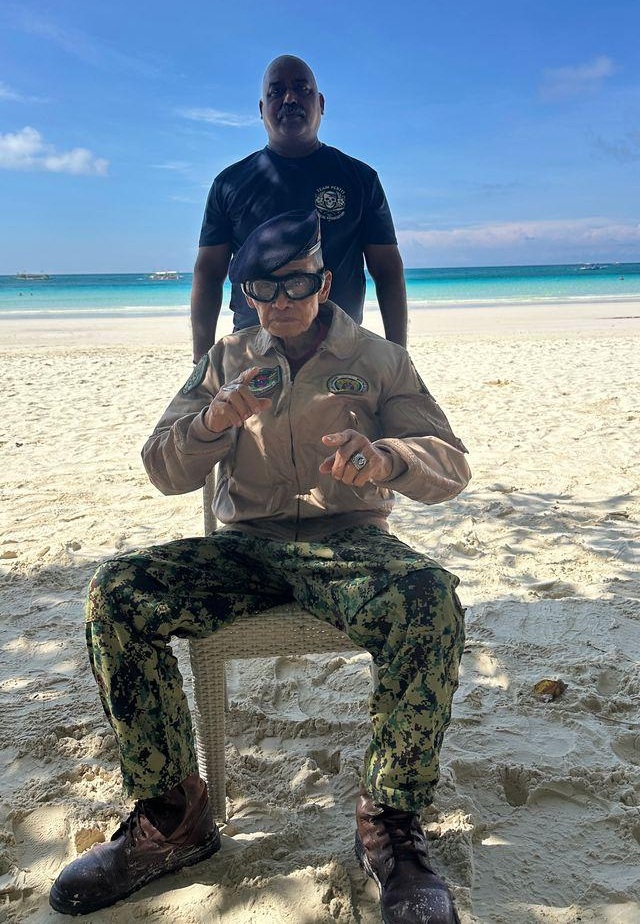
Shifu Kumar with his friend and buddy late GT Leopoldo T. Gaje Jr in In boracay , Philippines
A Lasting Path for Future Generations
Grand Tuhon Leo T. Gaje Jr., your blade has rested, but your combat, your spirit and your teachings continue to cut a clear and unwavering path for generations to come.
The lives you have touched, the warriors and guardians you have shaped, and the tradition you have kept alive will continue to speak in every drill, every movement, every moment of courage your students face. In your honour, we offer our deepest respect, our enduring gratitude and our heartfelt homage.
Key Milestone Data Summary
| Event / Milestone | Details |
| Lifespan | 5 May 1938 – 25 September 2026 |
| System | Pekiti-Tirsia Kali (PTK) |
| Role | Grand Tuhon / Heir and Global Guardian |
| Recognition | Official warfare doctrine of the Armed Forces of the Philippines; Black Belt Magazine 2018 Man of the Year |