
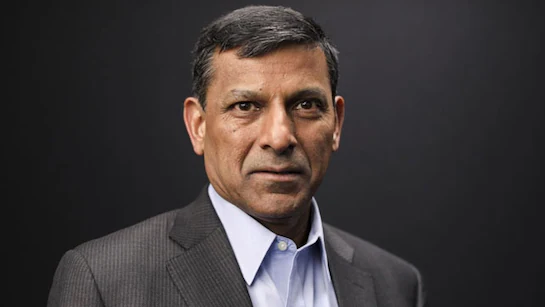
Raghuram Rajan’s claim that the US imposed a 50% tariff on India due to Trump-related remarks has sparked major controversy and intense online criticism.
The imposition of a substantial 50 percent tariff on Indian products in the United States by the Donald Trump administration was not primarily driven by the import of Russian oil, according to former Reserve Bank Governor Raghuram Rajan. A video of the senior economist has gained widespread attention, in which he is observed implying that U.S. tariffs on India were connected to New Delhi’s response to remarks made by Donald Trump regarding the military truce with Pakistan following Operation Sindoor.
During a speech at the University of Zurich, Rajan stated that the United States imposed a 50 percent tariff on India because it did not endorse Trump’s version of events, whereas Pakistan “went along” and received a 19 percent tariff. The footage from December 4 has prompted a surge of intense criticism, with numerous internet users condemning Rajan of “distorting the facts” and “undermining India” in an attempt to justify US actions.
Remarks by Raghuram Rajan
Russian oil was not the primary concern… I believe the primary issue centered on individual personalities, particularly within the White House, and their response to specific comments made by India following Trump’s assertion of credit for preventing a conflict between India and Pakistan. Pakistan handled the situation appropriately, attributing it entirely to Trump, as Rajan stated, in reference to the May conflict between India and Pakistan that occurred following the terrorist attack in Pahalgam.
India launched Operation Sindoor in response to the Pahalgam attack, focusing on dismantling terrorist infrastructure within Pakistan. The military operation led to a short-lived conflict between the two nations.
Also read : Microsoft Commits $17.5 Billion to India for AI, Cloud, and Skill Development
India contended that the two nations had reached an agreement without Trump’s involvement … the reality likely lies somewhere in between … However, the overall outcome was that India imposed tariffs of 50 percent, whereas Pakistan levied tariffs of 19 percent. I understand there was some discussion regarding how your leader in Switzerland attempted to explain the tariffs to Trump, which did not proceed smoothly… Therefore, we are uncertain about the true nature of the situation between India and the United States, but we remain hopeful that, in the long term, reason will prevail on all sides and that mutually acceptable agreements will be achieved, he added.
Trump’s Assertion and India’s Position
During the peak of the conflict with Pakistan, an armistice was declared on May 10. Trump has attributed the armistice to his actions, asserting that his intervention brought an end to the conflict. Nevertheless, India has asserted that an agreement on the cessation of hostilities was established following contact between the Pakistani military’s Director General of Military Operations and his Indian counterpart to engage in direct discussions on the matter.
Although Pakistan initially denied the claim, it subsequently acknowledged it and proceeded to nominate Trump for the 2026 Nobel Peace Prize, in recognition of his decisive diplomatic intervention and pivotal leadership during the recent India-Pakistan crisis.
Digital Repercussions
Rajan’s comments elicited criticism from social media users, with many asserting that India maintained its position by rejecting a deceptive narrative, while Pakistan publicly acknowledged Trump for facilitating the ceasefire.
Another user criticized Rajan’s interpretation of the event and stated, “Is the truth lying in between?” Apologies, Mr. Raghuram Rajan; the truth does not lie in between, but resides with India. Pakistan employed appeasement tactics to curry favor with Trump. This approach promptly yielded favorable results, reducing their tariff to just 19%, compared to India’s 50%. The future will reveal the extent of the cost associated with this 19%.
Some users even questioned the significance of Rajan’s remarks, with one stating, “Even a broken clock is correct twice a day… he should continue attempting.” Eventually, he will become comprehensible.