
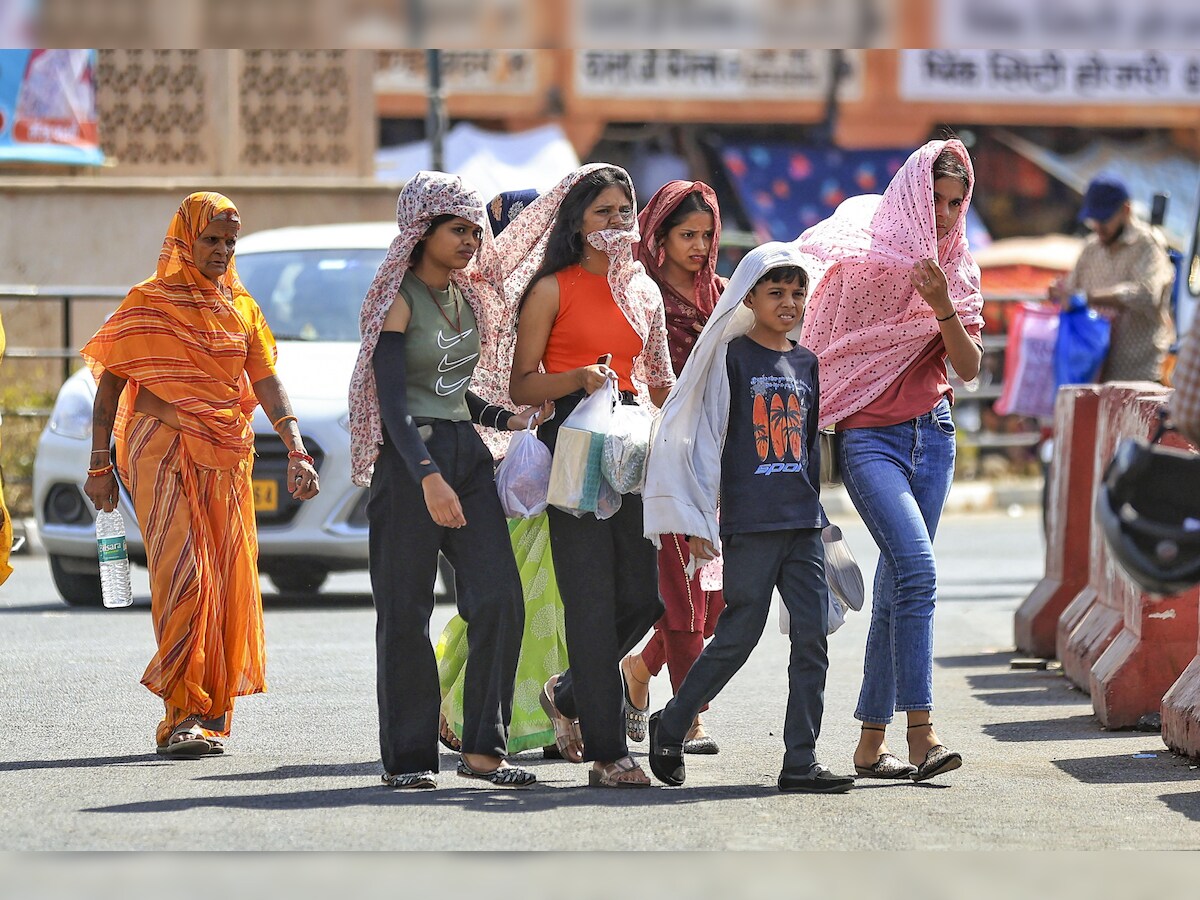
North India is witnessing an unusually early onset of summer-like conditions, as the pre-monsoon season begins ahead of schedule, according to the India Meteorological Department (IMD) and Skymet Weather. Temperatures in the northern plains are climbing rapidly, with nighttime readings already in double digits.
Normally, the region experiences lingering winter chill until early March, but this year, heat has set in across Delhi, Punjab, Haryana, and Rajasthan.
Delhi Heat Crosses 30°C in February
The national capital is seeing record warmth for February. On Monday, February 23, 2026, the Safdarjung Observatory recorded a maximum temperature of 30.5°C, roughly 5 degrees above the seasonal average. Earlier, on February 16, Delhi had already seen a peak of 31.6°C, marking the hottest day of the year so far.
Forecasts indicate that temperatures will likely remain between 31°C and 33°C for the rest of the month, potentially challenging historical records.
Rajasthan, Punjab, and Haryana See Rising Nighttime Temperatures
Night temperatures across the northwest are also on the rise:
Rajasthan: Western districts report lows between 15°C and 19°C, temperatures usually recorded in late March.
Haryana: Southern districts near the Rajasthan border have recorded minimums of 11°C to 14°C.
Also read : PM Modi Congratulates Rob Jetten on Becoming Netherlands Prime Minister
Punjab: Some areas remain slightly cooler at around 10°C, but the overall trend is upward due to dry northwesterly winds.
Holi Forecast: Relief May Arrive Early March
Meteorologists say relief from the heat may only come around Holi on March 4, 2026, when a Western Disturbance is expected to develop. This system is likely to primarily impact Himalayan regions, with the possibility of isolated cloud cover or light showers over the plains, providing a brief respite from soaring temperatures.
Signs of Early Pre-Monsoon Transition
Experts note that the current dry conditions combined with strong lower-level winds are classic indicators of an early pre-monsoon shift. Residents are advised to stay hydrated and take precautions against the sudden rise in heat.