
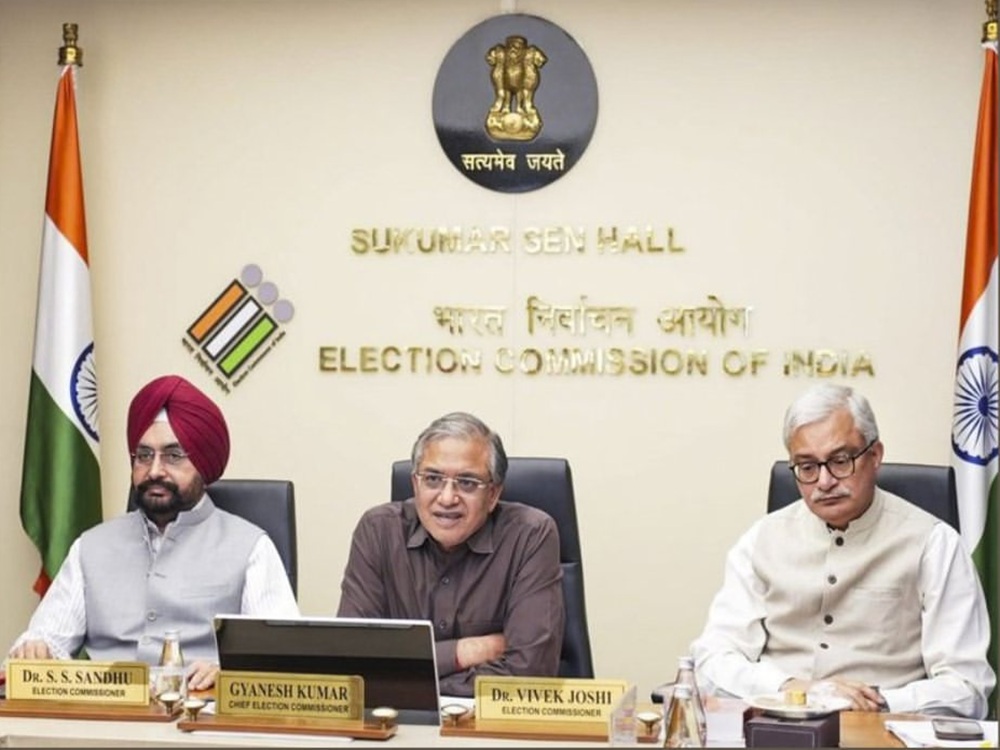
Key Internal Objections Within the Poll Body
A major controversy surrounds India’s top poll panel as an Internal Dispute Hits Election Commission decisions. As per Indian Express investigation, Election Commissioners Sukhbir Singh Sandhu and Vivek Joshi formally raised objections at least 14 times over ten months. They expressed deep concern over procedural steps executed under Chief Election Commissioner Gyanesh Kumar.
The two commissioners highlighted unilateral changes made to Form 6. This form serves as the primary application for new voter registrations. In their written notes, they described these alterations as unauthorized and illegal. They stressed that changing statutory forms requires official notification from the Ministry of Law and Justice. Modifying software requirements without statutory clearance bypasses established electoral regulations.
Also Read : https://indiathisweek.in/india/former-fssai-head-flags-phaseout-warnings-food-labels/
The dispute centers on a new declaration added to the digital registration portal. The software forced applicants to specify whether their ancestors appeared in historical revision lists. Young voters could not complete the process without selecting one of these options. Commissioners argued that this barrier created unnecessary harassment for first-time electors seeking their voting rights.
| Dispute Area | Action Executed | Legal and Procedural Concern |
| Form 6 Alterations | Added mandatory ancestor declaration box | Bypassed Law Ministry notification rules |
| Database Operations | Shifted control to IT Directorate in Delhi | Reduced statutory field officer oversight |
| Electoral Roll Access | Centralized processing systems | Overrode local officer verification authority |
Centralization Warnings and Software Integrity Concerns
Beyond registration forms, Sandhu and Joshi warned against the gradual centralization of voter software systems. As per Indian Express investigation, Electoral Registration Officers at the local level traditionally maintain primary authority over roll updates. Ground-level checks prevent administrative bias and preserve institutional integrity.
The dissenting commissioners noted that centralized IT divisions in Delhi gained direct control over database entries. Central software now overrides decisions made by local statutory officers. They warned that moving operational authority away from field officials erodes traditional safeguards against database tampering.
| Operations Layer | Institutional Workflow | Security Risk |
| Local Field Officers | Reduced authority over digital entries | Weakens ground verification checks |
| Central IT Division | Direct administrative control | Creates single point of failure |
| Digital Platforms | System-level decision overrides | Restricts local officer intervention |
Alarmed by software changes, the commissioners took the unusual step of writing to the Cabinet Secretary. They requested an independent review of the IT infrastructure overseeing national voter rolls. They emphasized that maintaining public trust in elections requires complete transparency across all technical operations.
Legal Mandates and Commission Governance Rules
The internal disagreement highlights structural challenges within the Election Commission. Under current laws, the poll body operates as a multi-member institution where decisions should reflect consensus. The relevant Act expects Commissioners to transact business unanimously whenever possible.
| Governance Aspect | Statutory Requirement | Status in Dispute |
| Decision Process | Consensus among all three members | Commissioners kept in the dark |
| Statutory Compliance | Government approval for form changes | Direct changes made on portal |
| Electoral Integrity | Decentralized verification checks | Centralized IT control in Delhi |
As per Indian Express investigation, repeated formal dissents show that majority members felt sidelined from major policy shifts. Bypassing standard review channels creates legal vulnerabilities for future electoral rolls. Legal experts note that decisions taken without proper statutory approval face scrutiny in high courts.
Political Reactions and Systemic Accountability
The revelation of these internal notes triggered quick reactions across political circles. Opposition leaders called for parliamentary discussions on poll panel operations. They argued that internal objections from sitting commissioners validate concerns regarding institutional autonomy.
| Stakeholder Group | Official Position | Demand |
| Opposition Parties | Flagged institutional interference | Demand parliamentary debate |
| Legal Experts | Highlighted statutory non-compliance | Urged adherence to 1960 Rules |
| Civil Rights Groups | Expressed concern over voter friction | Called for IT system audit |
Civil rights groups urged the panel to publish detailed reports on recent software updates. Restoring public confidence requires removing unapproved digital barriers and returning verification authority to local field officers.
Policy Implications for Future Electoral Revisions
The ongoing debate will shape how electoral rolls are managed across the country. As per Indian Express investigation, modernizing registration through digital platforms offers efficiency, but centralizing data creates security risks. Striking a balance between technical upgrades and statutory oversight remains crucial for administrative stability.
As calls for reform grow, observers expect the Commission to re-examine its internal decision-making processes. Adhering to established legal frameworks ensures that every eligible citizen registers smoothly without unnecessary administrative delays.