
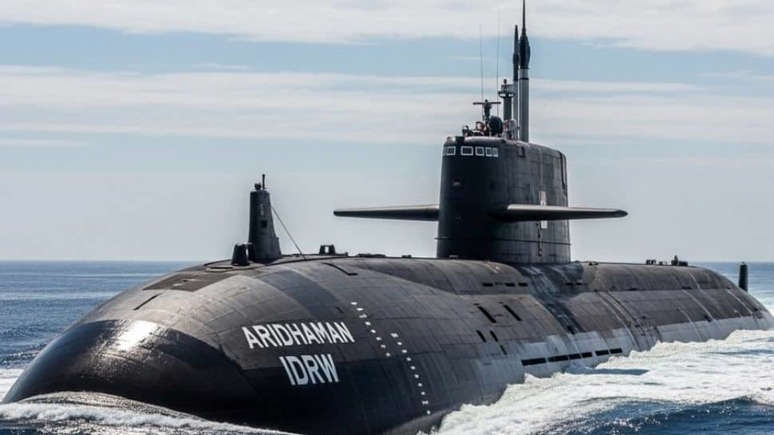
The “S4” class vessel, built under the secretive Advanced Technology Vessel (ATV) project, is a significant leap forward. While the original INS Arihant carries four vertical launch tubes, Aridhaman features eight. This design doubles the submarine’s offensive capacity. It can carry either 24 short-range K-15 Sagarika missiles or eight long-range K-4 ballistic missiles.
The K-4 missile is the centerpiece of this upgrade. With a strike range of 3,500 kilometers, it allows the Indian Navy to target strategic locations across Asia from deep within the Bay of Bengal. This extended reach ensures that the submarine does not need to venture far from home waters to remain a viable threat.
Stealth Technology and Project Varsha Strategy
Strategic stealth is the primary mission of INS Aridhaman. The submarine uses advanced sound-absorbing tiles and an 83-megawatt pressurized water reactor. These features allow it to operate as a “ghost” in the deep ocean. Unlike conventional diesel submarines, it can stay submerged for months. It is limited only by food supplies for its 95-member crew.
The vessel will operate primarily from Project Varsha. This is a high-security naval base currently being completed near Rambilli, Andhra Pradesh. The base features underground pens and tunnels designed to hide submarines from satellite surveillance. This infrastructure allows Aridhaman to slip into the deep waters of the Bay of Bengal without detection.
Securing the Indo-Pacific Against Naval Expansion
The induction comes as naval competition in the Indo-Pacific reaches new heights. China’s People’s Liberation Army Navy (PLAN) has expanded its presence in the Indian Ocean. Meanwhile, Pakistan is reportedly acquiring eight Hangor-class submarines from China. India’s response focuses on a “survivable second-strike” capability.
Under India’s No First Use policy, the sea-based leg of the triad is the most critical. Land bases and airfields are vulnerable to a surprise attack. However, a hidden submarine like Aridhaman ensures that India can always retaliate. This “credible minimum deterrence” is essential for maintaining peace in a nuclear-armed neighborhood.
The Road Ahead for India’s Underwater Armada
Following Aridhaman, the Indian Navy plans to induct a fourth vessel, designated S4*, by 2030. Development has also begun on the much larger S5 class. These future “boomers” will displace 14,000 tonnes and carry even longer-range MIRV-equipped missiles. For now, the commissioning of INS Aridhaman stands as a testament to India’s growing self-reliance in high-end defense technology.
Also Read : PM Modi, Brazilian President Lula Strengthen India-Brazil Partnership in New Delhi