
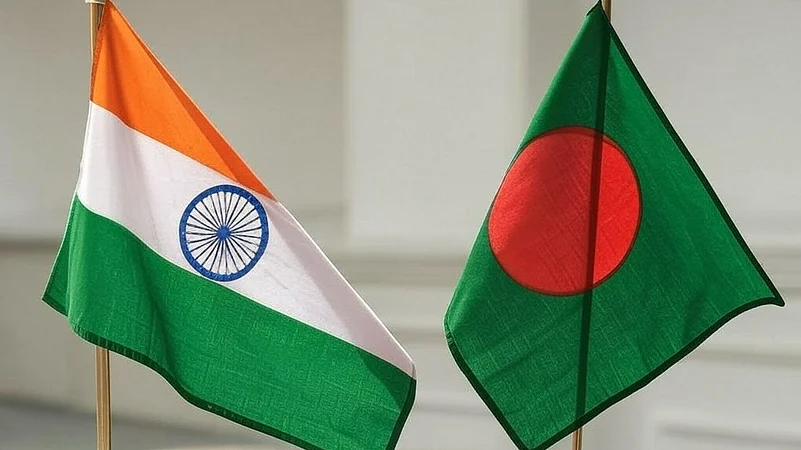
India summoned Bangladesh’s High Commissioner after Hasnat Abdullah threatened to shelter anti-India forces and cut off Northeast “seven sisters” states.
Bangladesh’s High Commissioner was called by India ‘s Ministry of External Affairs (MEA) on Wednesday to submit a formal diplomatic complaint over what it called Hasnat Abdullah, the head of the National Citizen Party, making aggressive anti-Indian statements.
Speaking to a crowd at Dhaka’s Central Shaheed Minar, Abdullah issued a warning that Bangladesh might provide sanctuary to anti-Indian forces, such as separatist organizations, and assist in cutting off India’s “seven sisters” states: Arunachal Pradesh, Assam, Manipur, Meghalaya, Mizoram, Nagaland, and Tripura.
Remarks made by a Bangladeshi politician against India
Abdullah declared, “We will shelter separatist and anti-India forces and then we will sever the seven sisters from India,” to thunderous applause from certain audience members.
He went on to say, “I want to make it clear to India that Bangladesh will respond if you give sanctuary to forces that do not respect Bangladesh’s sovereignty, potential, voting rights, and human rights.”
Without specifically mentioning India, Abdullah further asserted that despite Bangladesh’s 54-year independence, the country is still being targeted by what he called “vultures” who want to take control of it.
Also read : Delhi Fog Disrupts Flights: Airlines Warn Passengers
Without specifically mentioning New Delhi, Hasnat further asserted that despite Bangladesh’s 54 years of independence, “vultures” still strive to impose their will on the nation.
Bangladesh-India relations
Himanta Biswa Sarma, the chief minister of Assam, denounced the comments as “irresponsible and dangerous,” noting that India is a nuclear-armed nation with the fourth-largest economy in the world. How is Bangladesh even able to consider it?
For many years, especially in the late 1990s and early 2000s, India has accused militant and separatist groups in the Northeast of utilizing Bangladesh as a base of operations, transit route, and refuge. Several Assamese and Tripuran rebel groups ran camps, safe havens, or support systems on the other side of the border at this time.
Beyond the Northeast, Islamist terrorist networks with ties to India have also been housed in Bangladesh. Indian agencies have warned groups like Harkat-ul-Jihad-al-Islami (HuJI) and, later, Jamaat-ul-Mujahideen Bangladesh (JMB) for their cross-border presence, as well as for aiding in the logistical networks and radicalization that affect eastern India.