
India Formally Rejects New Beijing-Islamabad Border Mechanism
India has firmly rejected the newly operationalised Pakistan-China Boundary Joint Commission. Official statements from New Delhi emphasize that Pakistan possesses no legal right to execute agreements over Indian land. The stance reinforces decades of strategic policy regarding occupied regions.
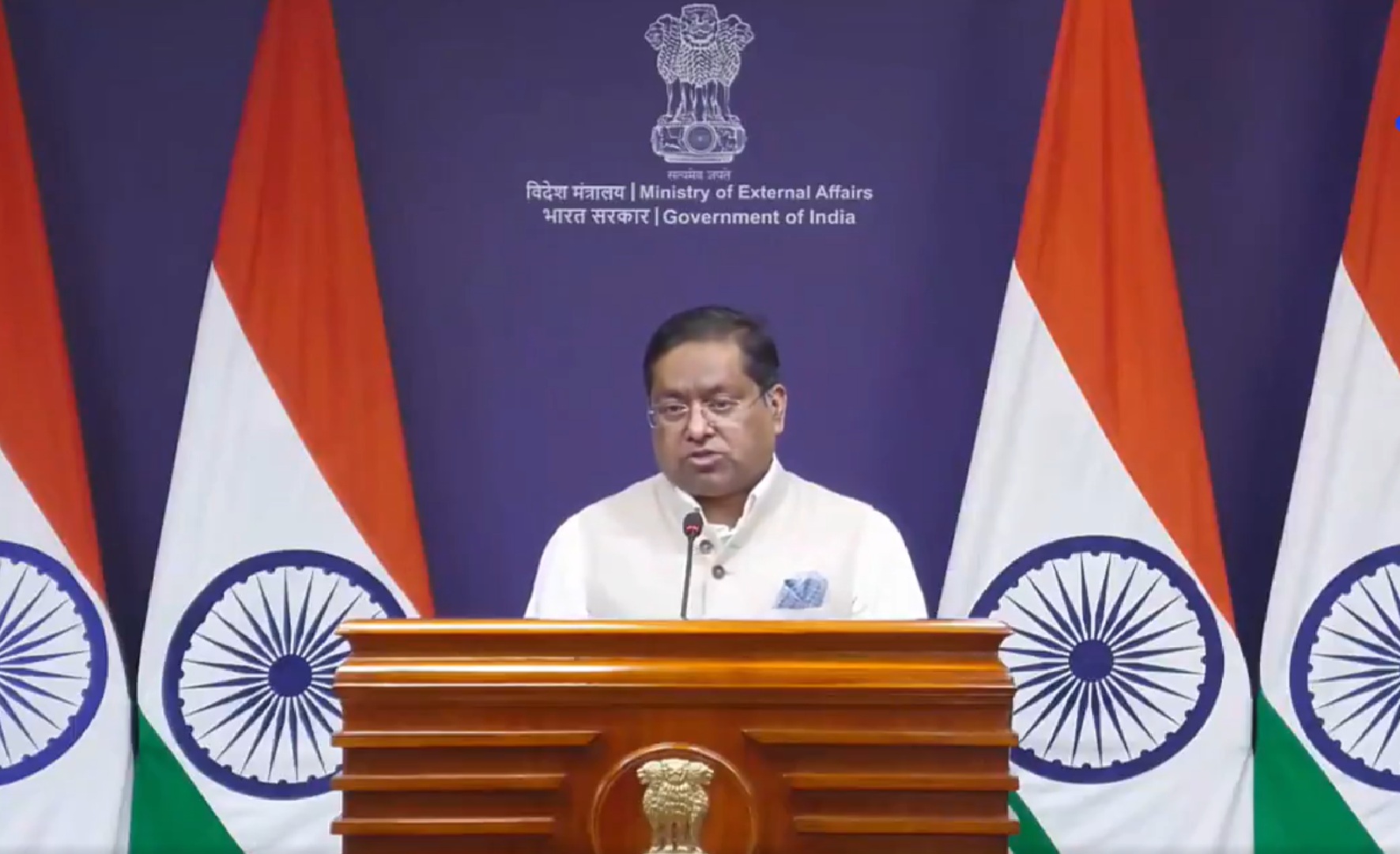
Ministry of External Affairs spokesperson Randhir Jaiswal addressed media queries regarding the bilateral initiative. Jaiswal stated plainly that no common geographic border exists between Pakistan and China. Consequently, India views the joint commission as an illegal entity lacking international legitimacy.
The bilateral commission met in Islamabad to formalize regional oversight mechanisms. However, Indian foreign policy officials countered that occupying powers cannot alter territorial sovereignty. Diplomatic channels reiterate that Jammu, Kashmir, and Ladakh remain central to India’s territorial integrity.
| Foreign Policy Aspect | Official Indian Position | Diplomatic Rationale |
| Commission Validity | Completely Rejected | No shared land border exists between Pakistan and China. |
| Legal Standing | No Locus Standi | Occupying power cannot negotiate Indian sovereign territory. |
| 1963 Border Pact | Illegal and Invalid | Ceded territorial areas belong to Jammu, Kashmir, and Ladakh. |
| Direct Demand | Immediate Vacation | Pakistan must withdraw entirely from occupied zones. |
Legal Status of Jammu, Kashmir, and Ladakh Stated
The External Affairs Ministry reiterated its constitutional position regarding border sovereignty. The entire Union Territories of Jammu & Kashmir and Ladakh remain integral parts of India. Administrative changes or joint mechanisms executed by third parties cannot dilute this sovereignty.
Historical arrangements between Islamabad and Beijing lack legal standing in international law. The 1963 boundary deal remains invalid under Indian foreign policy frameworks. Attempts to alter regional status quo through joint surveys face direct opposition from New Delhi.
Sovereignty claims over northern borderlands are grounded in the 1947 Instrument of Accession. India maintains that administrative structures built on illegally occupied land create zero legal rights. Furthermore, bilateral agreements regarding the Shaksgam Valley remain unrecognized by Indian authorities.
| Key Historical Milestone | Date / Timeline | Impact on Regional Sovereignty |
| Invalid Border Pact Signed | March 2, 1963 | Pakistan illegally ceded Shaksgam Valley land to China. |
| Territorial Reorganization | August 5, 2019 | India reaffirmed constitutional status of J&K and Ladakh. |
| Commission Operationalized | September 16, 2026 | Islamabad meeting established joint border oversight body. |
| Official Demarcation Demand | September 16, 2026 | MEA called on Pakistan to vacate occupied territories immediately. |
CPEC and Infrastructure Developments Under Strategic Scrutiny
The dispute over border management intersects directly with international trade corridors. The China-Pakistan Economic Corridor passes through northern Pakistan-occupied Kashmir. New Delhi has consistently opposed infrastructure construction across disputed zones without sovereign consent.
Joint commissions often seek to secure supply routes connecting Xinjiang to Arabian Sea ports. However, Indian diplomats emphasize that infrastructure expansion cannot confer legal ownership. Continued bilateral projects inside occupied lands face sustained diplomatic objections.
International investors are regularly reminded of the contested status of these corridors. Risk assessments highlight potential legal instability surrounding multi-billion-dollar infrastructure assets built on disputed land. India continues to raise these security concerns in multilateral forums.
| Strategic Asset / Corridor | Regional Location | Primary Indian Policy Objection |
| Shaksgam Valley Area | Trans-Karakoram Tract | Illegally transferred under the invalid 1963 agreement. |
| Karakoram Highway | Gilgit-Baltistan Region | Passes directly through sovereign Indian territory. |
| CPEC Transit Route | PoK Infrastructure | Violates territorial integrity without New Delhi’s consent. |
Geopolitical Implications Across South Asian Borderlands
The current dispute highlights ongoing friction across northern border corridors. Diplomatic objections extend beyond simple territorial claims toward long-term regional stability concerns. Bilateral cooperation between China and Pakistan in occupied zones continues to draw formal protests from India.
Also Read : https://indiathisweek.in/business/upi-charges-04-percent-mdr-above-2000-october-15/
Instead of engaging in administrative theatrics, Islamabad must focus on complete withdrawal. Government officials maintain that sovereign authority remains unchanged despite local infrastructure developments. The latest MEA reaction underscores New Delhi’s proactive defense of its sovereign rights.
Recent high-level diplomatic contacts between Asian powers emphasize peaceful border management. However, New Delhi draws a firm boundary regarding third-party arrangements on its land. Regional security relies on respecting established sovereign borders and international norms.
Long-Term Strategic Balance and Foreign Policy Outlook
Diplomatic analysts observe that India’s firm stance signals zero compromise on territorial integrity. As regional power dynamics evolve, clear communication prevents misunderstandings regarding sovereign borders. New Delhi’s response reinforces its established red lines in South Asian diplomacy.
Future bilateral engagements will likely reflect these firm boundary positions. Neighboring capitals are urged to focus on mutually legal framework agreements rather than unilateral territorial mechanisms. India remains committed to safeguarding its northern frontiers through diplomatic and strategic vigilance.
| Policy Objective | Strategic Execution | Expected Diplomatic Outcome |
| Territorial Integrity | Reject illegal third-party mechanisms. | Prevents legal recognition of occupied land. |
| Regional Stability | Insist on respecting established borders. | Mitigates unilateral border modifications. |
| Sovereignty Defense | Demand complete vacation of occupied areas. | Maintains consistent international legal standing. |