
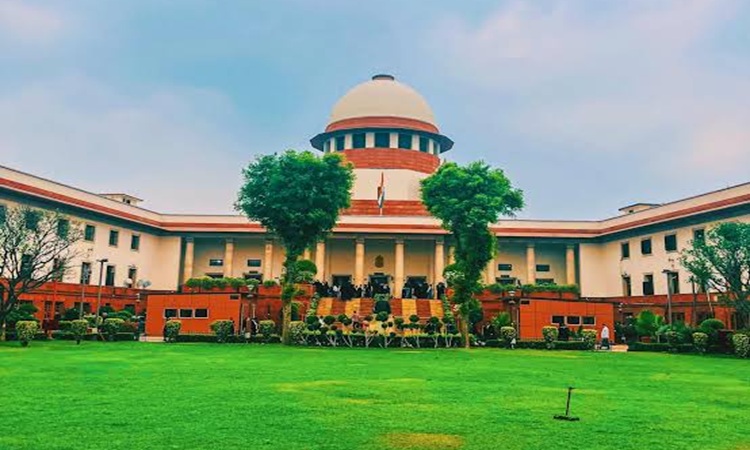
Top court pauses enforcement and appoints a high-powered committee to reassess ecological and structural concerns of Aravalli
The Supreme Court of India today stayed its November 20 order related to the protection of the Aravalli hills and ranges, keeping its earlier directions in abeyance until a fresh expert review is completed. The court clarified that no final action would be taken until a newly constituted high-powered committee of domain experts submits its findings, signalling a cautious and balanced judicial approach.
The case concerns the long-term protection of the Aravalli mountain system, which plays a critical role in preventing the Thar Desert from advancing toward the Gangetic plains. The court highlighted that the Aravalli range acts as a vital ecological shield and stressed that any regulatory decision affecting it must be based on accurate scientific assessment rather than partial interpretation.
ALSO READ : Gujarat AAP MLA Chaitar Vasava Leads Massive Rally to Protect Aravalli Mountains
Supreme Court Flags Risk of Misinterpretation of Aravalli
The apex court noted that its earlier observations, along with the findings of an expert committee, appeared to have been misconstrued in certain quarters. This misunderstanding, the court observed, risked creating confusion about the scope and intent of its directions, especially regarding land use and mining restrictions.
The court emphasised that enforcing recommendations without a comprehensive and neutral evaluation could lead to unintended legal and environmental consequences. Therefore, it underlined the need for a fair, impartial, and independent expert opinion before issuing any binding directions that could affect multiple states and sectors.
Background of the November 20 Aravalli Order
The matter is being heard under the case titled In Re: Definition of Aravalli Hills and Ranges and Ancillary Issues, which focuses on legally defining the Aravalli landscape for environmental protection. On November 20, the Supreme Court had accepted a uniform definition of the Aravalli hills and ranges and imposed a ban on the grant of fresh mining leases.
That order applied across Delhi, Haryana, Rajasthan, and Gujarat, regions where the Aravalli range extends over vast and ecologically sensitive areas. The court had relied on recommendations made by a committee under the Ministry of Environment, Forest and Climate Change (MoEF&CC), aimed at safeguarding one of the world’s oldest mountain systems.
Key Definitions That Triggered Widespread Impact
Under the earlier framework, an “Aravalli Hill” was defined as any landform in notified Aravalli districts rising 100 metres or more above local relief. An “Aravalli Range” was defined as two or more such hills located within 500 metres of each other.
These definitions significantly expanded the scope of areas subject to environmental regulation. As a result, mining operations, construction projects, and real estate activity in several regions faced uncertainty, prompting concerns from stakeholders and state authorities alike.
Why the Aravalli Hills Are Ecologically Crucial
The Aravalli range plays a vital role in maintaining climatic balance, supporting groundwater recharge, and preserving biodiversity across northern and western India. Environmental degradation in this region has long been linked to rising desertification risks, declining water tables, and worsening air quality.
Rapid urbanisation, illegal mining, and infrastructure expansion have placed immense pressure on the fragile ecosystem. The Supreme Court has repeatedly acknowledged that unchecked activity in the Aravalli region could cause irreversible environmental damage.
Role of the Newly Proposed Expert Committee
The newly proposed high-powered committee will conduct a multi-temporal examination of the Aravalli hills and ranges. This process involves analysing changes in the landscape over several decades using satellite imagery, historical data, and ground-level assessments.
The committee will examine structural continuity, ecological degradation, land-use patterns, and human impact across the region. Its findings will form the basis of the Supreme Court’s final directions, ensuring that conservation measures are scientifically sound and legally sustainable.
What the Stay Means for Mining and Development
With the November 20 order stayed, enforcement of fresh mining restrictions remains paused for now. However, the court has made it clear that this pause does not dilute its commitment to environmental protection.
Instead, the stay reflects a deliberate effort to balance developmental needs with ecological safeguards, ensuring that any future action is based on verified data rather than broad assumptions.
A Broader Shift in Environmental Governance
The Supreme Court’s decision highlights a broader shift toward science-led environmental governance. By prioritising expert input over immediate enforcement, the court aims to strengthen the credibility and durability of its eventual ruling.
The final outcome of the Aravalli case is expected to influence mining policy, land-use planning, and environmental regulation across India. As the expert committee begins its work, the case remains under close national attention, with significant implications for both conservation and development.