
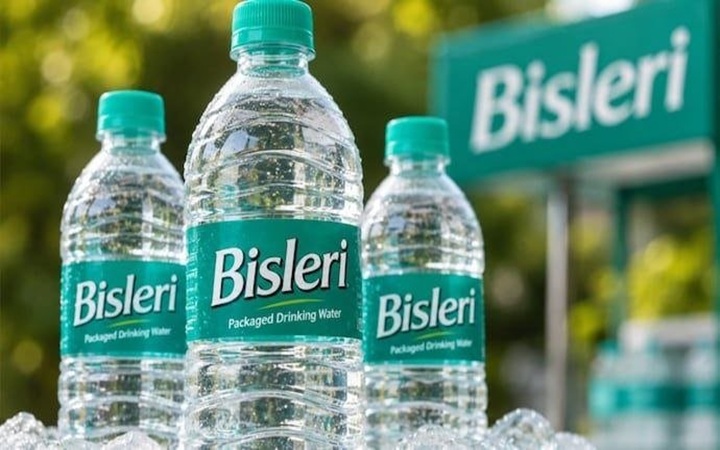
Food Safety Regulator Launches Legal Action Against Bottled Water Giant
Triggering widespread consumer concern across India, Bisleri water fails safety test conducted by the Food Safety and Standards Authority of India (FSSAI). Following laboratory findings that declared a packaged drinking water sample “unsafe” for human consumption, the national food regulator sanctioned formal prosecution against Bisleri International Pvt Ltd.
According to official regulatory disclosures, inspectors collected the sample of packaged drinking water—specifically distinct from Bisleri’s mineral water variant—directly from the company’s premises.
Initial laboratory screening revealed that the water failed to comply with prescribed statutory bromate limits.
After Bisleri appealed those initial findings, the regulator dispatched the sample to a referral food laboratory for independent verification. That secondary referral test detected polynuclear aromatic hydrocarbons (PAHs) and once again declared the sample unsafe.
FSSAI Enforcement Action and Laboratory Findings Summary
The table below outlines official test findings, legal provisions invoked, and parallel enforcement actions announced by the food safety authority.
| Serial No. | Regulatory / Lab Parameter | Official FSSAI Finding | Consumer & Legal Impact |
| 1 | Primary Sample Tested | Packaged Drinking Water | Distinct from mineral water variants. |
| 2 | Initial Lab Violation | Non-Compliant Bromate Limits | Classified as possible carcinogen. |
| 3 | Referral Lab Verification | Detected PAHs (After Appeal) | Confirmed unsafe under 2006 Act. |
| 4 | Legal Sanction Approved | Prosecution Under FSS Act, 2006 | Court proceedings to follow next. |
| 5 | Other Businesses Penalized | 4 Prosecutions & 2 Suspensions | Includes Asha Confectionery recall. |
Understanding Bromate and PAH Risks in Drinking Water
Highlighting why Bisleri water fails safety test findings matter for public health, global agencies classify bromate as a possible human carcinogen. Bromate typically forms during ozonation disinfection processes when bromide naturally present in source water reacts chemically.
Similarly, polynuclear aromatic hydrocarbons (PAHs) are toxic organic compounds regulated strictly in potable beverages.
Both compounds carry strict maximum permissible limits under the Food Safety and Standards Act, 2006.
However, the regulator has not yet released the full laboratory report detailing exact concentration levels or how contamination occurred.
What Consumers Need to Know About Current Bottles and Recall Status
Amid viral discussion over news that Bisleri water fails safety test, officials clarified key consumer safeguards. First, FSSAI has not identified a specific retail batch number nor ordered a nationwide recall of Bisleri packaged drinking water.
Second, sanctioning prosecution initiates formal legal proceedings; a court has not yet found the company guilty.
In response, Bisleri International stated that water safety remains its top priority and assured full cooperation with the ongoing probe.
Meanwhile, consumers are reminded to inspect bottle seals, manufacturing dates, and packaging integrity before purchasing sealed water.
Broader FSSAI Crackdown Targets Food and Beverage Operators
Beyond the headline where Bisleri water fails safety test, FSSAI has intensified nationwide enforcement throughout 2026. Alongside Bisleri, the regulator sanctioned prosecution against Vasant Masala, Tit-Bit Foods India, Mimansa Industries, and Asha Confectionery.
Additionally, FSSAI suspended licenses of Urmi Lifesciences LLP and Gaur Ayurvedic Store while ordering a product recall for Asha Confectionery’s chocolate-filled cookies.