
Historic Interplanetary Mission Blasts Off From Tanegashima
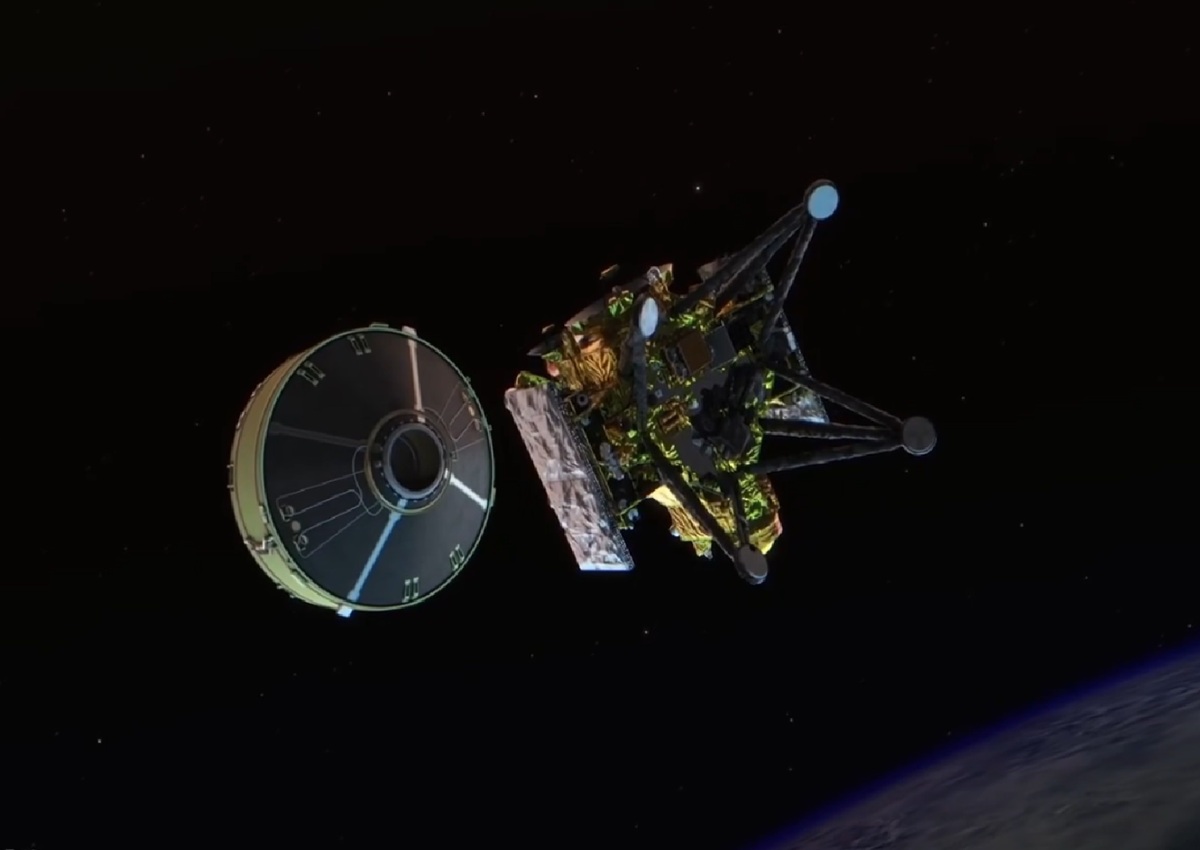
The successful launch of the Martian Moons eXploration Spacecraft marked an unprecedented chapter in deep-space exploration as Japan’s Aerospace Exploration Agency (JAXA) deployed its premier Mars probe. The unmanned MMX spacecraft blasted off aboard a flagship H3 rocket from the Tanegashima Space Center in pitch-black skies at 4:41 a.m. local time on Tuesday, October 20, 2026.
Mission control confirmed that the spacecraft separated smoothly from the launch vehicle’s upper stage, deploying solar arrays and entering its target trajectory toward the Martian system. The primary goal involves landing on Phobos, collecting surface regolith, and returning those pristine samples back to Earth.
Scientific Objectives: Unlocking Solar System and Planetary Origins
The scientific mandate driving the Martian Moons eXploration Spacecraft addresses one of astronomy’s most persistent mysteries: whether Mars’s moons, Phobos and Deimos, are captured asteroids or debris fragments from an ancient giant planetary impact. By collecting at least 10 grams of surface material using pneumatic sampling drills, JAXA scientists aim to analyze water molecules and organic compounds preserved in the regolith.
Understanding the origin of Martian moons provides crucial data regarding how water and building blocks of life were distributed across inner solar system terrestrial planets during early formation phases.
| Serial No. | MMX Spacecraft Parameter | Scientific & Technical Standard | Targeted Mission Outcome |
| 1 | Launch Vehicle Platform | Flagship H3 Rocket (JAXA) | Achieves Precision Trans-Mars Injection |
| 2 | Primary Sampling Target | Phobos (Inner Martian Moon) | Retrieves 10+ Grams Regolith |
| 3 | Secondary Celestial Target | Deimos Flyby Observations | Maps Surface Composition & Gravity |
| 4 | Earth Return Timeline | Scheduled Sample Return Capsule | Enables Isotopic Laboratory Testing |
Summary of Interplanetary Flight Metrics
The table below consolidates the primary operational metrics established during the spacecraft launch.
| Serial No. | Key Operational Metric | Official Recorded Status | Strategic Significance |
| 1 | Focus Category Keyword | Martian Moons eXploration Spacecraft | Leads international Mars exploration |
| 2 | Launching Space Agency | JAXA (Japan Aerospace Exploration) | Demonstrates H3 rocket reliability |
| 3 | Launch Site Location | Tanegashima Space Center, Japan | Primary Japanese deep-space port |
| 4 | International Collaborators | NASA, CNES, and ESA Agencies | Supplies Rover & Spectrometer Modules |
Global Significance for Future Human Mars Exploration
The data gathered by the Martian Moons eXploration Spacecraft will also assist international space agencies planning human missions to Mars in the late 2030s. Mapping radiation levels, surface gravity variations, and dust dynamics on Phobos establishes whether the moon can serve as an orbital staging base or refueling depot for future crewed landers.
With the spacecraft safely cruising toward Mars, planetary scientists worldwide await the groundbreaking sample return capsule that could redefine our understanding of solar system evolution.