
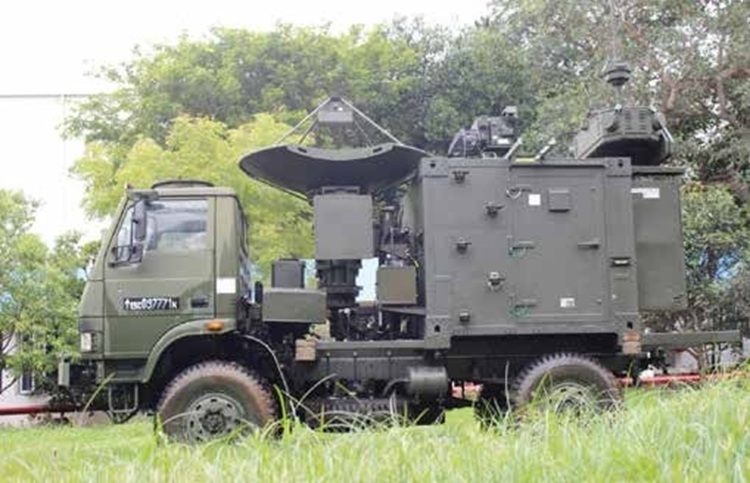
Advanced Electronic Warfare Capabilities Developed for Border Defense
The development of the DRDO Electronic Intelligence System marks a major leap forward in tactical border surveillance and signal intelligence. Engineers at the Defence Research and Development Organisation (DRDO) designed these compact, portable electronic warfare (EW) modules to capture and analyze hostile radar emissions in real time. The platform allows front-line units to detect enemy radar installations and track incoming unmanned aerial vehicles across challenging terrain.
Field deployments will enable Indian Armed Forces personnel to identify signal signatures before hostile platforms enter controlled airspace. By integrating modular signal receivers into lightweight transportable frames, the technology ensures rapid deployment for infantry and armored formations along forward border sectors.
Tactical Surveillance and Real-Time Signal Processing Capabilities
Modern battlefields demand continuous electronic surveillance to protect forward positions from low-altitude aerial threats and reconnaissance platforms. The DRDO Electronic Intelligence System addresses this operational requirement by providing real-time signal classification across multiple frequency bands. The technology automatically categorizes intercepted emissions, allowing field commanders to distinguish between commercial drones, military-grade surveillance platforms, and ground-based target tracking radars.
Also Read : https://indiathisweek.in/technology/private-space-launch-deal-skyroot-secures-us-reflect-orbital-contract/
Furthermore, the hardware integrates advanced software algorithms capable of pinpointing the precise location of hostile transmitters. This radio frequency direction-finding capability enables defensive units to initiate targeted electronic countermeasures or dispatch interceptor drones to neutralize incoming threats before they reach critical infrastructure.
Technical Modules and Environmental Standard Certifications
Under the DRDO Electronic Intelligence System project, development covers specialized receiver hardware, signal processing software, and environmental shockproofing. Engineers subjected the modules to rigorous qualification testing to satisfy technical and environmental standards.
The equipment withstands extreme temperature variations, high humidity, mechanical vibration, and heavy electromagnetic interference. Consequently, field operators maintain continuous situational awareness even during intense electronic countermeasure operations.
| Serial No. | Technical Module Component | Operational Engineering Function | Environmental Qualification Benchmark |
| 1 | Signal Capture Module | Detects Low-Probability-of-Intercept Radars | High Electromagnetic Interference Shielding |
| 2 | Drone Tracking Receiver | Intercepts Unmanned System Control Links | Temperature & Humidity Resistant Design |
| 3 | Tactical Data Processor | Analyzes Frequency & Emission Signatures | Shock and Vibration Tested Frame |
| 4 | Modular Power Pack | Provides Portable Field Energy Supply | Continuous Operation in Extreme Climates |
Integration with Forward Command and Control Networks
To maximize operational utility, the DRDO Electronic Intelligence System connects seamlessly with existing military command and control architecture. Digital interfaces allow the units to broadcast threat alerts instantly to nearby air defense batteries and automated artillery control systems.
This networked approach shortens the kill-chain response time, ensuring that air defense batteries receive accurate target tracking data the moment a threat is classified. Additionally, the unit features low power consumption requirements, allowing mobile teams to operate on battery power in remote border outposts without relying on heavy electrical generators.
Operational Metrics and Field Deployment Targets
The summary below outlines core metrics established during system qualification testing.
| Serial No. | Key Operational Metric | Official Recorded Status | Strategic Significance |
| 1 | Focus Category Keyword | DRDO Electronic Intelligence System | Enhances tactical airspace awareness |
| 2 | Developing Agency | Defence Research and Development Organisation | Advances indigenous defense tech |
| 3 | System Form Factor | Compact, Portable Field Units | Enables rapid frontline movement |
| 4 | Target Threat Profile | Hostile Radars and Unmanned Systems | Neutralizes electronic warfare risks |
Future Upgrades and Indigenous Defense Manufacturing
The deployment of the DRDO Electronic Intelligence System reinforces India’s commitment to self-reliance in critical defense technology. By manufacturing both hardware components and processing software domestically, the military eliminates dependence on foreign vendors for critical electronic warfare upgrades.
Future development phases will incorporate machine learning algorithms capable of adapting to novel, previously unrecorded radar waveforms. This iterative software enhancement model ensures that forward units remain fully prepared to counter emerging electronic threats along contested national borders.