
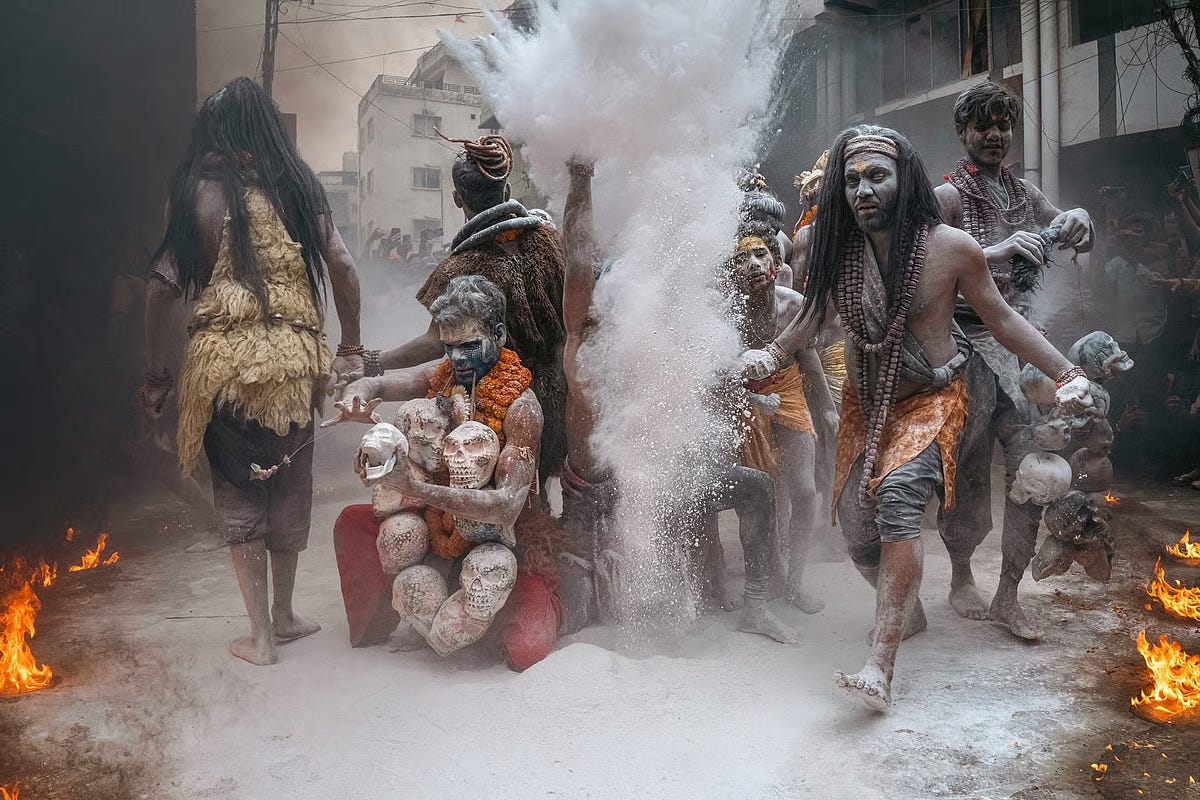
Varanasi, India: In the spiritual heart of India, Holi in Varanasi is celebrated in a way unlike anywhere else in the world. Beyond the vibrant powders and playful water splashes, the festival extends to the sacred cremation grounds, where ash from funeral pyres becomes part of an age-old ritual known as Masane Ki Holi.
In 2026, Masane Ki Holi will be observed on 28 February at the iconic Manikarnika Ghat, drawing thousands of devotees and curious visitors eager to witness this unparalleled spectacle. Preparations at the ghat are already underway to ensure the event retains its traditional grandeur.
Timing and Spiritual Significance
Masane Ki Holi follows Rangbhari Ekadashi, the day when Lord Shiv is believed to ceremonially bring Goddess Gauri to Kashi. The next day, the Mahashmashan (cremation grounds) becomes the stage for one of India’s most symbolic Holi rituals, where participants use sacred ash mixed with gulal to create a surreal, visually striking experience. Nearly 20,000 people are estimated to attend, with over 1.5 quintals of chita bhasma (sacred ash) used in the celebration.
Also read : 7 Natural Remedies to Remove Holi Colours Without Damaging Your Skin
Venues of the Celebration
The central ritual takes place at Manikarnika Ghat, one of India’s oldest cremation ghats, with celebrations also extending to Harishchandra Ghat. Devotees, sadhus, and Shiv bhakts smear themselves not only with vibrant gulal but also with sacred ash, symbolising the transient nature of life and the inevitability of mortality, reflecting Shaivite philosophy.
Shiv Barati Procession: The Spiritual Prelude
Before the main celebration, a grand procession called the Shiv Barati begins at Aghor Peeth Baba Keenaram Ashram and proceeds to Harishchandra Ghat. Participants, dressed as Lord Shiv and his ganas, carry the festive energy with conch shells, damru beats, chants of “Har Har Mahadev”, and clouds of gulal. The procession represents Lord Shiv’s cosmic wedding journey and sets the stage for Masane Ki Holi.
Masane Ki Holi : The Mythological Origin
Masane Ki Holi traces its roots to legend. After Rangbhari Ekadashi, when Lord Shiv brought Goddess Gauri to Kashi, the residents welcomed them with Holi celebrations. However, Shiv returned the next day to celebrate Holi with spirits, mystical beings, and ganas at the cremation grounds, using sacred ash instead of colours. This act gave birth to the Masane Ki Holi tradition, symbolising detachment, liberation, and the cycle of life and death.
A Visual Spectacle of Ash and Gulal
On the day of the ritual, clouds of bright pink and red gulal fill the air, interspersed with sacred ash from the pyres, creating a scene that is both intense and surreal. Participants become an active part of the ritual, transforming the Mahashmashan into a living canvas of devotion and philosophy.
In a world where Holi is increasingly commercialised, Masane Ki Holi remains raw, spiritual, and profoundly symbolic, reminding all of Kashi’s timeless cultural and spiritual identity.