
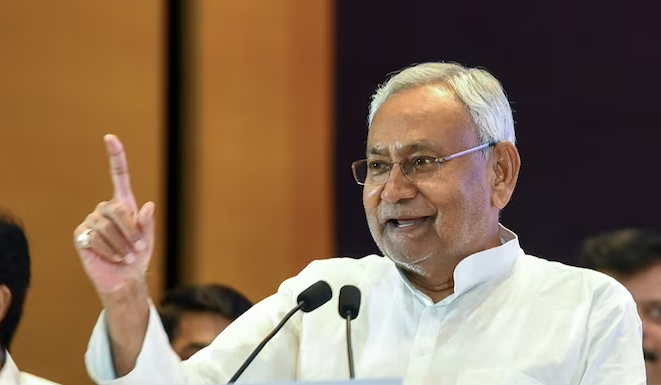
Bihar Chief Minister Nitish Kumar is set to provide major financial assistance to women across the state under the Mukhyamantri Mahila Rojgar Yojana on Monday (February 16). As part of the initiative, ₹10,000 will be directly transferred through Direct Benefit Transfer (DBT) into the bank accounts of nearly 25 lakh women beneficiaries. Altogether, approximately ₹2,500 crore will be disbursed under this phase of the Mukhyamantri Mahila Rojgar Yojana scheme. A special event is scheduled at the Chief Minister’s residence at 10 am to mark the occasion.
Deputy Chief Ministers Samrat Choudhary and Vijay Kumar Sinha will attend the programme. District Magistrates and administrative officials from all 38 districts will participate virtually through video conferencing. The initiative is being viewed as a significant step toward strengthening women’s financial independence and promoting self-employment in Bihar.
₹10,000 Aid Released; Next Installment Subject to Review
Under the first phase of the Mukhyamantri Mahila Rojgar Yojana scheme, eligible women are receiving ₹10,000 to help them start small businesses or income-generating activities. In subsequent stages, financial support of up to ₹2 lakh will be provided. The utilization of the initial ₹10,000 grant will be monitored by village organizations, which will evaluate whether the funds were used to establish shops or other ventures. These reports will be forwarded to block-level authorities, who will then determine eligibility for further installments.
Also read : Nitish Kumar Inspects Kurji and Anandpuri Drain Projects to Curb Waterlogging in Patna
Women Beneficiaries Set for Major Financial Boost in Mukhyamantri Mahila Rojgar Yojana Upcoming Phase
So far, the Nitish Kumar government has credited ₹10,000 each to around 1.56 crore women beneficiaries under the Mukhyamantri Mahila Rojgar Yojana scheme. With six months now completed, preparations are underway to release the next installment, which could provide up to ₹2 lakh per beneficiary.
Launched in September ahead of last year’s Assembly elections, the scheme is widely regarded as a politically significant move. It is believed to have played a key role in consolidating women voters, with nearly 48 percent of women supporting the NDA alliance, contributing to its sweeping victory of over 200 seats in Bihar.