
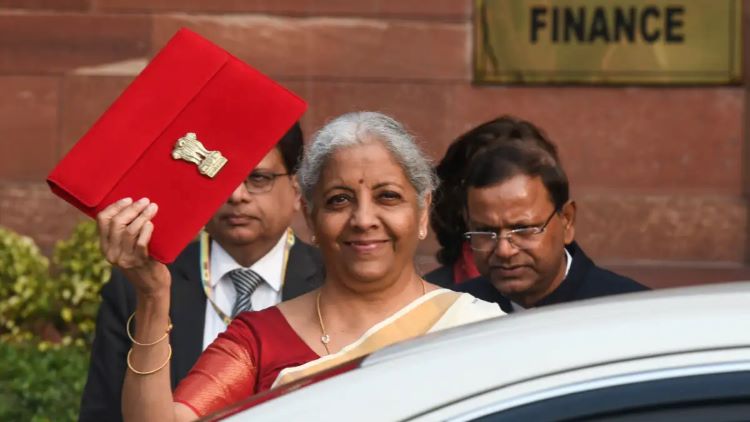
India’s Economic Survey 2025-26 tabled ahead of Union Budget 2026, highlighting growth, fiscal trends, and sectoral performance. PM Modi emphasises India-EU trade pact.
The Lok Sabha was adjourned on Thursday afternoon and is scheduled to reconvene on February 1 at 11:00 am. Ahead of the upcoming Budget presentation, Union Finance Minister Nirmala Sitharaman tabled the Economic Survey of India for the financial year 2025‑26 in Parliament.
In line with parliamentary tradition, the Economic Survey is presented before the Budget to provide a comprehensive assessment of the current state of the economy.
This year’s Union Budget is notable for being presented on a weekend, an uncommon occurrence. Additionally, Finance Minister Sitharaman is set to make history by presenting her ninth consecutive Budget—a rare achievement in India’s parliamentary history that reflects continuity in economic policymaking.
Significance of the Economic Survey
Often referred to as India’s official annual “report card” on the economy, the Economic Survey offers a detailed, data-driven evaluation of the country’s economic performance over the past year. It analyses growth trends, sector-wise performance, fiscal indicators, and overall macroeconomic developments, while also highlighting potential policy directions for the future.
Also read: India Crosses 950 Million Internet Users in 2025, Rural Adoption Leads Growth : Reports
Prepared by the Economic Division of the Department of Economic Affairs under the guidance of the Chief Economic Adviser (CEA), the Survey is published in two volumes, each focusing on different aspects of the economy. While the Budget outlines forward-looking measures such as taxation, expenditure, and policy initiatives, the Economic Survey provides the analytical basis for these measures.
PM Modi Highlights India-EU Trade Pact Ahead of Budget Session
Ahead of the 2026 Budget Session, Prime Minister Narendra Modi addressed the media from Parliament, underlining the importance of the India-European Union Free Trade Agreement. He described it as “Free Trade for Ambitious India, for Aspirational Youth, and for Aatmanirbhar India.”
The Prime Minister expressed optimism about the pact’s impact, stating, “I am confident that especially India’s manufacturers will leverage this opportunity to enhance their capabilities. This marks a significant step towards a confident, competitive, and productive India.”
PM Modi also highlighted India’s democratic strengths, noting that its democracy and demographic profile have become sources of global optimism. He emphasised that Parliament, referred to as the “temple of democracy,” should convey a strong and positive message to the world during the Budget Session.
Budget Session Schedule
The Budget Session is set to run for 65 days across 30 sittings, concluding on April 2. Both Houses will take a recess from February 13 to March 9, allowing Standing Committees time to examine the Demands for Grants of various ministries and departments.