
Punjab Strengthens Horticulture with Global Partnership
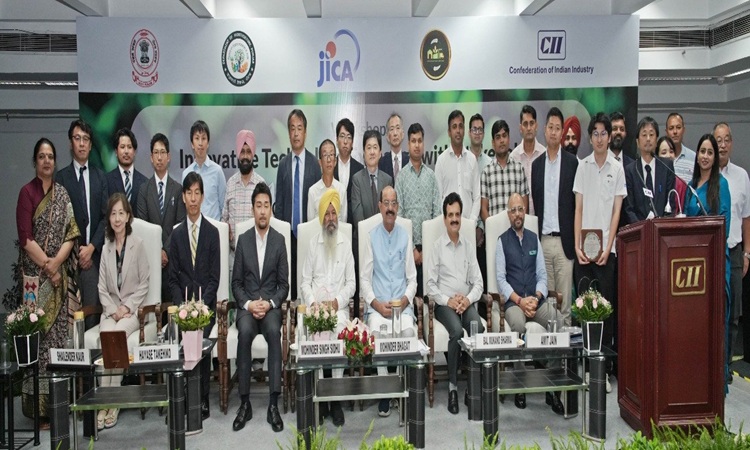
Chandigarh, August 27 – The Punjab Government has taken another major step to boost its horticulture sector by hosting a Technology Exchange Workshop on Climate-Resilient and Sustainable Horticulture in collaboration with the Japan International Cooperation Agency (JICA). The event, held at the Confederation of Indian Industry (CII) Complex in Chandigarh, highlighted Punjab’s focus on modern farming practices, crop diversification, and sustainable growth for farmers.
The workshop was organised under the Promotion of Climate-Resilient and Environmentally Sustainable Horticulture in Punjab (PCRESHP) project. It brought together a high-level JICA delegation, agricultural experts, farmer representatives, and industry stakeholders.
JICA Delegation Discusses Advanced Technology
Punjab’s Horticulture Minister Mohinder Bhagat welcomed the JICA team and emphasized the importance of international cooperation in strengthening Punjab’s horticultural value chain. The 30-member Japanese delegation included senior officials such as Hayase Takechiko, First Secretary (Food and Agriculture); Eiji Wakamatsu, Senior Representative JICA India; Shinohara Togo, Team Leader of JICA Survey Team; and Nishtha Vengurlekar, Development Specialist JICA India.
Minister Bhagat stressed that Punjab’s horticulture is gaining global recognition and the government is determined to provide farmers with modern technology and international expertise. He noted that JICA’s experience in sustainable farming will help reduce input costs, promote crop diversification, and enhance farmer incomes.
The visiting delegation reaffirmed its support. Japanese experts highlighted Punjab’s strong potential in horticulture and assured assistance with cutting-edge technology, training programs, and sustainable agricultural practices that could directly benefit local farmers.
Key Themes and Sessions
The workshop featured several thematic sessions aimed at promoting innovation, sustainability, and collaboration. Experts and industry leaders presented insights on:
- New Technologies in Controlled Environment Horticulture
- Agri-Tech Solutions for Resource Management
- Low-Carbon and Sustainable Horticultural Practices
- Academic Collaboration Between India and Japan
These discussions enabled knowledge sharing on advanced farming methods, resource efficiency, and environment-friendly practices. Companies, research institutes, and universities from both India and Japan also participated, showcasing technologies relevant to the horticultural value chain.
Punjab officials, including Bal Mukand Sharma, Chairman of the Punjab State Food Commission, and Horticulture Director Shailender Kaur, spoke about various support schemes available for farmers. They highlighted initiatives such as technical guidance, financial aid, and state-level programs promoting climate-resilient horticultural practices.
Strong Commitment to Farmer-Centric Growth
Minister Bhagat reiterated that Punjab’s focus is not only on expanding horticulture but also on ensuring sustainability and resilience against climate challenges. He stressed that by adopting international best practices and advanced technologies, the state can reduce costs for farmers while improving crop quality and productivity.
The Punjab Crop Residue Efficient and Sustainable Horticulture Project (PCRESHP) was a key point of discussion during the deliberations. It aims to improve resource use, promote diversification, and minimize crop residue burning through sustainable solutions.
Representatives from farmer organizations and agricultural scientists praised the initiative and welcomed the state’s efforts to connect global expertise with local farming needs.
The workshop concluded with a commitment from Punjab and JICA to strengthen collaboration in horticulture and move towards sustainable, climate-resilient, and farmer-friendly growth.